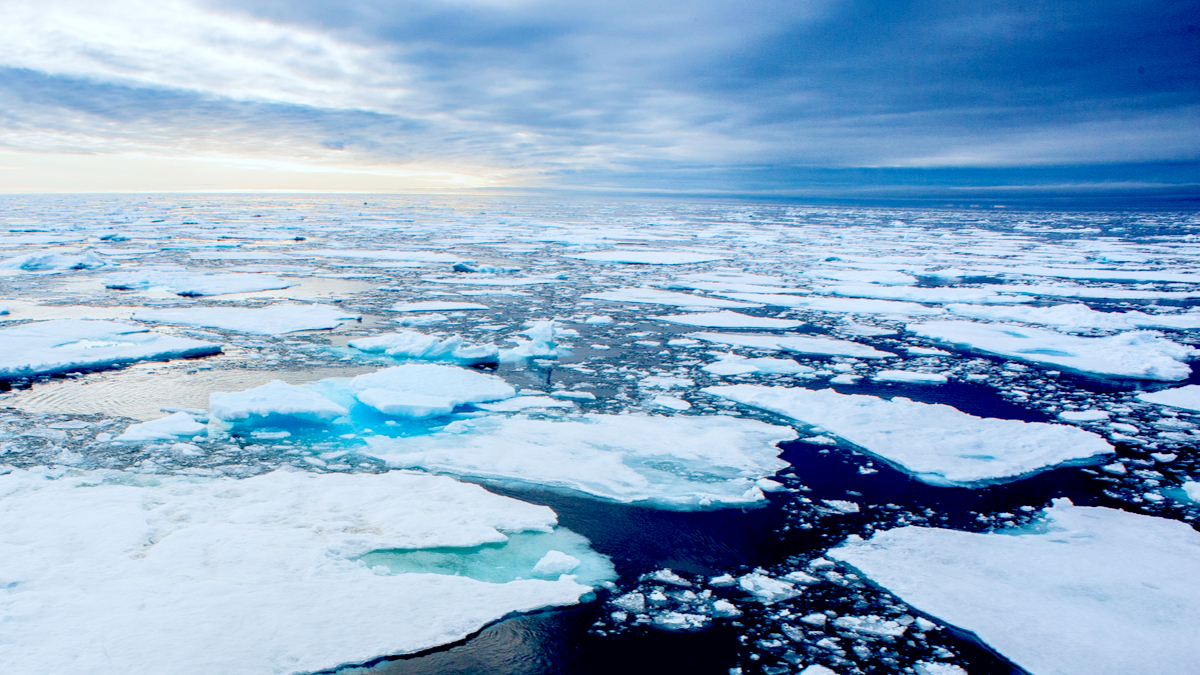
New research reveals that the intensification of climate change, and the accompanying accelerated melting, are having a dramatic impact on many species evolving in the icy waters of the Arctic.
Chain Reactions
Published in the journal Communications Earth & Environment, these findings discuss the crossing of a critical chemical threshold, marked by remarkably low nitrate levels. Such nutrients are essential for the growth of phytoplankton, which itself is a key link in Arctic trophic networks.
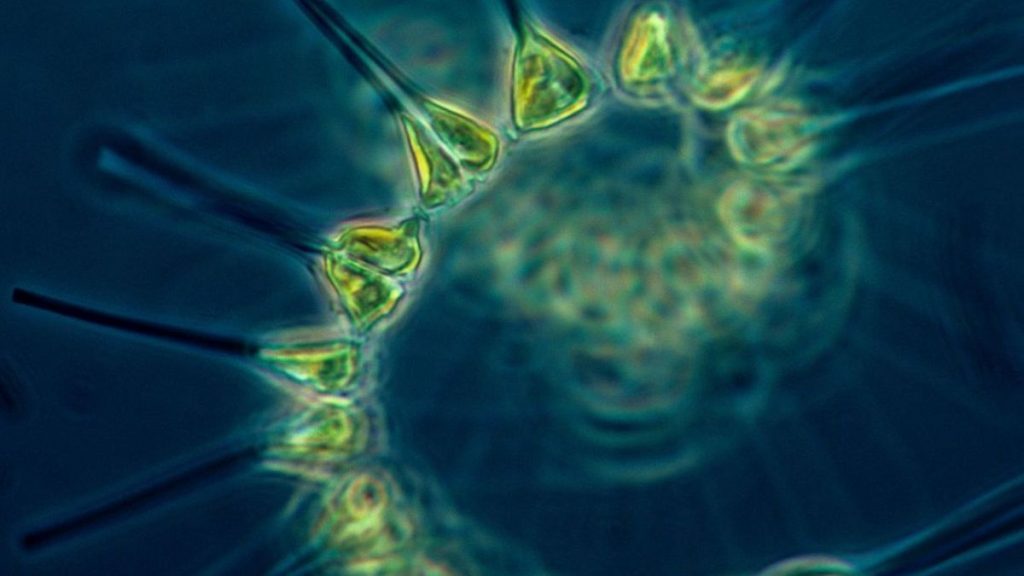
“These tiny animal and plant organisms carried by currents form the base of the diet of a wide range of species, from small fish to whales,” notes the team. By domino effect, this disturbance also contributes to the decline of many marine mammals and seabirds.
Concretely, the increased exposure of Arctic waters to solar radiation, consequent to the melting of the ice, stimulates the growth of phytoplankton. But this phenomenon is accompanied at the same time by a stratification of the surface waters, limiting exchanges with the deeper layers rich in nitrates. Over decades, this translates into a broad reduction in the availability of this precious food resource.
“This process, called benthic denitrification, transforms nitrates into nitrogen gas in the sediments of the shallow continental shelves that cover nearly half of the Arctic Ocean,” details Marta Santos-Garcia, of the University of Edinburgh. “It seems to have shifted from a light-limited system to a nutrient-poor system, which has dramatic consequences for its ecosystems and food webs.”
A Tipping Point Crossed More Than a Decade Ago
The twenty years of data from Fram Strait, between Greenland and the Norwegian archipelago of Svalbard, revealed that this tipping point was crossed around 2009.
Because of its relatively recent nature, continuing to monitor the Arctic food chain’s evolution closely will prove essential. “This also has profound implications for commercial fishing in the North Atlantic,” stresses Raja Ganeshram, the study’s lead author.
The implications do not stop there. The decline of phytoplankton populations, which play a crucial role in capturing atmospheric carbon and converting it into sugars via photosynthesis, also fuels the acceleration of the greenhouse effect.
Earlier, a study had revealed that the Arctic was entering a “new era” of bioclimatic extremes.

Contact details
Address:
Farmers Forum,
36, Dominick Street,
Mullingar,
Co. Westmeath,
Ireland
Phone:
+353 (0)44 9310206
Or email us:
For technical issues please check out our FAQ's page or email - [email protected]
For general Queries email - [email protected]
Request to add event to our Calendar - [email protected]
Send us your mart reports - [email protected]
Suggestions and feedbacks - [email protected]
News Items / Press Release - [email protected]
To Advertise on Farmers Forum - [email protected]