
In the warm waters off Mexico and Texas, a tiny fish thrives with a life cycle that is decidedly atypical: the Amazon molly, whose members, exclusively female, reproduce via gynogenesis.
The Intriguing Poecilia formosa
The theory of evolution predicts that organisms relying solely on asexual reproduction should go extinct relatively quickly due to the accumulation of deleterious mutations resulting from restricted genetic mixing. While most models foresee the species’ existence not exceeding about ten millennia, the Amazon mollies (Poecilia formosa) defy all expectations.
Although the triggering of embryonic development in P. formosa, arising from the sexual cross between a female Poecilia mexicana and a male Poecilia latipinna, involves interaction with the sperm of other closely related species, the male DNA does not fuse with the egg and therefore contributes no genetic material to the offspring to be born.
In order to unravel the evolutionary success of mollies that have reproduced exclusively by asexual means for more than 100,000 years, Edward Ricemeyer and his colleagues sequenced the entire chromosomal genome of P. formosa, as well as that of its two closest relatives.
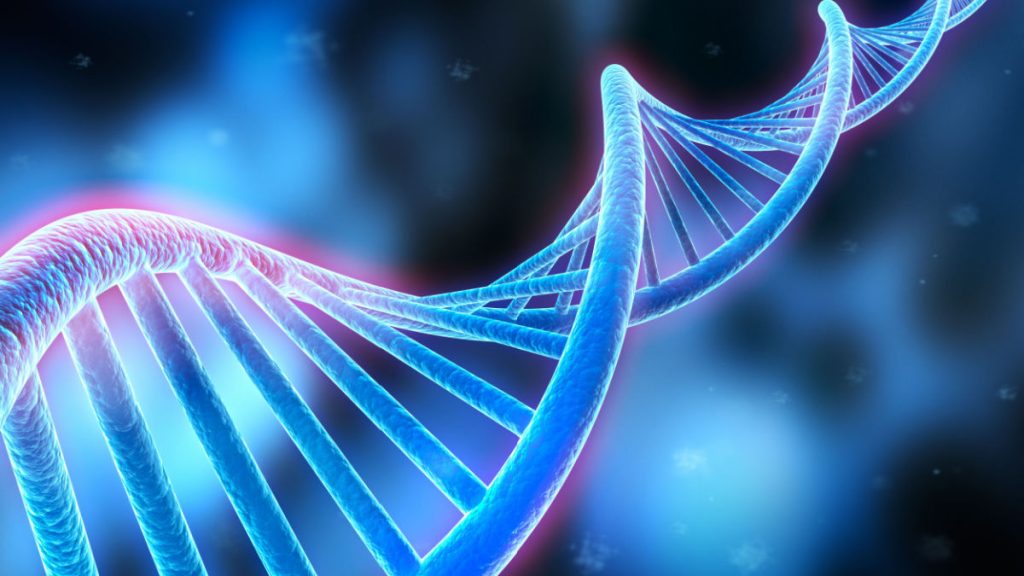
« Copy-paste » genetics
By tracing the mutation history in P. formosa, which appeared at a noticeably faster rate than in P. mexicana and P. latipinna, the team found no signs of harmful influence on their DNA, indicating a form of “genetic conversion” that plays a role comparable to the shuffling produced by sexual reproduction.
Described as a “copy-paste” mechanism, in the Amazon molly it was 10.6 times more likely to revert a new mutation to its ancestral state than to propagate it.
“When a harmful mutation appears on a chromosome, the fish often replaces it with a healthy version coming from the other,” write the authors of the new study, published in the journal Nature. “Genetic conversion is essentially random, but the fact that it generates multiple versions of the genome gives natural selection a broader range of options.”
A few years ago, researchers discovered that a South African bee had cloned itself hundreds of thousands of times.

Contact details
Address:
Farmers Forum,
36, Dominick Street,
Mullingar,
Co. Westmeath,
Ireland
Phone:
+353 (0)44 9310206
Or email us:
For technical issues please check out our FAQ's page or email - [email protected]
For general Queries email - [email protected]
Request to add event to our Calendar - [email protected]
Send us your mart reports - [email protected]
Suggestions and feedbacks - [email protected]
News Items / Press Release - [email protected]
To Advertise on Farmers Forum - [email protected]