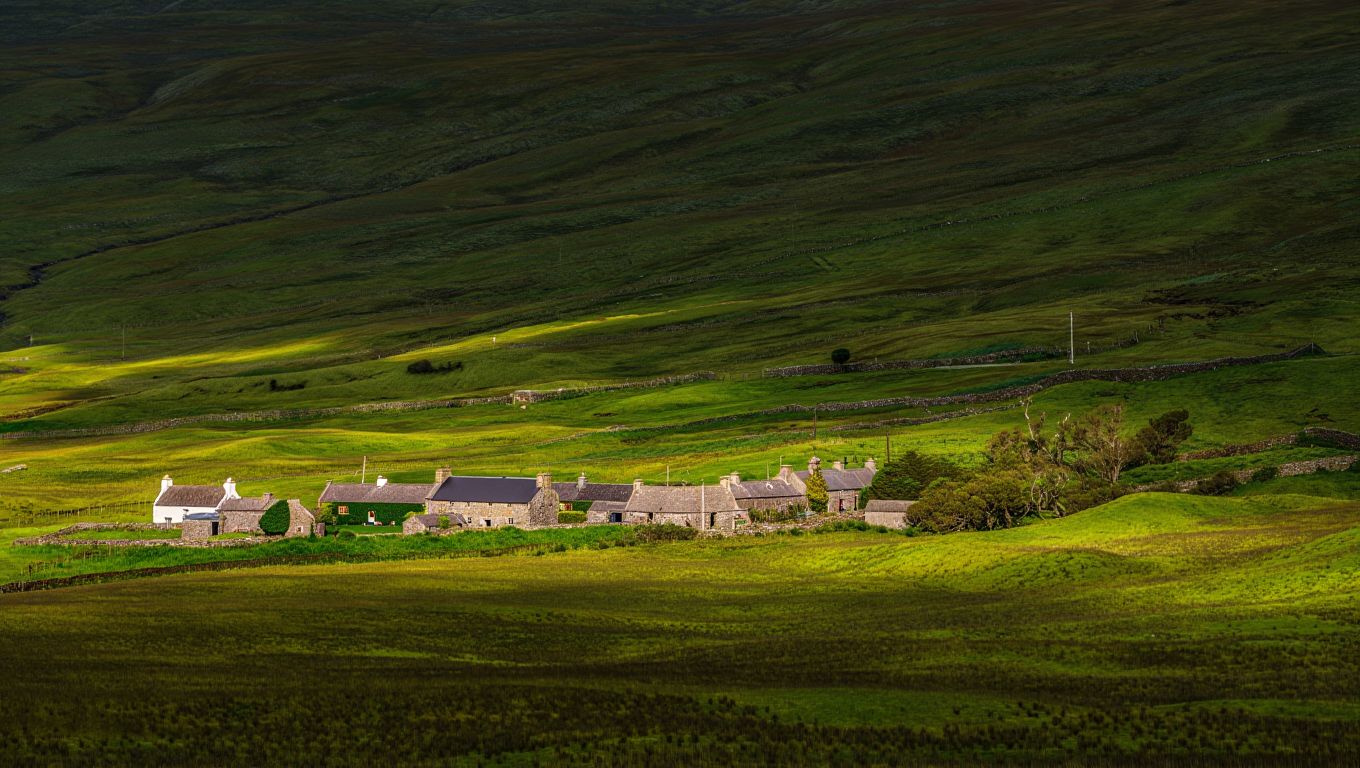
The news didn’t arrive with fanfare, just a soft ripple across heather and stone: a small Irish village tucked into the Slieve Aughty hills has been singled out in Europe for its almost unbroken hush. In late summer the air feels weightless, the roads curve between peat-dark bogs, and the sky stretches with a clean clarity that invites you to slow down.
“It’s the kind of quiet you can hear,” says one walker, pausing beside a gate where the hedges hold a faint honey scent. “The wind writes its own music, and you just stand there and listen.”
A map drawn in soft edges
These uplands are a scrim of woods, open moor, and secret turloughs that swell and vanish with the season. Trails drift through hazel and oak, then lift onto ridge lines where you can trace the blue shoulders of distant loughs. Everything is close, and yet it feels vast.
On late afternoons the hills take on a bronze sheen, with dragonflies skimming over still pools and curlews dropping their slow, liquid calls. You move without hurry, and the hours open like a book.
Why so quiet here?
The answer begins with landscape and ends with rhythm. The hills were never built for rush, their lanes too narrow for traffic, their fields parceled by old stone. Farms keep to a measured pace, and evenings fall with lamp-lit windows and early sleep.
A visitor once whispered, “I didn’t know silence could feel friendly,” and that seems right. It’s not an empty quiet; it’s a gentle presence, the kind that asks nothing and gives you time.
Low-key joys, high rewards
You don’t come here for spectacle. You come for small, steady pleasures that last longer than any rush of adrenaline. A flask on a stile, a notebook by a stream, the slow count of swans tipping the reeds.
- Walk a meandering section of the East Clare Way at first light, stop for brown bread and local honey, then drift down to a lough where reeds make a soft skirt around the shore.
Threads of history underfoot
The hills remember footsteps, from monks who mapped their days by bells to herders who moved with the seasons. Field walls hold a quiet grammar, each stone set by a hand that lifted and placed without waste.
Place names carry the old language, like a low current running beneath the modern map. Say them aloud and they shape the air, gentle syllables that keep their own courage.
Practicalities for peaceful travel
Getting here is simple, but never urgent. Buses knit from the larger towns, and a hired bike will handle the lanes if you prefer to drift rather than drive. Bring shoes that love mud, a light shell, and room in your day for the unplanned.
You’ll find a handful of guesthouses, a farm stay or two, and a family-run café where butter thumps on warm scones. Book ahead in high season and keep your plans flexible enough to follow the weather.
Food that stays with you
The quiet threads through the kitchen too. Think simple plates done well: trout with bright lemon, earthy beetroot with goat’s cheese, and potatoes that taste of soil and sun. Tea is poured like a promise, and nobody rushes the last cup.
If you’re lucky, you’ll catch a small session, a fiddle threading a reel through a back room while locals nod into the tune. Even the music feels measured, built for listening more than applause.
Keeping the hush intact
Silence is a shared resource, and here it’s treated like a commons. Keep to waymarked paths, pocket your litter, and step aside on narrow lanes for tractors holding the village’s real clock. The hills are more resilient than they look, but they repay care.
A local put it simply: “Take your time, and leave it behind.” In a place like this, the best souvenir is the way your pulse slows, a rhythm you can carry back to the loudest street you know.
When to go, and how it feels
Late summer brings long twilights, soft rains, and the deep green afterglow of a wet year. Mornings start cool and silver, afternoons warm to a mild blue, and evenings close with a single star above the dark bog.
On some days the mist sits low, turning hedges into a line drawing and loughs into a quiet mirror. On others the light breaks clean, all edges and sky and bright, skipping ripples.
What you carry home
You arrive with an overfull mind and leave with a pocket of space. The village doesn’t change who you are, but it changes your pace, and that may be the most modern luxury left. To spend a few days where the world stays soft and hours keep their shape is to remember how to move without noise.
Some places demand to be seen. This one asks to be heard—in the rustle of birch, the turn of a small key in an old door, the long exhale of wind across the heather. And in that quiet, you may find the summer you meant to have all along.

The name of this village?????
No link to guesthouse or farm seats?
Liam Kennedy
Liam Kennedy is a journalist at Farmers Forum, covering both Irish and global agricultural news and market developments, delivering practical reporting and in-depth analysis for the farming community.….and writer of beautiful poetry
What’s the village?