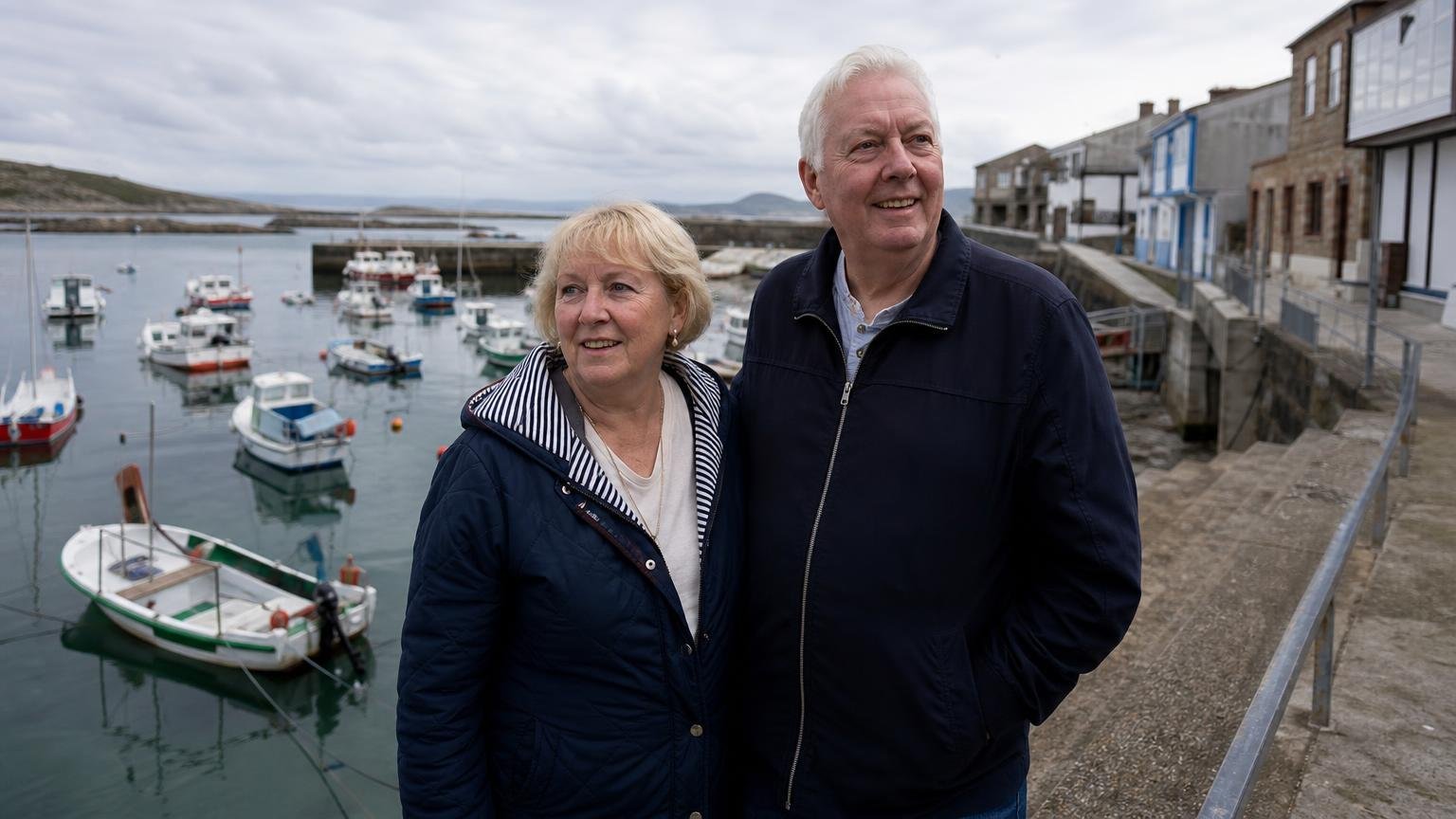
The western edge of Spain has a way of quieting noise and amplifying light. On a sloping street above a granite harbour, two people from Listowel found air that felt familiar, and sea that felt new. They thought they were visiting for a month, but the calendar had other plans.
From Kerry to the edge of the Atlantic
They came from a town of bookshops and fairs, where the River Feale slides under stone arches and gossip moves like soft rain. “We loved the market, the chats, those golden evenings,” said Maeve, who taught history before the pair packed their final boxes. “But we kept pointing at maps, and the ocean kept pointing back.”
Galicia’s northwest felt anchored, yet always moving. The Costa da Morte looked like Kerry after a storm, but with sharper light and a steadier pulse. “It was the edge of a map that didn’t feel like an edge,” said Tom, who had fished the Shannon and dreamed of wider swell.
Settling in Muxía
They rented first in Muxía, a fishing town where granite meets foam and cafés serve steam in tiny cups. From their balcony they watched percebeiros inch along slick rock, balancing danger and livelihood on the morning tide. “You learn the word bravo, meaning fierce sea, very quickly,” Maeve said with a laugh, waving to neighbours stringing nets and shaking out blue tarps.
A priest in a wool jumper pointed them toward a spare flat, and an elderly widow pressed figs into Maeve’s palm. “That was the moment I felt kept,” she said. A key changed hands, and suddenly the view belonged to their days.
The spell of September
They arrived in late summer, and it was September that sealed the deal. “The heat softens, the wind settles, and the Atlantic turns silvery at six in the evening,” Tom said, watching chop fade into long lanes of light. Crowds thin, the roads feel patient, and the scent of pine slips in from the hills.
“The sky goes that particular blue, as if someone washed it with salt,” Maeve added. “You can walk for hours and meet only cats and old men talking about mackerel.”
What September gives
September here feels like a handshake, warm but not clammy, and it teaches habits that you end up keeping:
- Long, late walks on quiet promenades, where one gull can sound like company and the horizon looks reachable.
The sun slides low, making the granite glow and the water think it’s a mirror, just until the swell shrugs and breaks the spell.
Weather, faith, and a festival of stone
On the headland, the Santuario da Virxe da Barca sits among boulders, a chapel pitched against weather and time’s persistent spray. In early September the romería arrives, drums in the distance and stalls selling almonds that crack like tiny thunder. “I cried at the first procession,” Maeve admitted, “because the wind kept singing, and the church bells knew the tune.”
That mix of roughness and welcome felt exactly right. “You need a coat, but you keep your swimsuit nearby,” Tom said, grinning at the logic of it all.
A day made of small rituals
Mornings start with a tostada, tomatoes mashed into bread that still remembers the oven. Tom checks the harbour, counts the boats like beads, and notes the wind’s mood before the cafés fill with low talk. Maeve opens a thin novel, underlines a word, and watches how the light redraws the room.
By late afternoon the water invites, cool but not daring, and they wade past slick weed into a brief, bracing silence. “You come out awake, and the day resets its spine,” Maeve said, twisting a towel into a neat rope.
The taste of staying
Dinner leans on octopus, potatoes freckled with paprika, and a glass of crisp Albariño that sparkles like talk at a good table. The fishmonger nods at Tom’s careful questions, correcting a verb with a wink while weighing a bright-eyed hake. “I never thought I’d love a queue this much,” Tom said, “but every line is a lesson if you listen to the jokes.”
The language comes in layers, as stubborn as barnacles, and as satisfying when they finally loosen. “You learn to say the weather, then you learn to say how it feels,” Maeve said, touching her chest for the second part.
Edges without hurry
They measure weeks in tides, not meetings, in footsteps on promenades, not spreadsheets. When it rains, the town smells like hot stone and pine needles, and the church steps shine like fresh-printed ink. On clearer days the ocean writes its long sentence, clause after clause, and leaves the rest to the next wave.
“People think retirement is a door closing,” Tom said, watching clouds edit the sun. “Here it felt like a door held open, and September kept it there.”
Weathered, and staying
They still miss Listowel, its fast wit and festival rush, but the edge of Galicia holds their pace and answers their questions. “We found a month that behaves like a home,” Maeve said, knotting her hair against a playful gust. The wind rose, the sea breathed, and the town went about its business, steady as a boat with a practiced hand.
If you ask why they stayed, they’ll point to the sky just before supper, when the day turns liquid and the stones turn warm. “That’s our season,” Tom said softly, “and it keeps arriving right on time.”

Surname of the Listowel couple would make it seem more authentic I think.
We also chose Galicia ten years ago to retire and have never been happier.
Congratulations on winning the rose of Tralee up in Westmeath!!!
Fabulous writing.