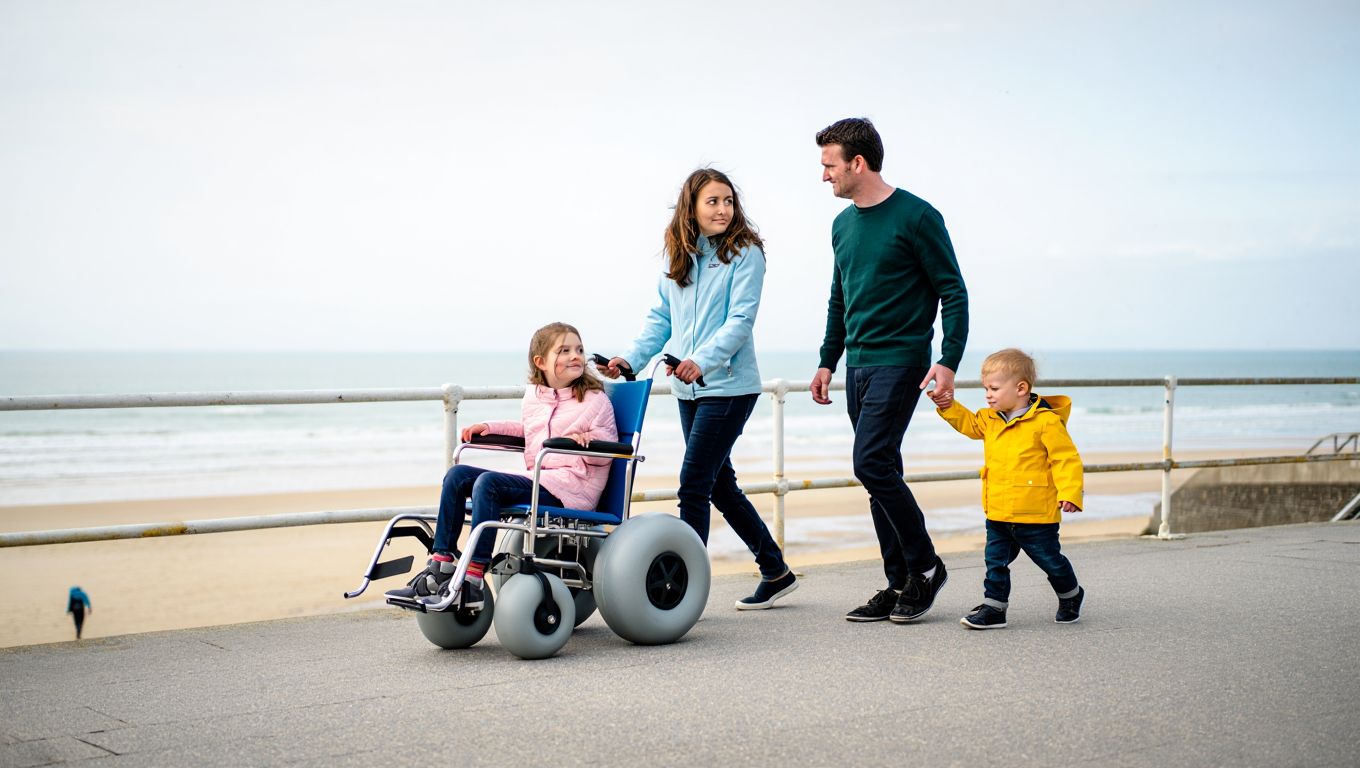
A salty breeze rolls over timber planks, and a child’s laugh cuts through the gullsong. A parent taps a brake, nudges a wheel, and the chair glides toward the waterline. It feels astonishingly simple, and for many Irish families it is suddenly possible.
Across the island, seafronts are changing in quiet, practical ways. Ramps meet sand with confidence, beach mats unravel like blue ribbons, and wide chairs with balloon tyres float over dunes. “We went without fuss, we left with memories,” says one Galway father, still damp from a June splash.
Why access changes everything
When a path is continuous, choices get bigger. A beach that is step-free doesn’t just welcome a wheelchair; it invites prams, aching knees, and tired ankles. It softens the day for carers, and it restores agency to the person who wants to feel spray, not just watch from the car park.
“Access is freedom, but it’s also dignity,” says a volunteer coordinator from the west coast. With a booking slot and a friendly briefing, a beach wheelchair puts the tide within reach of the hand.
From pilot mats to permanent routes
What began as trials on busy promenades is maturing into durable infrastructure. Councils are fitting rails, widening boardwalks, and aligning hard surfaces with lifeguard zones. Seasonal mats appear with the first sunbreak, then stay through late September if storms stay gentle.
You can see it in small decisions that matter a lot. A kerb is shaved to flush, a gate is left openable, a gradient holds to standards even where dunes shift. “The brief is simple,” says an engineer in Cork. “Make the route obvious, keep it smooth, and let the sea do the talking.”
Families are re‑mapping summer
Trips that once demanded military logistics now feel like picnics. Parents compare tide tables, not staircase counts. Teenagers pick a cove for the café’s ramp, then stay for golden hour selfies on the slipway.
A mother in Meath put it plainly: “For the first time, we planned our whole summer around access, not around avoidance.” She listed three counties, four beaches, and one ecstatic dog that finally chased the foam.
What makes an inclusive beach work
Real inclusion is built from layers, not just a single chair. It starts with parking that is close and marked. It continues through toilets with room to turn, and ends with a seat in the shade when the sun flexes its rare muscle.
Stewardship is the secret ingredient. Mats need sweeping, chairs need checks, and staff need simple training. A cheerful five‑minute demo beats a laminated essay. “Show me the brake, show me the belt, now let’s hit the shore,” laughs a Tramore lifeguard.
How to plan your accessible day out
A little prep makes the sea feel closer, even before you see the horizon.
- Check booking times for beach wheelchairs, confirm collection points, review tide windows, and pack a warm layer for Atlantic‑style mood‑swings.
The human ripple effect
Access starts practical, then turns poetic. A sibling can push a handle and become the day’s quiet hero. A grandparent can sit at toe‑tickling distance and tell sand‑sticky stories. A swimmer nods to a rolling chair, reads the shared space, and shifts with easy grace.
Local economies notice the shift. Ice‑cream melts into more sales, and cafés learn the dance of chairs and tables. A ramp earns its cost on the first rain‑threatened evening when everyone still comes for hot chips.
Beyond the shore: design that travels
What works on a strand often works in a park. The same gentle grades, the same clear wayfinding, the same invitations to rest and linger. Coastal thinking has a humble genius: assume weather will happen, assume people will bring stuff, and make the simplest route the best.
A physiotherapist from Clare framed it beautifully: “Every ramp is a promise, and every promise needs maintenance.” Keep the sand brushed, keep the loan forms simple, keep the phone lines answered when the sky turns blue.
Where to next
Demand breeds momentum, and momentum sharpens craft. The next wave is better storage, longer mat spans, and more chairs sized for kids as well as for taller bodies. Digital maps will pin real‑time status, and notices will say “welcome” before they list the rules.
Most of all, the habit will take root. Families will expect access, and councils will plan for that expectation from sketch to shore. On bright mornings and grey ones, wheels will hum over planks, and Ireland’s edge will feel a little more open, a little more ours.

Contact details
Address:
Farmers Forum,
36, Dominick Street,
Mullingar,
Co. Westmeath,
Ireland
Phone:
+353 (0)44 9310206
Or email us:
For technical issues please check out our FAQ's page or email - [email protected]
For general Queries email - [email protected]
Request to add event to our Calendar - [email protected]
Send us your mart reports - [email protected]
Suggestions and feedbacks - [email protected]
News Items / Press Release - [email protected]
To Advertise on Farmers Forum - [email protected]