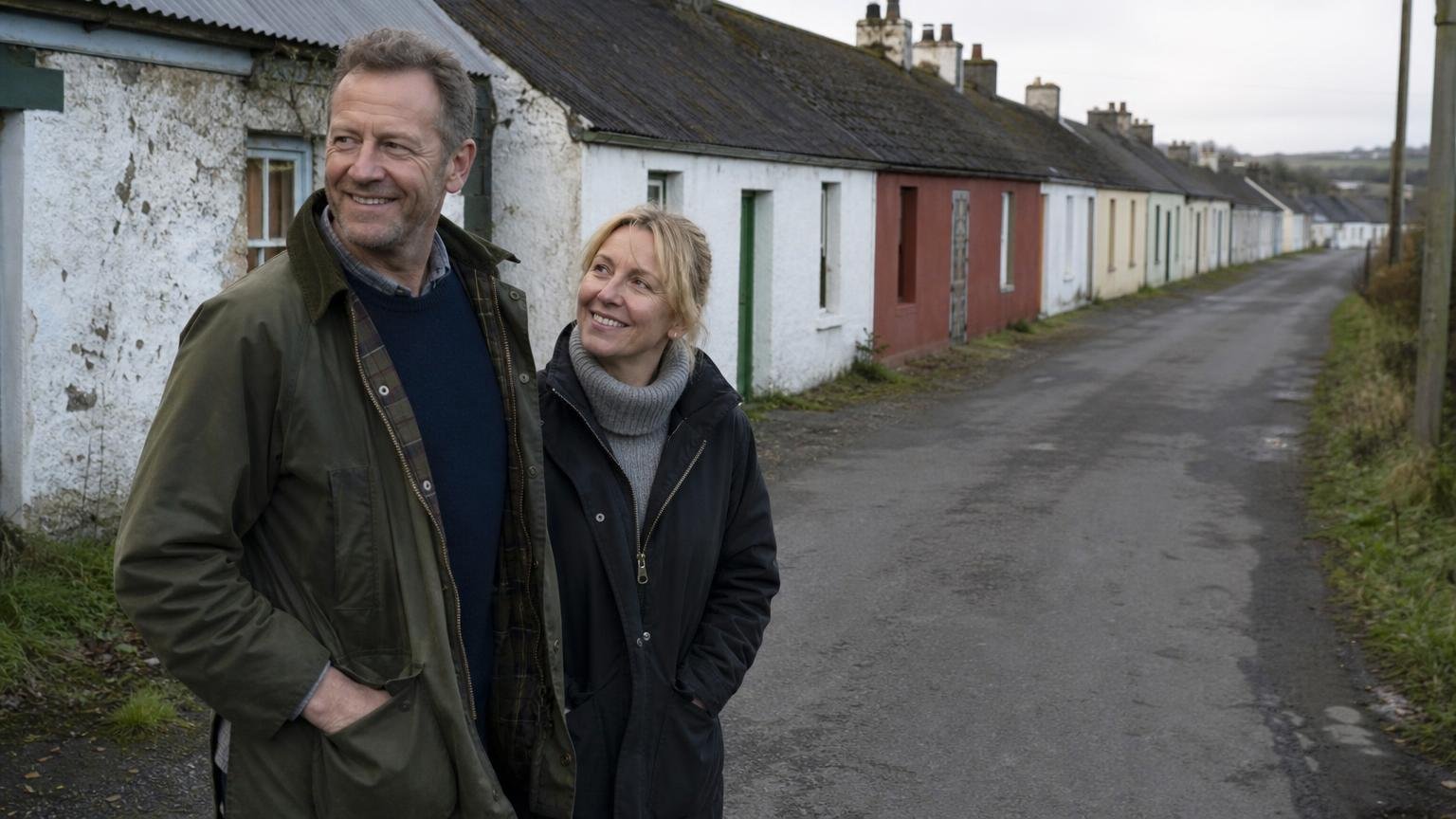
They left a polished city for a wild coast, trading lift buttons and courtyard echoes for gulls, gorse, and a salt-scrubbed horizon. In one deal, a Hamburg apartment became a string of cottages on Ireland’s westerly edge, and the math felt almost like a prank. “In the old neighborhood,” Matthias said, “we couldn’t buy a garage for what we spent here.”
From HafenCity to Atlantic Weather
They were mid-career, mid-crisis, and mid-sentence when a listing turned into a journey. Anja taught design online; Matthias coded and consulted, both work that could ride a broadband line as well as a train line. Friends said they were brave; the couple called it arithmetic, a simple swap of costs for time.
The first week blew them sideways with Atlantic weather and pub welcomes, the kind of hospitality where strangers ask your story and then add a chapter of their own. “We came for the wind,” Anja laughed, “and we stayed for the quiet.”
The Street That Waited
West of Westport, near bog-land and shoreline, they found a huddle of limewashed cottages strung like pearls along a single boreen. Some had sagged into sleep, others hummed with sparrows, but the bones were good and the chimneys kindly.
The agent’s key turned like a clock, opening door after door, and with each room the couple’s plans unspooled. “This isn’t a project,” Matthias whispered, “it’s a place to become.”
Numbers, Nerve, and the Long View
Their Hamburg flat had appreciated into a museum piece: admired, expensive, and just a little untouchable. Here, for less than half that figure, they held an entire streetscape, a stage set for future stories. “Honestly,” Anja shrugged, “we looked at the receipt and said, we couldn’t buy a garage there for that.”
Still, cost is only the headline; the footnotes were heavy with labor. Roof slates to rehang, damp to outsmart, windows to rescue, and floors to steady. They chose to restore rather than replace, letting the old timber argue with new tech until a compromise held.
Building With, Not Over
They decided early to be guests, not conquerors, asking neighbors for the history that planning files never hold. The postmistress mapped out families; a retired mason taught them lime and patience. In a pub snug, they learned the difference between weather and climate, and why you never wager against the wind.
To anchor themselves, they made a short list of promises:
- Keep one cottage for home, one for neighbors in need, and turn the rest into slow-stay rentals and short artist residencies.
- Hire local craftspeople, buy local materials, and pay on Fridays with biscuits on Thursdays.
- Insulate without smothering, respect the house’s breath, and preserve the mischievous tilt in the stairs.
Work That Feels Like Weather
Mornings began with tools and tea, afternoons with supply runs and questions. A plumber explained how old pipes sing, while an electrician translated a nest of wires into readable prose. “Every day the place teaches us,” Anja said, “and every night it forgives us.”
They balanced romance with rubbish, hauling skip after skip, then sitting on the wall to watch evening light lace the grass with silver. On Saturdays they learned the rhythms of GAA matches, on Sundays the rhymes of fiddle tunes at a kitchen table.
A New Kind of Street
By spring, two cottages were warming, a third almost ready, each one keeping its old soul with fresh lungs and knees. They named them after small things—larks, rushes, nettles—part charm, part reminder to go slow.
Bookings came quietly: a composer seeking silence, a nurse between shifts, a young family chasing a last pre-baby escape. “We wanted a street with lights on,” Matthias said, “not a museum of lockups.”
They built a tiny library from a linen press, stocked it with poetry and how-to guides, and set a brass bell by the gate. Ring once for a chat, twice for tools, three times for cake if it’s your birthday.
The Calculus of Value
Place makes its own accounting, one where cliffs earn compound interest and neighbors add daily dividends. Some days the fog erases the Atlantic, and on others the sea writes itself in capital letters. “Back there we had status,” Anja said. “Here we have space.”
The couple doesn’t evangelize; they apologize for the luck, and caution that rural life has edges. Winters are wet, distances are long, and patience is as necessary as plumbing. But the ledger keeps balancing, paid in time and names learned at the shop till.
“We used to measure value by square meters,” Matthias said, “now we measure by sky meters, by how much horizon we can see before coffee cools.” He smiled the slow smile of the recently converted, then corrected himself with a grin. “Not converted—just returned to something we never had.”
On clear nights the lane goes quiet, and the cottages glow like a necklace laid down by hand. The couple sit on the step, trading plans for the next day’s repairs, listening as the Atlantic tests the stones and finds them sound. And sometimes, just once, they say it out loud, a phrase that still feels like luck. “For the price of a parking place, we found a place to park a life.”

Great writing, as ever.