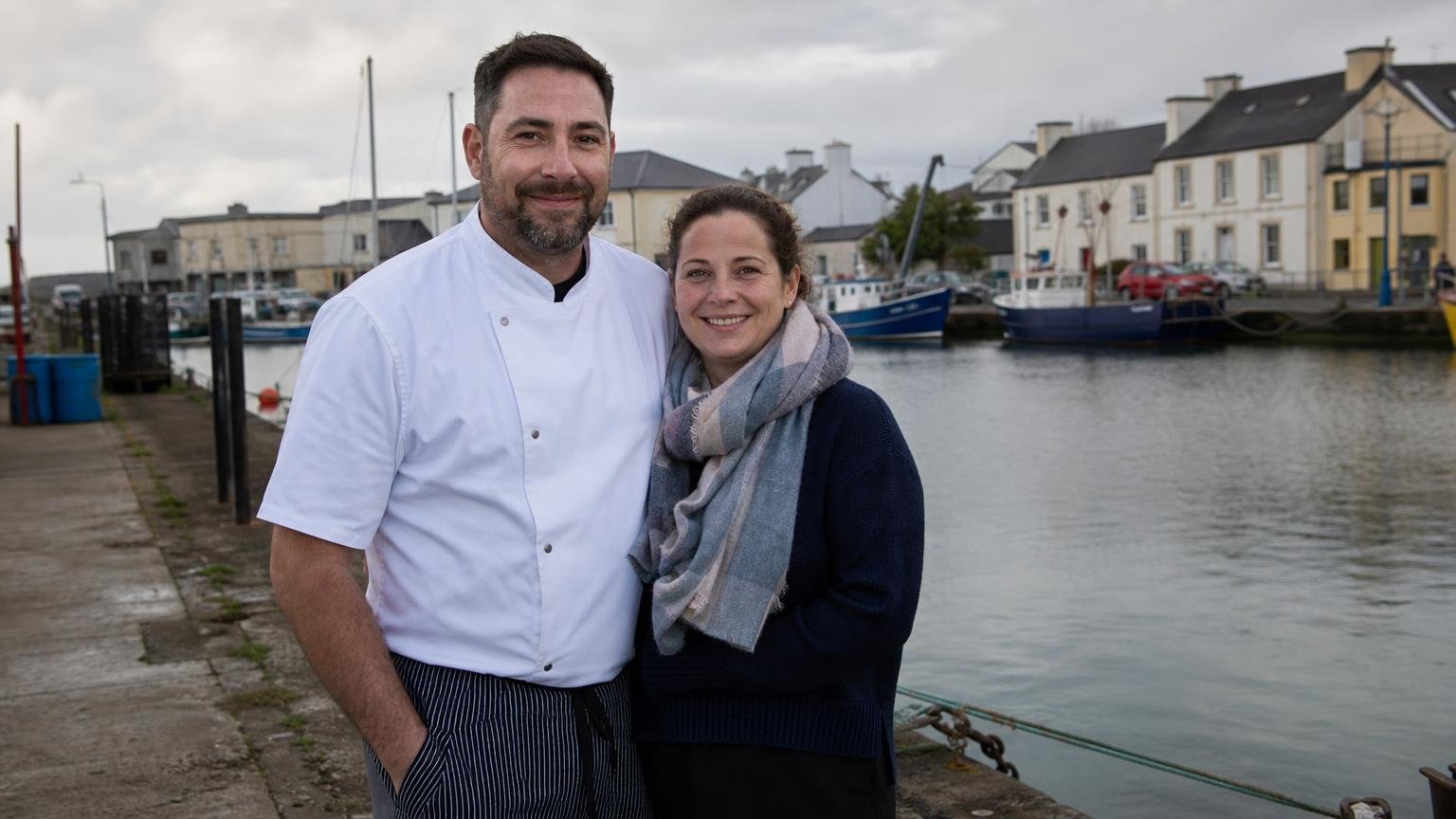
They arrived on the edge of the Atlantic with a van full of knives, a sourdough starter, and more nerve than sense. He was a French chef from Lyon, she was the maître d’ with a map in her head and a ledger in her pocket. What they found was a squat building of salt-streaked windows, gulls heckling the sky, and a harbour that glimmered like spilt steel. “It was love at first gust, not just first sight,” she said, laughing over the shrill of a kettle. “The wind told us to stay.”
The leap that didn’t look logical
Back in France, life was elegant and predictable. Bookings lined the weeks, suppliers delivered with clockwork grace, and Sundays had a familiar clink of glassware. But there was an itch they couldn’t name, a hum of restlessness under the skin. “I wanted to cook to the sound of tide, not traffic,” he said. They sold the apartment, auctioned plates they once cherished, and taught themselves the art of packing a life into cardboard.
On the drive west from Dublin, rain stitched the sky. They kept going anyway, past hedgerows and bogland, toward a coastline that kept changing its mind. The restaurant waited, doors a bit swollen, floorboards a bit honest. She ran her palm along the bar and said, “You’ll do.” He glanced at the stove and whispered, “Bon.”
First service, first storm
The sea wrote the opening menu. Mussels when the boats came in heavy, hake when the nets smiled, crab whenever the pier boys texted at dawn. “The trick,” he said, “is to season with weather.” The second trick was to learn the local names: pollock as “lythe,” dogfish as “rock salmon,” periwinkles just “winkles,” and absolutely no argument about the best potatoes.
Their debut night was a near-miss ballet. The fryer sulked, a gasket sighed, and a tray of brioche went bronze a minute too soon. But plates came back clean. A fisherman at Table 3 raised a glass and declared, “Fair play, chef. That butter has muscle.” Later, scrubbing pans in the quiet, they heard the harbour slap the wall and felt brave again.
What they changed, and what they kept
They didn’t repaint the whole place; storms had already done tasteful distressing. They kept the view unframed, the windows a little wild. But they sharpened the rest:
- A shorter menu, daily edits, and hand-chalked notes that confess what the tide didn’t bring.
He swapped fuss for focus. A plate might offer just three ideas: sea, field, fire. Mussels with cider and lovage. Hake with brown butter and dillisk. A tart shell holding caramelized onions, Comté, and an untidy crown of dressed beach herbs.
Market grammar, Atlantic accent
“French technique is a language,” he said, “but the accent here is pure Atlantic.” Butter grows bolder with a swipe of dulse. A bisque gets taller shoulders from a splash of cider. Apple cake smiles wider when kissed with buckwheat and a line of salt.
She learned the tides of custom. Early dinners when the surf is up. Late ones after a match. Tea that must be hot enough to char your worries. A farmer will trade the first kale if you lend him two crates and a listening ear. “Hospitality,” she said, “is simply saying ‘I see you’ and then saying it again with bread.”
Community, by the plate and by the pier
They hosted a midwinter supper with candles and the door propped open for the smell of woodsmoke. Someone brought a fiddle. Someone else baked a loaf dense as memory. He served chowder so patient it felt like a blessing. She poured wine like a promise.
“People here don’t clap after every service,” she said, “they bring you eggs, advice, and the weather forecast.” They learned which storms rename the horizon, which swells coax the surfers, which mornings the market will try to sell you all the parsley in Connacht for a smile and a coin.
The hard parts they didn’t Instagram
A compressor died at sunset. Insurance took its time to believe in wind. Some weeks the numbers sulked and the bread rose out of spite. “I discovered patience I never ordered,” he admitted. “And I learned how to ask for help without decor,” she added.
They made rituals of resilience: a staff espresso facing the bay, an afternoon walk to count the buoys, a notebook where they list small victories, like “perfect mackerel skin” or “table 7 laughed twice.”
Why the food tastes like a decision
“Leaving wasn’t escape,” he said. “It was arrival.” A place can edit you. Salty air trims vanity. Distance from old habits loosens your hand. He plates with less garnish and more nerve now. She greets with more steadiness and less scripted charm.
A regular once told them, “Your chowder tastes like it knows where it’s from.” They keep that on a Post-it near the till, under a magnet shaped like a little red boat. When service snarls, they look at it, breathe, and try again with warmer hands.
Tomorrow at the waterline
The future is a queue of tides. There’s talk of a smoker by the back wall, of pickled sea radish in small patient jars. A spring lunch where dessert is simply strawberries, crème crue, and a stubborn spoon. Plans drawn lightly, in pencil that the sea can smudge.
Night folds in. The kitchen hum quiets. Out front, the windows hold the last strip of blue. She stacks menus. He covers the starter. The harbour goes on with its perennial argument. They switch off the lights and step outside, pockets full of keys, coats full of salt. “À demain,” he says to the dark. She answers the wind: “We’re not going anywhere.”

Contact details
Address:
Farmers Forum,
36, Dominick Street,
Mullingar,
Co. Westmeath,
Ireland
Phone:
+353 (0)44 9310206
Or email us:
For technical issues please check out our FAQ's page or email - [email protected]
For general Queries email - [email protected]
Request to add event to our Calendar - [email protected]
Send us your mart reports - [email protected]
Suggestions and feedbacks - [email protected]
News Items / Press Release - [email protected]
To Advertise on Farmers Forum - [email protected]