
In an era of bingeable series and snack-sized content, few films dare to demand patience the way Martin Scorsese’s The Irishman does. Across three and a half hours, this elegiac gangster thriller unfolds with the measured confidence of a master, turning time itself into character and theme. What sounds intimidating becomes quietly hypnotic, a slow burn whose embers glow long after the final frame.
A monumental crime saga
Scorsese frames the rise and reckoning of Frank Sheeran, played with granite stillness by Robert De Niro. Drawn from Charles Brandt’s nonfiction book I Heard You Paint Houses, the narrative traces Sheeran’s path from war-scarred truck driver to Mafia foot soldier and reluctant confessor. Anchoring the film’s tragic core is the magnetic Jimmy Hoffa, whom Al Pacino plays with operatic bravado and heartbreaking vulnerability. Their friendship is both pact and timebomb, ticking through decades of labor politics and organized crime’s shadowy alliances.
Time as structure, not stunt
At 209 minutes, the length isn’t indulgence but architecture. Scorsese and editor Thelma Schoonmaker carve a patient rhythm, letting scenes breathe until their emotional contours emerge. The film loops through memories like a weathered confession, using a road-trip frame that becomes a journey through culpability and forgetting. Each chapter lays another layer of institutional rot, familial cost, and the insidious calculus of loyalty.
“Ideally, I’d love people to go to a theater and see it on a big screen, start to finish. But at home, it can work too—if you really give yourself to the movie, without checking your phone.”
Performances carved in stone
De Niro’s Sheeran is a study in guarded stillness, the quiet man who executes orders with mechanical calm. Pacino’s Hoffa is a glorious counterpoint, a bundle of stubborn pride, wounded dignity, and volcanic timing. The film’s stealth MVP is Joe Pesci, whose Russell Bufalino embodies menace without raised voice, a man who can end a life with a whisper and a gentle shrug. Around them, Stephen Graham, Harvey Keitel, Anna Paquin, Bobby Cannavale, and Jesse Plemons deepen the tapestry with lived-in, unshowy precision.
The much-debated de-aging
The digital de-aging has drawn mixed reactions, and the occasional plastic glint is real. Yet it quickly recedes as character and craft take over, transforming a tech talking point into a haunting device about memory’s unreliable surface. Faces seem smoothed by time even as bodies carry the weight of unerasable history, and that tension becomes strangely, piercingly human.
A patient epic that earns every minute
The Irishman’s payoff isn’t in gunshot crescendos, but in the lingering quiet of moral aftershocks. Scorsese decelerates the gangster myth, showing the slow corrosion of the soul and the unspectacular banality of a life spent. Dining rooms feel like confessionals, cars like coffins, and late-night corridors like purgatories where choices echo in low, resigned voices. By the final stretch, the runtime feels not long but lived, like years that slipped away while no one was looking.
- Because the performances are a masterclass in controlled ferocity, calibrated regret, and unsentimental truth.
- Because the film reframes the gangster epic as a meditation on time, power, and consequence.
- Because the patience pays off in an ending so quiet it roars with finality.
- Because Scorsese’s craft—staging, pacing, needle-drops—remains exquisitely assured.
- Because, flaws and all, the de-aging becomes thematically poignant, not merely technological showmanship.
America remembered, and forgotten
Beneath the mob lore lies a haunted portrait of postwar America—its unions, backroom deals, and the transactional nature of ideology. Hoffa’s crusades collide with underworld necessity, and the film suggests that history is often a ledger of favors owed. Scorsese isn’t chasing conspiracy thrills, but the chilling arithmetic of cause and effect. Each decision closes a door, each alliance narrows the path, until free will feels like a narrowing tunnel.
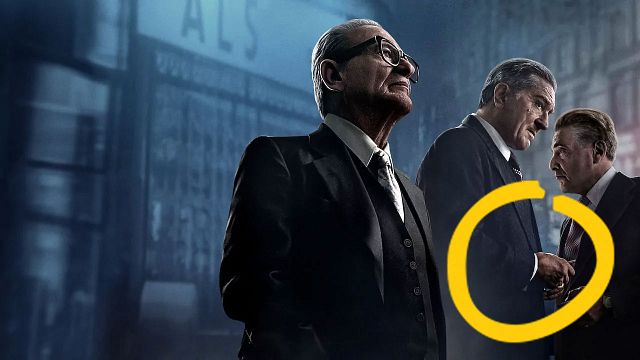
The silence after the storm
What remains is the unglamorous reckoning—the crackle of a fluorescent bulb, the rattle of a walker down a sterile hallway. The industry of violence has no pension, and the trophies are shabby, a room with a half-open door, a request to leave it ajar for ghosts that never truly arrive. The Irishman is less a rise-and-fall fable than a hospice for bad men, where the bravado fades and only memory and consequence persist. By then, the 3h30 have become the point: a lifetime paced at the speed of remorse.

Contact details
Address:
Farmers Forum,
36, Dominick Street,
Mullingar,
Co. Westmeath,
Ireland
Phone:
+353 (0)44 9310206
Or email us:
For technical issues please check out our FAQ's page or email - [email protected]
For general Queries email - [email protected]
Request to add event to our Calendar - [email protected]
Send us your mart reports - [email protected]
Suggestions and feedbacks - [email protected]
News Items / Press Release - [email protected]
To Advertise on Farmers Forum - [email protected]