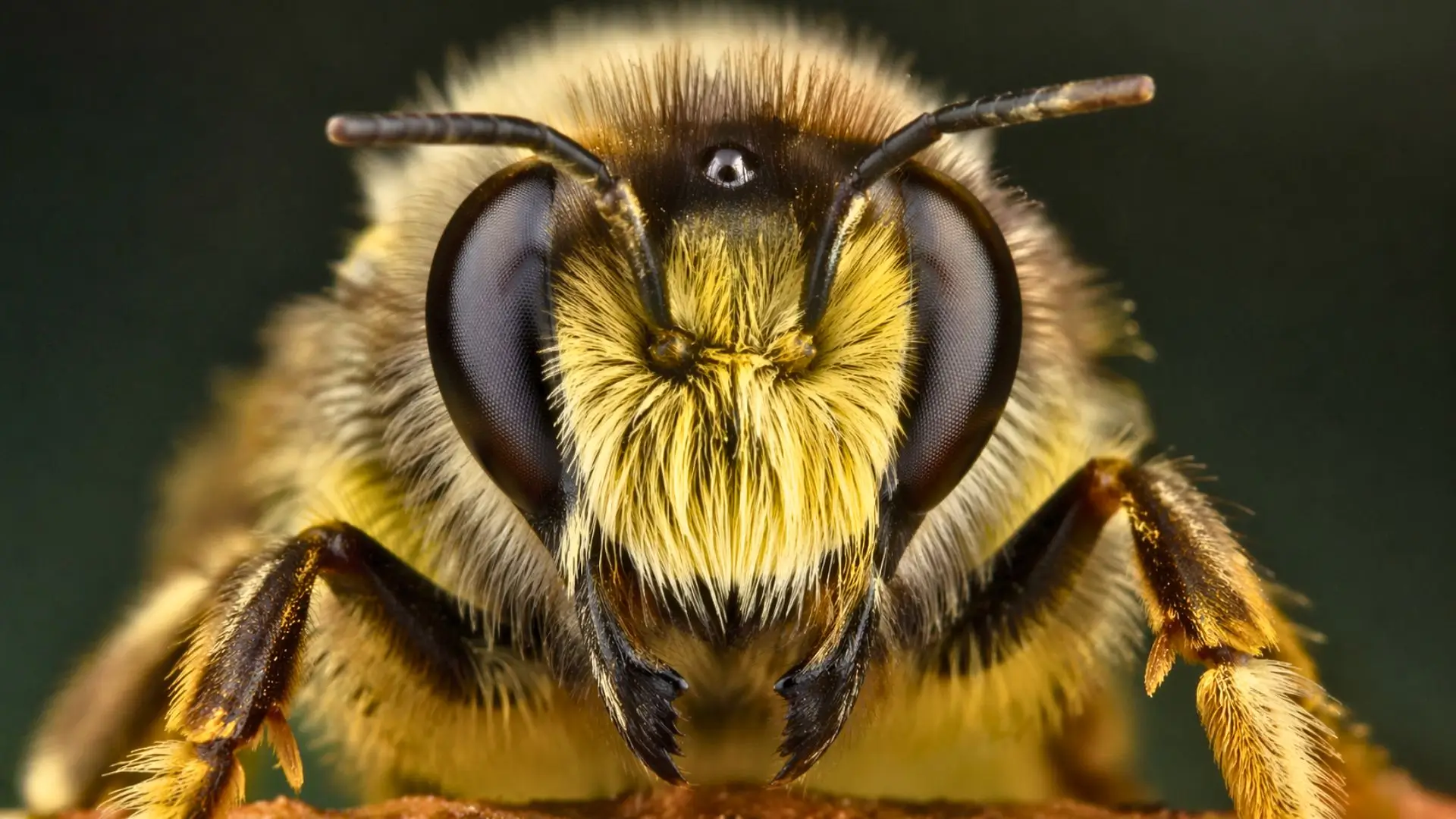
In a cave in the Dominican Republic, researchers identified fossilized honeybee nests lodged in mammal bones. Published in late 2025, the study confirms an unprecedented behavior among burrowing bees and sheds light on a vanished ecosystem, shaped by giant barn-owls and the scarcity of soil.
In the Cueva de Mono, a too-smooth mandible revealed fossil nests where the team sought evidence of extinctions
At first, the team was digging in the Cueva de Mono to reconstruct recent animal disappearances. Then a hutia mandible drew the researcher’s gaze. Its inner surface, too regular, stood in contrast to the rough appearance expected. This tiny detail set everything in motion.
While cleansing the fossils, Lazaro Viñola López noticed smooth, almost concave cavities. Yet ordinary sediment filling leaves irregular textures. This anomaly initially suggested a wasp nest. Subsequent comparisons steered the investigation toward another lead.
CT scans showed six cells nested within a tooth and gave a name to these traces, Osnidum almontei
Micro-CT scans revealed a clear architecture compatible with brood cells of burrowing bees. Their size and the extremely smooth inner walls point to a group probably close to the Halictidae. The authors thus described a new fossil trace, rather than a body of an insect.
The chosen name, Osnidum almontei, designates these fossilized nests found in dental sockets, a hutia vertebra, and even a sloth tooth. No complete insect was preserved. Nevertheless, the structures are enough to establish a new behavior in the known record.
One cavity even yielded six interlocking cells, a likely sign of reuse of the same site across generations. This detail changes a lot. It reveals a form of fidelity to the nest, rarely documented in such fossils, thanks to the 3D scanner.
Around the cave, the limestone lacked soil; inside, giant barn-owls bones offered perfect refuges
To understand this choice, one must look at the entire ecosystem. Giant barn-owls inhabited the cave for generations and piled up their prey there. Hutias, birds, reptiles and sloths crowded in. Little by little, the bones formed a stock of shelters at the heart of the sediments.
Outside, the karst landscape offered little loose soil for digging. Inside the cave, by contrast, fine deposits accumulated around the fossils. The solitary bees exploited this rare combination. They found in the bone cavities a well-suited refuge and protected refuge.
This discovery broadens the bees’ history, and it is already pushing paleontologists to reexamine every fossil
This case reminds us of a fact often forgotten: most bees do not live in a hive. Many nest alone and adopt a wide range of strategies. Yet regularly using buried bones had never been documented. That is why this discreet diversity fascinates specialists so much.
From now on, teams inspect each fossil before any cleaning. A mundane filling can hide major behavioral information. This vigilance changes the method, but also the perspective on tropical caves. Moreover, it opens a new field for paleoecology.
Thousands of remains still await thorough study in the Cueva de Mono. Other traces, or even other species, could emerge from this material. Here lies the true lesson. Even a fossilized bone can still tell a second life.

Contact details
Address:
Farmers Forum,
36, Dominick Street,
Mullingar,
Co. Westmeath,
Ireland
Phone:
+353 (0)44 9310206
Or email us:
For technical issues please check out our FAQ's page or email - [email protected]
For general Queries email - [email protected]
Request to add event to our Calendar - [email protected]
Send us your mart reports - [email protected]
Suggestions and feedbacks - [email protected]
News Items / Press Release - [email protected]
To Advertise on Farmers Forum - [email protected]