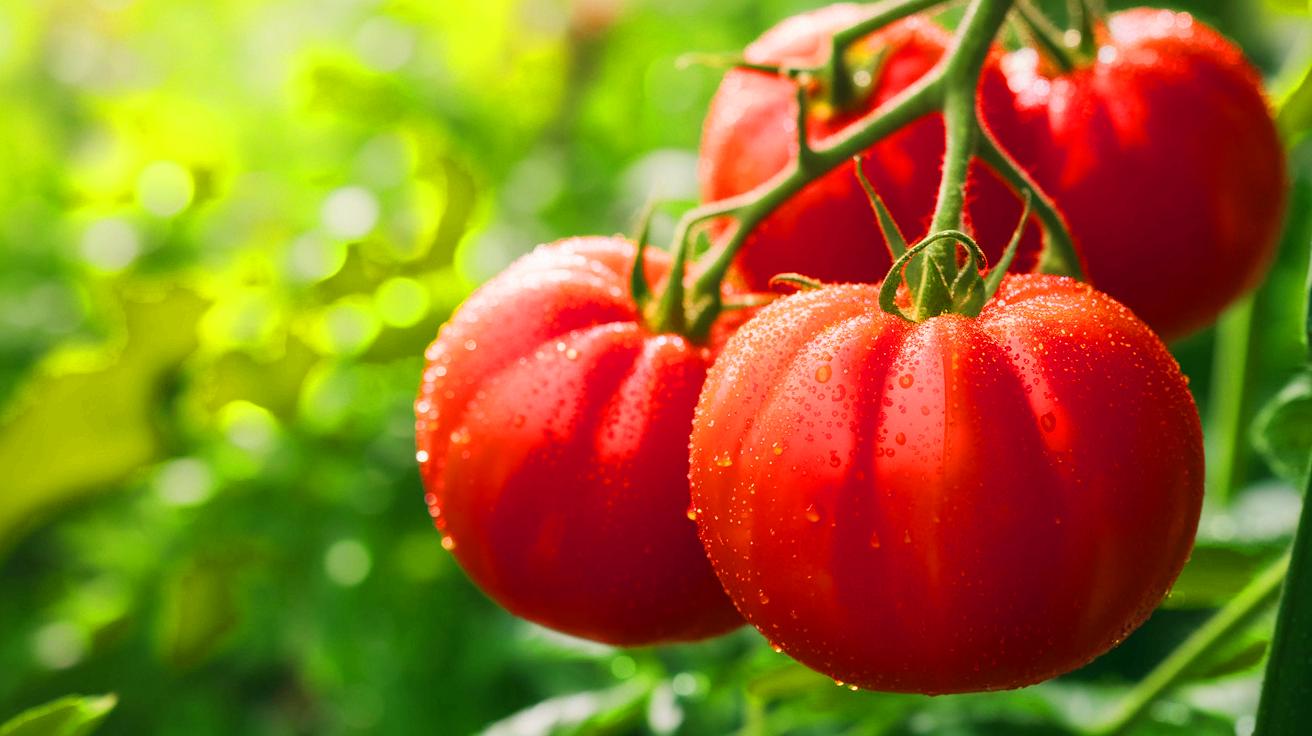
The discovery of new genetic modification methods holds the potential to transform agriculture in significant ways. Researchers at Johns Hopkins University, in collaboration with the Cold Spring Harbor Laboratory, have recently achieved a breakthrough that could revolutionize how we grow our fruits and vegetables. Building on advances such as CRISPR-Cas9 technology, they succeeded in editing plant genes with unprecedented precision, promising larger and juicier tomatoes and eggplants. This breakthrough could redefine our diets and help meet the planet’s growing food demands.
A Breakthrough More Precise Than Ever
Genetics has already enabled substantial improvements in agriculture, but this new study marks a genuine turning point. CRISPR-Cas9, often referred to as the genetic scissors, provides unprecedented accuracy in modifying DNA sequences. This method allows targeting and tweaking specific genome segments, opening possibilities that were unimaginable in the past.
A monumental “inverted dunk” in Berlin: this urban installation redefines public space and challenges city dynamics
The researchers focused on a specific gene, CLV3, which plays a crucial role in determining the size and shape of fruits. By editing a single copy of this gene, they managed to produce larger, more robust tomatoes and eggplants while maintaining their quality and viability. However, disabling both copies of the gene results in deformed, non‑commercializable fruits. This ability to adjust plant traits with such precision represents a leap forward compared to prior genetic techniques.
Like something out of Tatooine in Star Wars: hydroponic farms cut water needs by 90%
Exploring the Genetic Heritage of the Solanaceae
The study does not stop at tomatoes and eggplants. It forms part of a broader project to map the genomes of twenty-two solanaceous species, a family that also includes potatoes and peppers. This wide-ranging approach has revealed a fascinating evolutionary pattern: over time, certain genes duplicate or disappear, directly influencing plant traits.
This 400-meter giant cube: Saudi Arabia redefines future architecture with a colossal project
In adopting a pan-genetic approach, researchers compare the genomes of different species. This enables the identification of shared genes and unveils previously unsuspected evolutionary mechanisms. This method could not only enhance the solanaceae but also other staple crops that form the backbone of our diet. As Katharine Jenike, a researcher at the Cold Spring Harbor Laboratory, explains, having access to the full genome sequences of these species is like holding a treasure map. This genetic map helps locate key genes responsible for traits such as size, shape, or flowering time.

Promises for the Agriculture of Tomorrow
The applications of this Nature-published breakthrough are numerous and exciting. By adjusting the expression of certain genes, it is possible to obtain fruits that are not only larger but also more resistant to disease and better adapted to the changing climate. This advancement could revolutionize agricultural productivity and meet growing food demands worldwide.
Michael Schatz, one of the lead researchers on the study, succinctly captures the scale of the finding: “A single seed can be enough to ignite a revolution.” This phrase highlights how these advances could transform agriculture by providing tools to produce more sustainably, while reducing the need for pesticides. By exploring these genetic riches, researchers sketch the future of farming—a farming system able to yield fruits and vegetables that are tastier, more nutritious, and better suited to contemporary environmental challenges.
| Aspects | CRISPR-Cas9 Technology | Pan-genetic Approach |
|---|---|---|
| Precision | Targeted editing of DNA | Genome-wide comparisons |
| Applications | Improvement of fruit size and shape | Discovery of evolutionary mechanisms |
| Impact | Larger, more resilient fruits | Advancement of essential crops |
Although the fruits from these studies are not yet on our shelves, the innovation is undeniably underway. This scientific advance could redefine our eating habits for the better. How will this technology shape the future of our agriculture and our diet? The next steps in the research promise to provide exciting answers to this question.

Contact details
Address:
Farmers Forum,
36, Dominick Street,
Mullingar,
Co. Westmeath,
Ireland
Phone:
+353 (0)44 9310206
Or email us:
For technical issues please check out our FAQ's page or email - [email protected]
For general Queries email - [email protected]
Request to add event to our Calendar - [email protected]
Send us your mart reports - [email protected]
Suggestions and feedbacks - [email protected]
News Items / Press Release - [email protected]
To Advertise on Farmers Forum - [email protected]