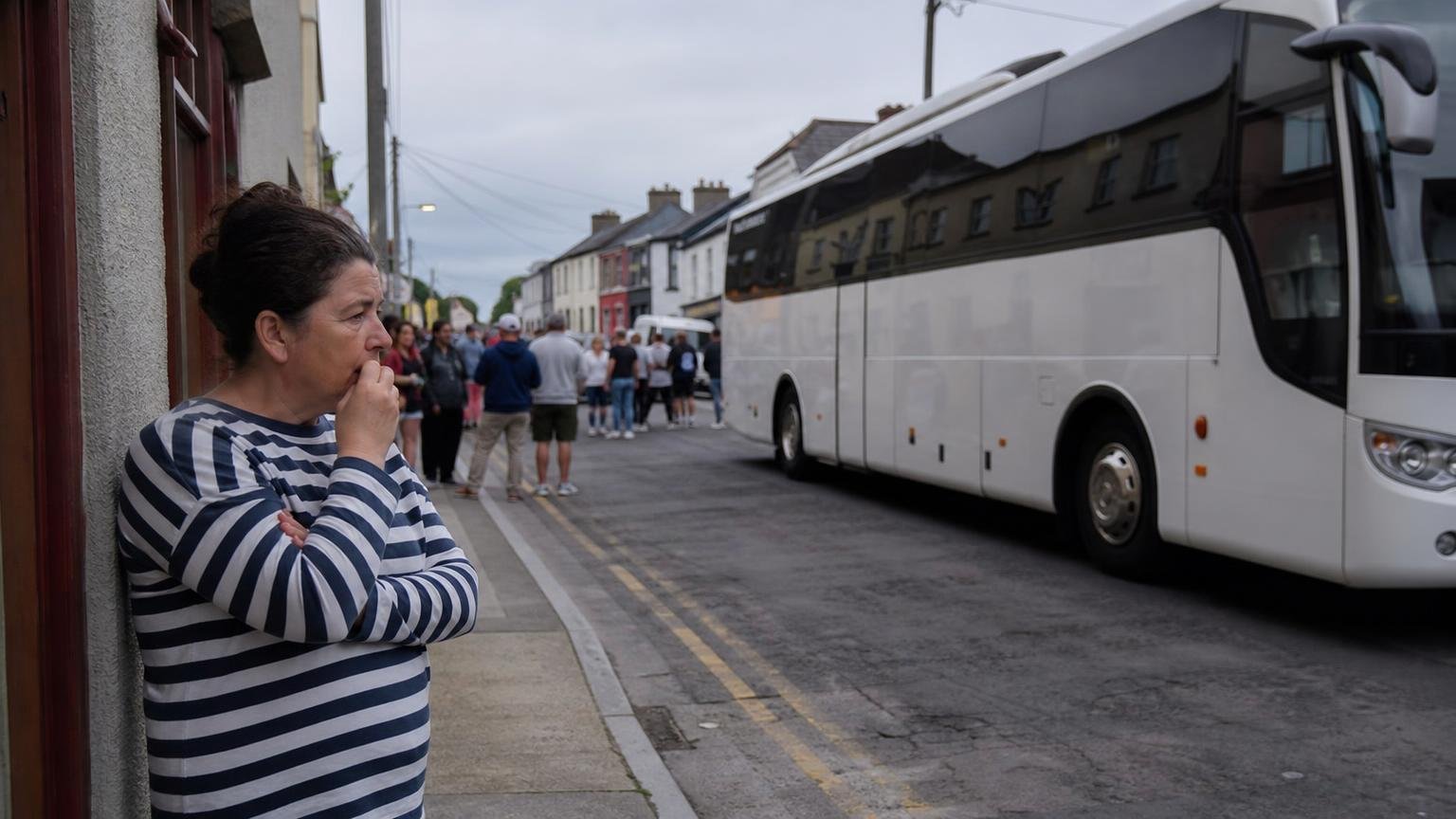
The first rumble you hear is not the ocean but the diesel, easing a coach into a lay-by made for two cars. The second is the sigh of locals who glance at the clock, count the umbrellas, and know the rhythm of the day just changed.
This is a Clare coastal hamlet that once built its reputation on music, stone, and a gentle welcome. Now the welcome remains, but the gentleness is strained, and the metronome is set by itineraries drafted far from the Atlantic.
A quiet harbour that isn’t quiet anymore
At low tide, the weed-green slipway still smells of salt and rope, of mackerel and boot rubber. But the harbour has learned a new language: reversing beeps, megaphone chirrups, and a breeze that lifts paper wristbands like confetti.
“We’re not anti-visitor,” says a shopkeeper, eyes on the afternoon surge. “It’s not the people, it’s the pace. The coaches have made the day shrink.”
Coaches pour out polite crowds who stride, photograph, and depart between forty and sixty minutes later. The transaction is efficient, the memory is brisk, the village is left catching its breath.
The mathematics of too many feet
On paper, nothing looks alarming: a few more routes, a few more operators, a new “must-see” reel looping on phones. On the ground, the algebra becomes sand: one footpath, three buses, fifty coffees, an eighty-second window to cross the street.
A teacher leaning on the school wall watches the midday choreography. “We used to hear curlews at lunch,” she says. “Now it’s luggage wheels and the click of the counter on the café door.”
A coach driver, cracking a smile, shrugs at the timing. “We’re just following demand,” he says. “If we skip here, guests feel they’ve missed the real Ireland. If we stop, the clock gets us.”
Souvenirs versus soul
The shops have adapted with grit and a certain gallows wit. Baskets of knitwear glow like turf embers. Tin whistles share space with USB chargers. Windows promise “authentic” as if authenticity could be vacuum sealed.
“It used to be fiddles at the back table,” one publican says, wiping a glass that never quite dries. “Now it’s a photo at the door and a sprint back to the bus. The tunes haven’t stopped, but the listening is shorter.”
The paradox arrives neatly boxed: the more popular a place becomes, the less time anyone has to feel it. A souvenir stands in for a story, and a receipt for a conversation.
The invisible costs no one budgets for
There is the litter that is not litter but overflow when a single bin meets a hundred snacks. There is the queue that is not malice but maths when one toilet meets a timetable.
There are roads whose edges fray, and verges that bruise into mud. There is the apology you offer your neighbour for parking outside their gate, again, because you had to make the drop for fresh bread.
There is also pride that goes unpaid: locals still give directions with a smile, still point at the best view, still promise the sky will clear, and sometimes it actually does.
What locals want, not just what visitors need
Ask around and you’ll hear reasonable asks, not gatekeeping. Staggered arrivals, smaller vehicles, a tiny levy that fixes paths, and time in the schedule that respects the pulse of the place.
“Let them stay an extra hour,” says a baker, pulling sconces like small suns from a tray. “If they linger, they buy lunch, they hear a song, they sit by the pier. That’s value for them and breathing space for us.”
Policy can nudge; operators can choose; travelers can help. No one action fixes a tide, but tides do answer to the moon of small, constant pulls.
Tips for seeing it without smothering it
If you’re heading west with a map and a hunger for the coast, consider these low-friction choices:
- Arrive early or late, and give yourself one full hour more than any guide says you need.
- Walk two streets back from the main drag, and buy from the place with a hand-written sign.
- Ask one person for their favourite spot, then go there and put the phone away for ten minutes.
- Carry a bag for your own rubbish, and one extra item you pick up that is not yours.
- If you book a tour, choose smaller groups or operators that publish their give-back to local infrastructure.
The day the rain held off
On a rare blue morning, a fiddle case leaned open by a door, unselfconscious as a cat in the sun. The bus did come, of course, and the umbrellas did bloom, but a few stragglers stayed.
They ordered soup, asked about the tune, and left with a name of a song rather than a discount code. “That’s it,” the musician said later, coiling a string with slow fingers. “That’s the point. Make room, and the place will answer.”
Clare’s edge has always been a conversation between stone and weather, between stubborn fields and ideas that travel faster than a cloud. The coaches have changed the volume, but not the language.
With a bit more time, a bit less hurry, and a few votes for the quiet option, this village can still be what it wants the world to find: not a quick stop, but a slow, salting breath of the Atlantic you’ll carry all the way home.

Contact details
Address:
Farmers Forum,
36, Dominick Street,
Mullingar,
Co. Westmeath,
Ireland
Phone:
+353 (0)44 9310206
Or email us:
For technical issues please check out our FAQ's page or email - [email protected]
For general Queries email - [email protected]
Request to add event to our Calendar - [email protected]
Send us your mart reports - [email protected]
Suggestions and feedbacks - [email protected]
News Items / Press Release - [email protected]
To Advertise on Farmers Forum - [email protected]