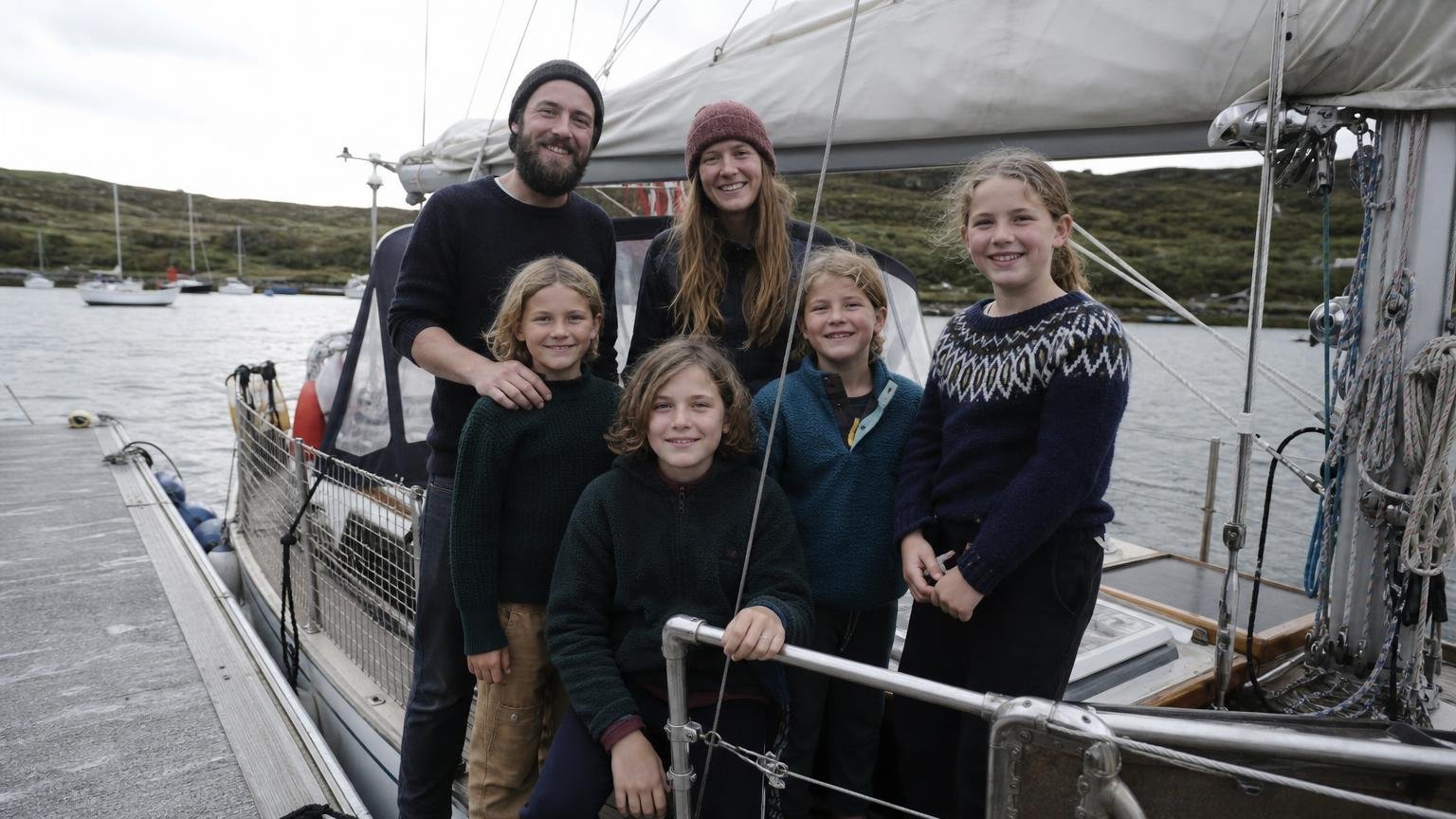
They traded school bells for foghorns, homework for harbour logs, and the school run for a runabout that circled an entire island. A family from Ratoath spent a year looping Ireland by boat, taking their children out of the classroom and onto the Atlantic. When they returned, the local school assessed the kids—and placed them a full class ahead.
Casting off from routine
It began with a map on the kitchen table and a question: What if learning could be lived, not just read?
“Once we imagined the wake behind us instead of a daily commute, we couldn’t unsee it,” said Aoife, the mother. “We wanted the kids to feel tides, not just read about them.”
They sold clutter, charted routes, and learned to fix a stubborn diesel at dawn. The children packed books, binoculars, and a journal each, and the family cast off from a misty marina in spring.
A floating classroom
The cabin became a schoolroom, the coastline a syllabus. Mornings meant maths with miles, knots with navigation, and reading with rain on the hatch. Afternoons meant harbours, history, and the rhythm of mooring lines.
“Algae became our microscope, cliffs our textbook,” said Dara, the father. “You can’t forget geology when you’ve climbed a basalt ledge.”
The kids learned meteorology by watching cloud stacks, geography by tracing inlets on a chart, and Irish history through lighthouses that blink like memory.
Curriculum by compass
They weren’t evading education; they were curating it. Each week had a theme—tides, trade routes, coastal wildlife, or storytelling traditions. Every port offered a new mentor: a harbourmaster with tide tables, a sculptor who welded boat cleats, a retired teacher who taught them to splice rope.
Highlights gathered like seaglass on a windowsill. The children:
- Logged daily distances, fuel use, and weather patterns to graph against speed
They also budgeted groceries, learned galley safety, and argued fairly in twenty knots of wind—then made up over tea.
Hard days, deeper learning
Not every day glowed like a postcard. Gales tested patience, fog demanded discipline, and cabins demand tidy habits. “When the heads clogged and the swell was wicked, nobody was writing poetry,” Aoife laughed.
Those were the days resilience hardened, and problem-solving felt visceral. “It’s amazing how electrics become maths when a fuse keeps popping,” Dara said. The kids learned to ask, “What’s the system, what’s the symptom?”—and to try three things before calling for help.
Reading the world—and books
At anchor, evenings turned quiet. Screens tucked away, they passed paperbacks hand to hand. “I read more this year than in the past three,” their eldest said. “The boat is either very loud or very quiet. Reading lives in the quiet.”
They logged pages, sketched wildlife, and filed letters to grandparents as if posting from a moving island. When storms trapped them in Cork, they turned the week into a Shakespeare festival—monologues by torchlight, applause for the galley cook.
Coming home, bearing proof
They returned with sun-faded fenders, thicker notebooks, and a sense of time measured by tide. Re-entry felt like docking after a long swell: steadying, then strange.
The school asked for evidence. They brought journals, reading logs, and a portfolio of projects—charts annotated with maths, essays tied to ports, and science notes on kelp beds.
“We didn’t want to romanticise or penalise,” said the principal. “We tested fairly, and the kids were a year ahead in core skills, with exceptional initiative. We placed them accordingly.”
Why it worked
The result wasn’t magic; it was structure plus curiosity. Parents set expectations and kept a simple daily cadence. The voyage created stakes—real problems, real feedback, and immediate consequences.
“On a boat, reflection happens naturally,” said Aoife. “You check the tide, make a plan, try it, then adjust with the next report. That loop is how you learn anything.”
The children now treat setbacks like weather: forecastable, navigable, and rarely personal. “We learned we can ‘heave-to’ a bad day and try again at first light,” their youngest grinned.
What schools can take on board
No one says every family should buy a boat. But every classroom can borrow the best currents:
- Tie concepts to real tasks with visible stakes
- Keep a predictable rhythm with room for wonder
- Assess growth with evidence, not just chronology
- Let students own a project from plan to reflection
“Advancing them wasn’t a gift,” the principal added. “It was an acknowledgement of mastery. Seat time is a proxy; learning is the measure.”
The wake they leave
Back in Ratoath, the kids still check wind apps at breakfast. They notice cloud ceilings, ask better questions, and map time not by bells but by what they can build before the next tide.
The boat taught them to treat the world like a worksheet that answers back. It’s messy, bracing, and often beautiful—and for one Irish family, it led straight past the next gate, class list, and year.

Contact details
Address:
Farmers Forum,
36, Dominick Street,
Mullingar,
Co. Westmeath,
Ireland
Phone:
+353 (0)44 9310206
Or email us:
For technical issues please check out our FAQ's page or email - [email protected]
For general Queries email - [email protected]
Request to add event to our Calendar - [email protected]
Send us your mart reports - [email protected]
Suggestions and feedbacks - [email protected]
News Items / Press Release - [email protected]
To Advertise on Farmers Forum - [email protected]