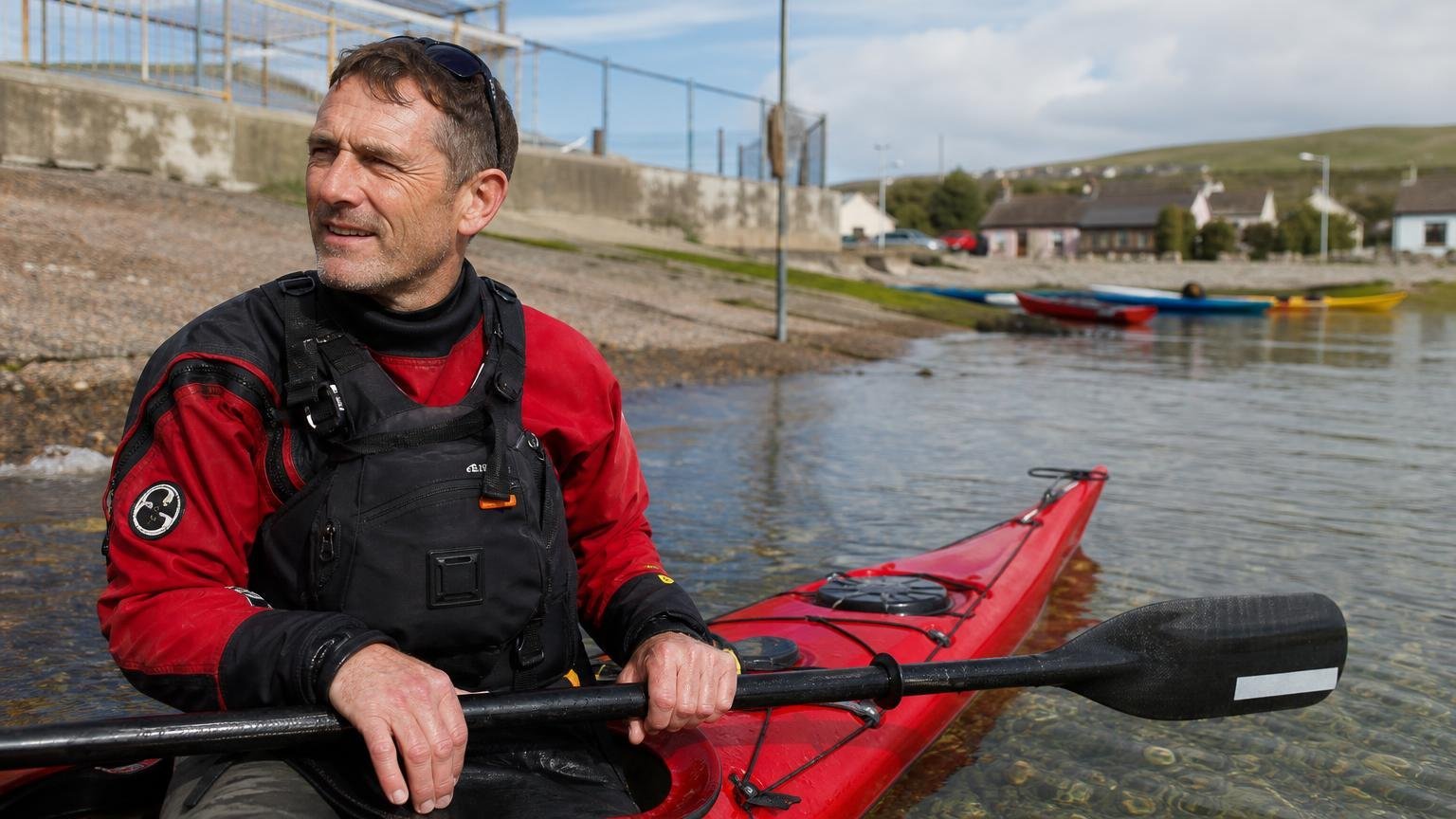
He spent nearly a decade steering a tram through city rhythms, then swapped rails for tides and timetables for weather. Today he charts early-morning launches and slack-water windows, guiding small groups from a Kerry harbour to the Atlantic’s edge. “I wanted a job where my pulse matched the sea rather than the clock,” he says, tightening a spraydeck with a practiced tug, eyes sweeping the swell for a tell.
From rails to waves
The city’s rails taught him precision and public trust, but it was the quiet between stops that fed a different dream. “On my break I’d scroll tide charts and watch storm tracks,” he laughs, “like studying a second full-time map while driving the first.” Over time the idea hardened into action: swap commute-laced air for salt-laced mornings.
He apprenticed himself to currents and coastline reading, shadowing local skippers, practicing rescues, drilling on wind shifts. “A tram obeys a line,” he says, “but the ocean writes a new sentence every day.” That uncertainty became his daily muse and his operating manual.
Portmagee at the waterline
Portmagee feels like a threshold, a village framed by bold headlands and gull-bright air. Boats idle beside nets, and the bridge lifts its neat arc toward Valentia’s patient slopes. Out beyond, the Skelligs stand like myths, stone spires ringed by restless blue.
He launches at first-light glow or after-supper calm, slipping kayaks through the harbour’s gate and into clean Atlantic breath. Some days it’s a glassy parade, others a drumming, muscular mood. “You learn the harbour’s small tells—a line of ruffled water, a gull that hangs and won’t commit,” he says. “They’re whispers that become your loudest advice.”
April to October, by design
The season starts when daylight grows its reach and the storms loosen their grip. From April to October, swells often settle into workable cadence, and the cliffs trade winter’s steel for summer’s shine. “It’s the window when risk and reward can share a proper table,” he says, “though the sea still sets the final terms.”
On marginal days he’ll pivot the plan, hugging lee-side coves or threading kelp-dark alleys between weathered rock. Guests learn that patience is part of the ticket, and that saying no is a deeper kind of skill.
The rhythm of a guided day
Briefings happen with steam from kettles and the rustle of dry bags. He covers strokes, signals, and quiet courage: “You don’t have to be brave, just honest about your edge.” On the water he sets an easy cadence, teaching the boat to be a soft argument with the sea rather than a hard fight.
Seal heads bob like curious punctuation, cormorants draft low lines, and sometimes a dolphin scribbles bright grammar across the bay. People who arrived speaking city noise begin to speak in longer, slower phrases.
Small lessons, big water
“Look where you want to go, not where you fear,” he calls, tapping a paddle on green-tinged swirl. Hips loosen, shoulders drop, and kayaks find their trim. He praises quietly and corrects with humour, a conductor swapping whistles for salt spray.
One afternoon a guest whispered, “I haven’t felt this wide since I was ten.” He just nodded and let the water finish the thought, long strokes drawing out the last soft light.
What to bring if you come
- A warm synthetic or wool layer, a brimmed hat, and curiosity that can float
Safety stitched into every route
He carries spare paddles, a tow line, flares, VHF, and a practiced plan. Weather checks stack like neat cards, and if the numbers don’t sing, the trip doesn’t sail. “Good guiding is invisible work,” he says. “People should notice cliffs and color, not the calculus in my head.”
When Atlantic mood turns sharp, he shifts to sheltered water, or postpones with clear kindness. Refunds are easy; rescues are the costlier story. He prefers the first ending, every single time.
What stays from the city
The tram years left him a love of crisp systems and a feel for crowd pulse. He times launches like station stops, reads faces like quiet screens, and keeps schedules elastic but not loose. “It’s still public service,” he shrugs, “just with wilder scenery.”
There are moments he misses fluorescent order, the solid click of platform doors, and rain that stays politely vertical. But then a puffin wings past like a flying comma, and the ledger settles back to deep black.
Edge-of-map days
High summer brings soft mornings and long, honeyed evenings when even the swell seems to listen. He drifts the group beneath anvil-dark ledges, pointing to lichened script that time wrote line by line. “Geology is patient company,” he says. “We just borrow its front row for an hour or two.”
After, there’s chowder in the village and hands smelling of clean brine. Laughter lifts, ropes creak, and the harbour writes its closing note.
He locks the kayaks, stacks sprayskirts into tidy halos, and checks tomorrow’s wind like a quiet prayer. “I still drive a line every day,” he smiles, “it just happens to be drawn in moving water.”

Contact details
Address:
Farmers Forum,
36, Dominick Street,
Mullingar,
Co. Westmeath,
Ireland
Phone:
+353 (0)44 9310206
Or email us:
For technical issues please check out our FAQ's page or email - [email protected]
For general Queries email - [email protected]
Request to add event to our Calendar - [email protected]
Send us your mart reports - [email protected]
Suggestions and feedbacks - [email protected]
News Items / Press Release - [email protected]
To Advertise on Farmers Forum - [email protected]