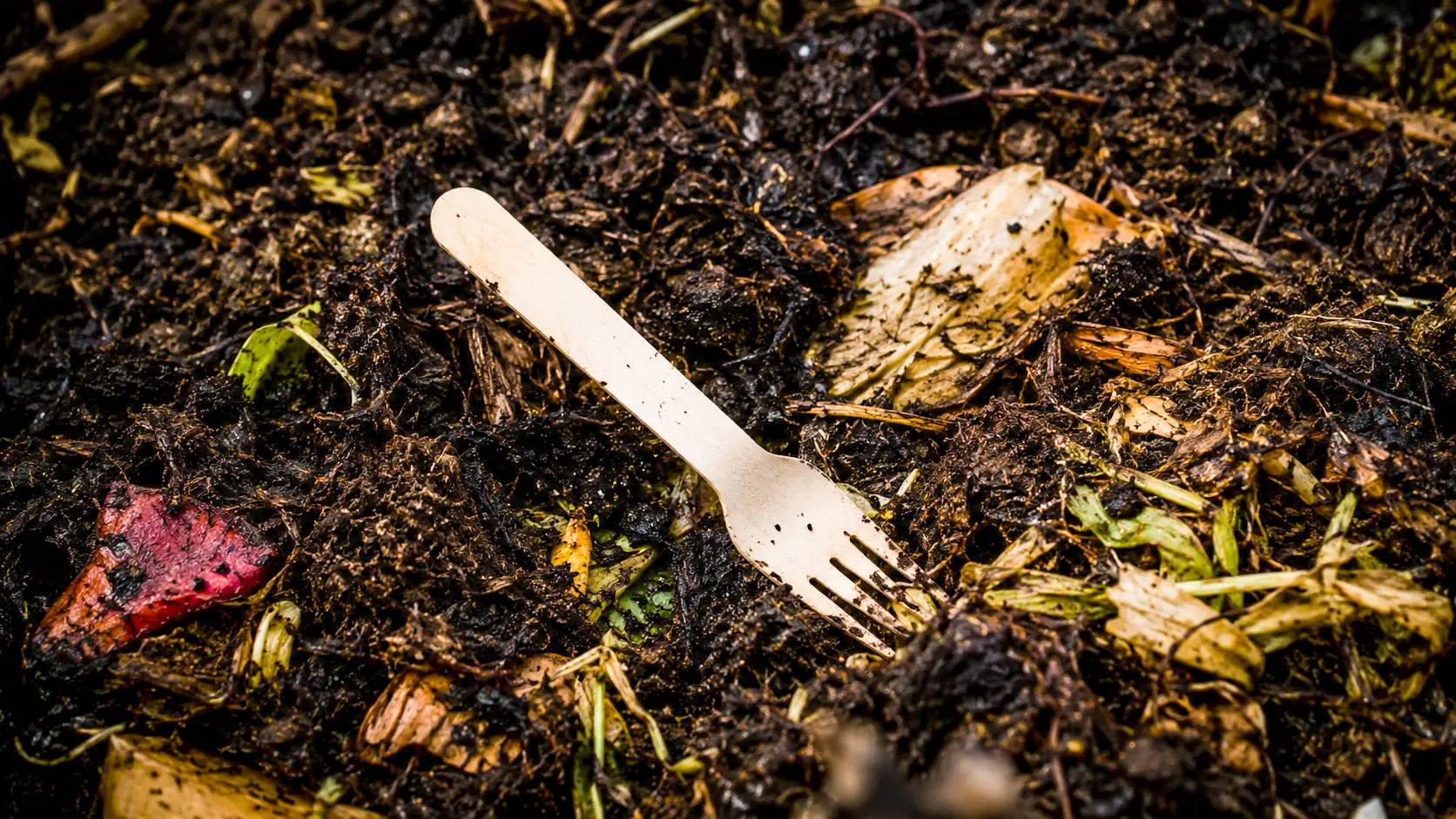
Many users bury so-called bio-based tableware in their garden hoping for a quick enrichment of the soil. Yet most of these items end up resisting for months without undergoing any real biological degradation.
Large-scale tests reveal that the majority of bioplastics resist home composting
The burying of disposable cutlery in a family compost bin often stems from a natural ecological impulse. However, while kitchen organic waste decomposes in a few weeks, the bioplastic tableware preserves its rigid structure and original characteristics for a prolonged period.
Several large-scale citizen surveys show that around 60% of so-called home-compostable plastics do not undergo complete degradation in individual bins. The promise of rapid assimilation by the soil clashes with the actual resistance of these products.
The temperature gap between the garden bin and the plant explains the survival of these plastic items
The decomposition process mainly depends on the temperature reached at the core of the pile. In a garden compost bin, the environment remains mesophilic, maintaining a moderate heat that typically fluctuates between 30 and 40 °C throughout the seasons.
The channels of industrial processing operate according to a very different thermophilic method, where temperatures routinely exceed 55 to 60 °C. This intense heat becomes the decisive factor in breaking the complex chemical bonds of plant-based polymers.
Rigorous tests conducted over about seven months with optimal humidity and pH parameters confirmed this blockage. No product tested in a domestic environment succeeded in complete degradation without the presence of specialized equipment.
Green labels keep a blur about timelines and risk polluting vegetable garden soils
The use of vague terms such as biodegradable or plant-based creates a misleading sense of security among users. Standards for private use tolerate a decomposition period that can reach twelve months, far from the efficiency observed in industrial settings.
Moreover, nearly 83% of gardeners spread the material directly onto their vegetables or flowers. These non-degraded items crumble slowly, risking the release of microplastics directly into cultivated soil.
This incomplete degradation generates fine particles invisible to the naked eye that accumulate over the seasons. Thinking of nourishing the soil with a healthy product ultimately ends up disseminating undesirable residues into the environment.
The best ecological alternative remains to favor washable cutlery to limit waste
To avoid these pitfalls, a clear distinction must be made between industrial and household composting. Some municipalities organize collections of biodegradable waste toward infrastructures capable of reaching the temperatures required to destroy these materials.
The most coherent approach is always to reduce waste at the source. The consistent use of reusable regular cutlery during outdoor meals eliminates all doubts linked to supposed ecological tableware.

Contact details
Address:
Farmers Forum,
36, Dominick Street,
Mullingar,
Co. Westmeath,
Ireland
Phone:
+353 (0)44 9310206
Or email us:
For technical issues please check out our FAQ's page or email - [email protected]
For general Queries email - [email protected]
Request to add event to our Calendar - [email protected]
Send us your mart reports - [email protected]
Suggestions and feedbacks - [email protected]
News Items / Press Release - [email protected]
To Advertise on Farmers Forum - [email protected]