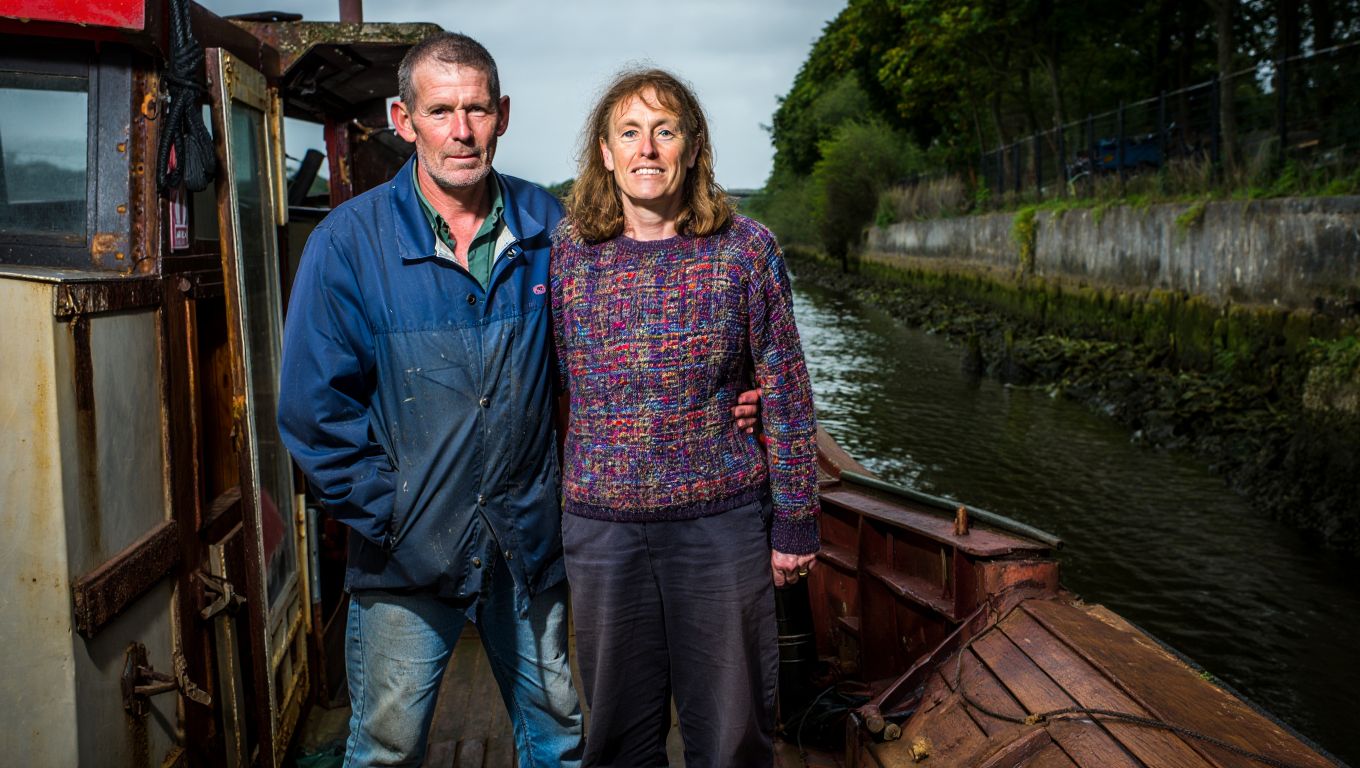
They swapped a fixed address for a floating one, traded keys for a keel, and found a quieter kind of freedom. Three years on the river, a Carrick-on-Shannon couple says the arithmetic is startling: their total annual spend afloat comes in at less than a single quarter of their old mortgage. But the math is only half the story. What they really bought was time—time to breathe, to repair, to watch the Shannon turn from pewter to blue and back again.
Letting the house go
They were both restless. Aoife worked in design, Mark in maintenance, and the rhythm of early alarms, late dinners, and weekend DIY on a semi-D in town felt shrinking. “We wanted something lighter,” Aoife says, “and at the same time more real.”
The decision arrived like a sudden gust. Sell the house, buy a pre-loved barge, and see if the river might be a better address. “People thought we were a bit mad,” Mark laughs, “but the more we said it out loud, the more it sounded like a plan we could actually live.”
They found a 1960s Dutch barge, paint flaking, cabin low, bones strong. They named her Lark, signed the papers, and learned the language of shallow drafts, locks, and rivets by heart, one weekend at a time.
The refit that taught them patience
Work began with a hiss of scrapers, skins of rust, and the bright shock of bare steel. They rewired the electrics and fitted LEDs, sealed portholes against rain like pinpricks of silver, and installed a little stove with a glow that outshone the television they no longer had.
Solar on the wheelhouse roof, a compact inverter, a composting loo that demanded more attention—and care—than any porcelain throne at home. “We made it warm, and we made it ours,” Aoife says. “Every fix turned the boat from a problem to a place.”
By spring, the diesel hummed cleanly, shelves held mugs against the swell, and a fold-out table replaced a bulky sofa. “It’s like living inside a toolbox you’ve tuned just for your hands,” Mark grins.
A day measured by water
Morning opens with mist that smells faintly of peat. Kingfishers fire like turquoise arrows. Canoes whisper past. On grey days, the river is a long mirror, and on bright days the light skitters like a thousand small coins.
They learned to love the slow drift, to time laundry with the sun, to cook stews that simmer while they idle beneath a willow’s shade. They read more, talk more, and fall asleep to ropes that creak like an old house gently breathing.
“Being afloat makes you present,” Aoife says. “If the wind rises, you deal with wind. If a seal pops up, you stop and just look. The boat keeps your day honest.”
The numbers that changed everything
They budget with a pencil, a ledger, and a smile. Fuel is modest, solar is free, and they plan routes that work with flow rather than against it. “We used to flinch opening bank statements,” Mark says. “Now, the outgoings are just… smaller.”
In Aoife’s words: “A whole year out here costs us less than three months of what the bank wanted for our old life.”
A typical year looks like this:
- Mooring and licences: low four figures, spread across seasons
- Fuel and stove wood: a few hundred when you move, less when you don’t
- Insurance and maintenance: planned, not panicked
- Contingency: a ring-fenced float that gets used, then topped up
The surprise savings show up in the edges: no commuting grind, smaller food waste, fewer impulse buys because there’s nowhere to put them.
The river gives, and it asks
Winter brings condensation like a chalky film, and any carelessness with hatches turns to damp regret. Gales test your knots, and a stalled engine will find the one afternoon you’re feeling smug. Space is a negotiation, not just with your partner but your own habits.
“We thought we were tidy,” Aoife admits. “But the boat teaches a sharper kind of order. Everything earns its keep, or it goes.”
There are bureaucratic papers, occasional lock queues, and the odd marina neighbour who plays music just a bit too earnest at dusk. But the rhythm returns, the stove goes on, and you remember why you chose this course.
People of the current
Communities bloom at moorings and close again like tents. You trade gaskets for recipes, gossip for tips on the next friendly bank. There’s a river-clean on Saturdays, mugs of tea balanced on gunwales on Sundays.
Living small shrinks the footprint. Less heating, fewer gadgets, slower miles. “We’re not saints,” Mark says, “we just ended up using less by making it harder to use more.”
You learn the water’s moods, the shallow that snags in August, the lift under your hull when the flood runs. You earn that knowledge by living with it, not skimming past.
What they carry forward
They plan in seasons now, not quarters. Maybe they’ll drift south in spring, or stay put to mend the aft deck. “We don’t need a five-year plan,” Aoife says. “We need a good tide and a kettle that sings.”
Home is a sound: rope against cleat, kettle on stove, rain that drums instead of drowns. Money is quieter here, and time, somehow, is larger. “We bought a boat,” Mark says, “and found a different kind of wealth.”
If there’s a single line that sums it up, it’s the one they share with a half-apologetic shrug: “A year on the water costs less than three months of the mortgage did—and gives us more of what we actually live for.”

Contact details
Address:
Farmers Forum,
36, Dominick Street,
Mullingar,
Co. Westmeath,
Ireland
Phone:
+353 (0)44 9310206
Or email us:
For technical issues please check out our FAQ's page or email - [email protected]
For general Queries email - [email protected]
Request to add event to our Calendar - [email protected]
Send us your mart reports - [email protected]
Suggestions and feedbacks - [email protected]
News Items / Press Release - [email protected]
To Advertise on Farmers Forum - [email protected]