The summer seas are settling, the birds are busy, and a quiet Atlantic island is ready to welcome curious travelers. If you’ve longed for early‑Christian drama without the scramble for tickets, there’s a gentler way to step inside Ireland’s monastic past—no elbows, no countdown clock, just open sky and stone.
Meet Scattery Island, the saint’s stronghold
Set in the wide mouth of the River Shannon, Scattery Island—Inis Cathaigh—holds a 1,500‑year thread of history that still feels astonishingly intimate. Founded by St. Senan in the sixth century, it shelters a soaring round tower, a roofless cathedral, several small churches, and the hush of a once‑thriving community.
“Out here the past feels present,” says a local heritage guide. “You can stand between the tower and the cathedral and hear only wind and curlew.” With no cars and no permanent residents, the island’s drama is carved in sandstone, laced with seabird cries, and framed by the long, silver reach of the Shannon.
June brings easy crossings—and easier plans
Ferries begin regular sailings in June, a sweet spot when wildflowers are peaking and the Atlantic is at its most forgiving. Unlike the country’s headline‑grabbing rock monastery, there’s no daily quota, no dawn dash to secure a precious permit. You simply book a seat, show up at Kilrush Marina, and step aboard a small boat that feels more like a harbor lift than an expedition.
“Most days we’re far from full,” a skipper tells me with a grin you can hear over the engine. “People get their sea air, their ruins, their picnic—and they’re back in time for a late lunch.” Even so, Irish weather is a spirited co‑host; check the forecast, and keep your schedule a little loose.
What you’ll find once you land
The island’s round tower rises like an exclamation mark of early faith, its doorway perched high above the grass. Nearby lie the cathedral remains, where scalloped stone arches frame big bites of sky, and a cemetery settles into the older earth below. Smaller oratories—Teampall na mBan, Teampall Senan—dot the flat interior like waypoints, guiding you from prayer to prayer across centuries.
Trace the curve of a Napoleonic‑era battery, added when imperial anxiety met coastal geography. Wander to the lighthouse for views that stack river, estuary, and Atlantic in shimmering layers. Between them, a deserted village whispers of fishing seasons and hard‑won livelihoods, the kind that rose and fell with tide and fortune.
“Don’t rush the silence,” advises one of the ferry crew, setting a gentle tone for your walk. The island is small, but its distances stretch as you pause at a holy well, run fingers along lichen‑soft stone, and watch terns write quick lines of white over blue water.
How to plan a low‑fuss visit
- Departures run from Kilrush Marina in County Clare; crossings take about 20–30 minutes.
- Bring water, layers, and a simple picnic; there’s no café, shop, or resident services.
- Wear sturdy shoes; paths are grassy, sometimes boggy, and stones can be slick.
- Allow three to four hours ashore—long enough to roam and still simply sit.
- Respect the ruins; don’t climb fragile masonry, and leave no trace but footprints.
- Book in advance on busy weekends, yet expect a relaxed, human‑scale boarding.
Reading the stones without the rush
The joy of this island is pace. You can loop from jetty to tower to lighthouse and back with no hurry, letting small discoveries set the rhythm: a carved cross barely raised from the rock, a sprig of sea‑pink nodding between ancient flags, the shadow of a cloud shifting the color of the estuary.
It’s a place that rewards simple attention. Notice how the round tower holds the day’s light; how graves lean slightly seaward, as if listening for remembered voices; how the wind edits your thoughts until only a few clean lines remain. Out here, the past isn’t a spectacle but a conversation, and you get to choose how long to linger.
“People step off the boat with busy heads,” the skipper had said. “They come back with quiet eyes.” That feels exactly right. June offers the softest possible entry: brighter weather, easier sailings, forgiving tides, and time enough to let old stones do their steady work.
If you’ve been waiting for a monastic pilgrimage without logistics turning into a second penance, this is your sign to go. Pack light, move slow, and let the island show how silence can be both a shelter and a guide. The doors of early Ireland are open again—no lines, no limits, just sea, sky, and the long memory of faith meeting the edge of the world.

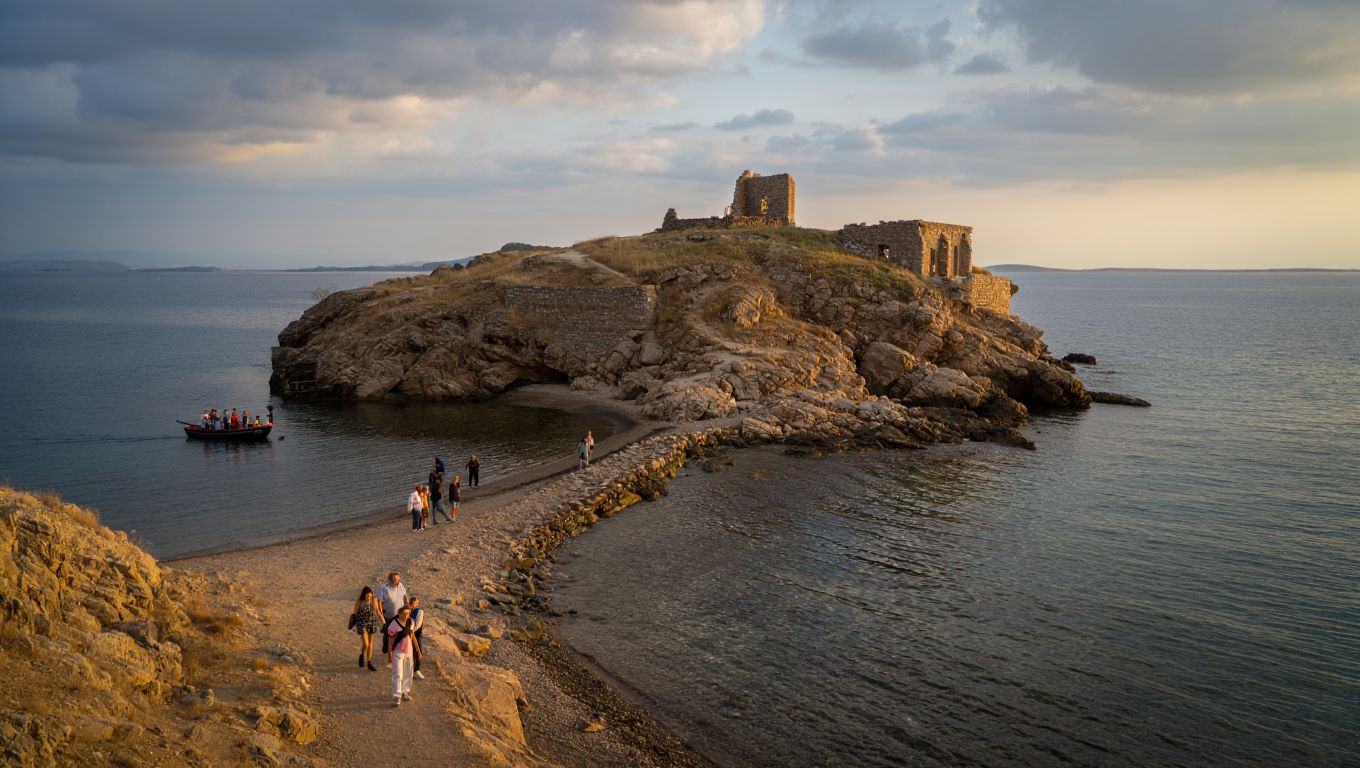
Where is the place shown in the main picture though?
I know, this has been bugging me. It doesn’t seem to be Scattery island looking at google maps. A google image search mentions Dalkey Is, St Catherine’s Is, Derrynane Is, Portnoo but it’s none of those. It could be Ai. Perhaps you could tell Liam Kennedy. Great arrival thanks for telling us about Scattery.
Thank you lovely and PEACEFUL COMMENTS as if I was there. Maybe on my way to heaven Im 89 years
Wrong photo. Not Scattery Island.