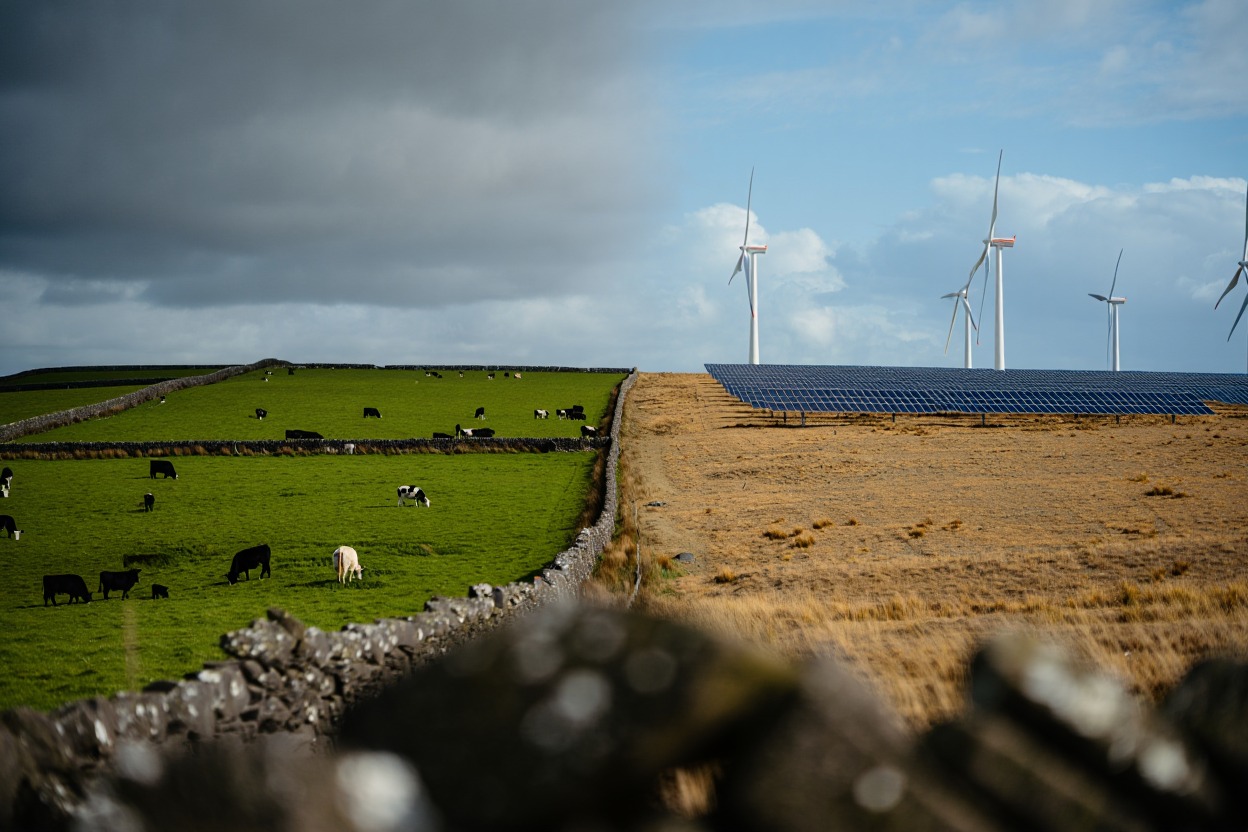
For generations, the landscape of southern Ireland has seemed almost permanent.
Green pastures.
Reliable rainfall.
Grass growing nearly year-round.
It is this natural advantage that helped build Ireland’s global reputation for grass-based dairy and beef farming.
But many farmers now believe that this familiar landscape could change dramatically within the next few decades.
Some are warning that by 2050, parts of rural Ireland may no longer look — or farm — the same way.
Weather Patterns Are Already Shifting
Across counties like Cork, Kerry and Tipperary, older farmers say the seasons no longer behave as predictably as they once did.
Spring grazing windows are becoming less consistent.
Heavy rainfall events are arriving more suddenly.
Longer dry periods are appearing during summer months.
These changes might seem small individually, but they are starting to affect the rhythm of farming.
Grass growth, which underpins Ireland’s dairy system, depends on stable seasonal patterns. When rainfall and temperatures fluctuate more dramatically, pasture performance becomes harder to predict.
Some farmers report that fields once reliable for early grazing now remain waterlogged longer in spring. Others say summer drought conditions — once rare — are beginning to appear more frequently.
The Grass-Based Model Under Pressure
Ireland’s dairy industry relies heavily on grass. Compared with intensive indoor systems common elsewhere in Europe, Irish cows spend more time outdoors feeding directly from pasture.
This model is efficient and relatively low-cost.
But it is also highly dependent on weather stability.
If rainfall becomes more erratic or temperatures shift significantly, grass growth patterns could change. That would affect feed planning, silage production and ultimately milk output.
Agricultural advisers increasingly warn that farmers may need to adapt management strategies to cope with more variable conditions.
These adaptations could include:
- Different grass varieties more tolerant to drought
- Increased silage reserves for unpredictable seasons
- Improved drainage systems on wetter land
- Greater use of real-time pasture monitoring technology
While none of these changes are dramatic on their own, together they signal a shift away from traditional farming assumptions.
Regional Differences Are Emerging
Climate researchers suggest that impacts may not be evenly distributed across the country.
Western coastal regions could face heavier rainfall events and flooding risks. Meanwhile, some southern and eastern areas may experience longer summer dry spells.
This regional imbalance creates new challenges.
Fields that historically performed consistently may become less reliable, while land previously considered marginal could improve under different conditions.
Farm planning — traditionally based on decades of experience — may increasingly depend on predictive climate models.
Farmers Are Already Preparing
Despite uncertainty, many Irish farmers are not waiting for 2050 to act.
Across the country, some are experimenting with new grazing systems designed to handle variable weather. Others are investing in soil health improvements to increase resilience during drought or heavy rain.
Technology is also playing a growing role. Grass measurement apps, satellite monitoring and data-driven farm planning tools allow farmers to track pasture performance more precisely than ever before.
For a sector built on adapting to natural conditions, resilience has always been essential.
A Landscape That Could Look Different
The warning that a region could become “unrecognisable” does not necessarily mean farmland disappearing.
Instead, the change may be more subtle.
Different grass species.
Modified grazing seasons.
More diversified farming systems.
Fields may still be green, cows may still graze, and agriculture will likely remain central to rural Ireland.
But the way farms operate could evolve significantly.
The Long View
Irish farming has changed many times before. Mechanisation, EU membership and the end of milk quotas all reshaped the sector.
Climate change may represent the next major transition.
For now, the hills of Cork and the pastures of Munster still look as they always have.
Yet many farmers believe the next generation could inherit a landscape that works differently from the one they know today.
And that possibility is already influencing decisions being made on farms across Ireland.

Contact details
Address:
Farmers Forum,
36, Dominick Street,
Mullingar,
Co. Westmeath,
Ireland
Phone:
+353 (0)44 9310206
Or email us:
For technical issues please check out our FAQ's page or email - [email protected]
For general Queries email - [email protected]
Request to add event to our Calendar - [email protected]
Send us your mart reports - [email protected]
Suggestions and feedbacks - [email protected]
News Items / Press Release - [email protected]
To Advertise on Farmers Forum - [email protected]