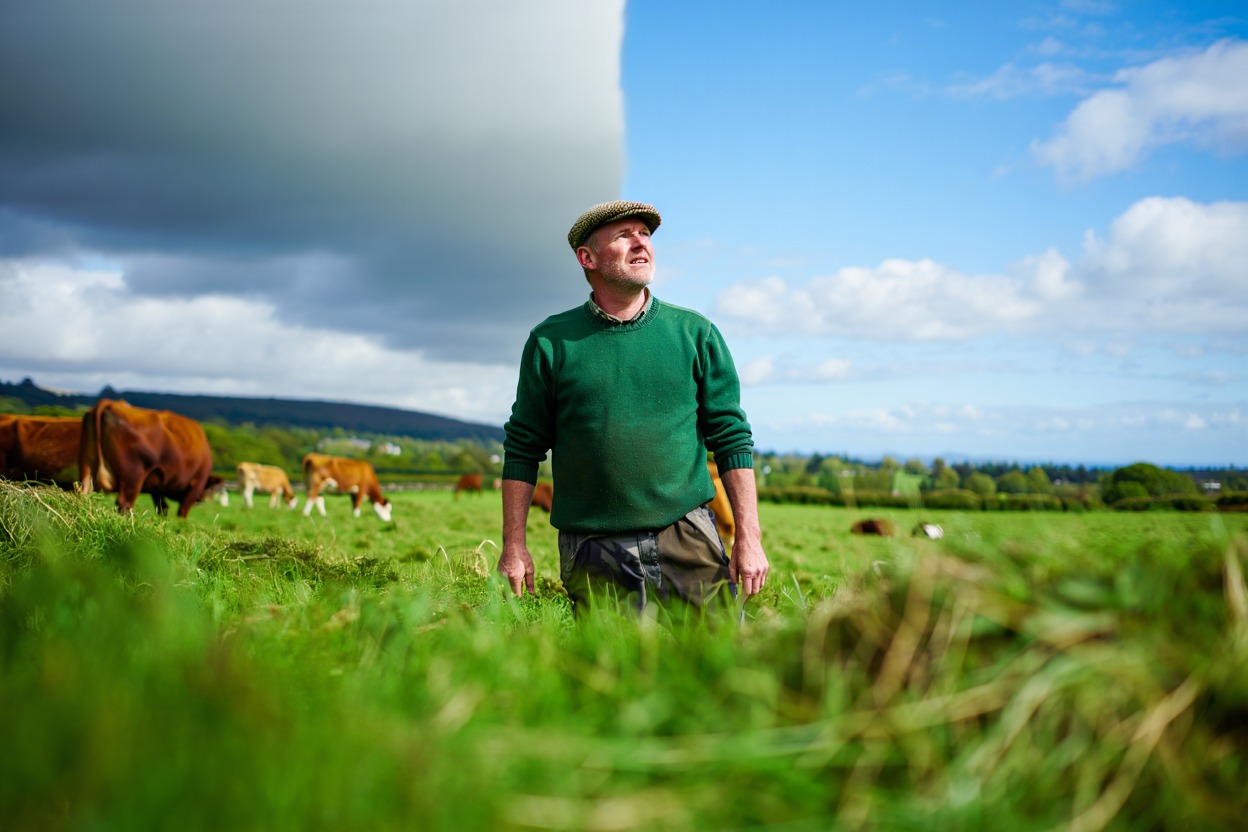
For decades, Irish farmers relied on something that felt almost guaranteed. Rain.
Not too little, not too much. Just enough to keep the country’s famously green grass growing almost year-round. That balance is one of the key reasons Ireland became one of Europe’s most efficient dairy producers.
But many farmers now say something subtle has changed.
The total rainfall may not look dramatically different on paper. Yet the way it arrives throughout the year is shifting — and that change is starting to worry dairy producers across the country.
Rain Is Becoming Less Predictable
Older farmers often describe Ireland’s climate as “steady.” Rain would fall frequently but moderately, allowing fields to absorb moisture gradually. Grass growth remained relatively stable, and grazing seasons followed predictable patterns.
Today, many producers say the rhythm is no longer the same.
Instead of steady rainfall spread across weeks, heavy downpours are increasingly concentrated into short periods. Fields can receive several weeks’ worth of rain in just a few days.
After that, longer dry spells sometimes follow.
This pattern creates a new problem for grass-based dairy farming.
Soil cannot absorb large volumes of water instantly. When intense rainfall hits already saturated ground, fields become waterlogged and grazing becomes difficult. Cows must be housed earlier, and machinery struggles to operate on wet soil.
Waterlogging Is Becoming More Common
In parts of counties Cork, Kerry and Limerick, farmers say fields that once drained easily now remain saturated for longer periods.
When soil stays wet, grass growth slows and root systems weaken. Tractors spreading fertiliser or slurry can damage the surface, creating compaction that reduces productivity for months.
This forces farmers to make difficult decisions.
Should they house cows earlier than planned?
Should they delay fertiliser application and risk slower grass growth?
Should they rely more heavily on stored silage?
Each choice carries a financial cost.
Grass-Based Systems Depend on Stability
Ireland’s dairy advantage has always been its grass.
Compared with many European countries that rely heavily on imported feed, Irish farms typically depend on pasture as the primary energy source for cows. This keeps costs relatively low and supports competitive milk production.
But that system works best when grass grows consistently.
If rainfall becomes more erratic, grazing calendars become harder to predict. A wet spring can delay turnout, while sudden dry periods later in the season can reduce pasture availability.
When that happens, farms must purchase more feed, which increases production costs.
In an industry where margins are often tight, even small changes in weather patterns can affect profitability.
Farmers Are Starting to Adapt
Across Ireland, dairy farmers are gradually adjusting their strategies to cope with changing rainfall patterns.
Some are investing in improved drainage systems to help fields recover faster after heavy rain. Others are building larger silage reserves to prepare for unpredictable grazing seasons.
Technology is also playing a role.
Grass measurement tools, satellite pasture monitoring and data-driven grazing planners help farmers respond more quickly to changing field conditions.
These tools cannot control the weather, but they can help farms adapt to it.
A Subtle Change With Long-Term Consequences
Climate scientists have warned that rainfall patterns in parts of Western Europe may become more intense and less evenly distributed over time. Ireland, sitting on the Atlantic edge of the continent, may experience these shifts earlier than some other regions.
For now, the changes remain gradual.
Fields are still green, cows still graze and milk production remains strong. But farmers who work the land every day say they can already feel the difference.
The challenge is not simply how much rain falls.
It is how and when it falls.
If that pattern continues to shift, the grass-based model that helped make Ireland a dairy powerhouse may need to evolve.
And for many producers, that quiet change has already begun.

Contact details
Address:
Farmers Forum,
36, Dominick Street,
Mullingar,
Co. Westmeath,
Ireland
Phone:
+353 (0)44 9310206
Or email us:
For technical issues please check out our FAQ's page or email - [email protected]
For general Queries email - [email protected]
Request to add event to our Calendar - [email protected]
Send us your mart reports - [email protected]
Suggestions and feedbacks - [email protected]
News Items / Press Release - [email protected]
To Advertise on Farmers Forum - [email protected]