For decades, the success of farming in Munster has depended on something remarkably consistent: the climate.
Mild temperatures. Regular rainfall. Grass that grows for most of the year.
These conditions helped transform counties such as Cork, Tipperary, Kerry and Limerick into the heart of Ireland’s dairy industry. But according to a new climate modelling study examining weather patterns across southern Ireland, that stability may not last forever.
Researchers now warn that by the middle of the century, agriculture in Munster could face significant shifts in rainfall, temperature and seasonal patterns.
For farmers whose businesses depend on predictable grass growth, those changes could alter the way the region farms.
Rainfall Patterns Could Become More Extreme
The model suggests that total annual rainfall in Munster may not decrease dramatically. Instead, the distribution of rain throughout the year could change.
Periods of heavy rainfall are expected to become more intense, particularly during autumn and winter months. At the same time, longer dry spells may appear during summer.
For farmers, this combination creates a new challenge.
Heavy rain arriving in short bursts can saturate soils quickly, making fields difficult to access with machinery. When this happens during key farming periods, it can delay fertiliser spreading, silage harvesting and grazing rotations.
Then, during dry periods later in the year, grass growth may slow sharply.
The result is a farming calendar that becomes harder to predict.
Grass Growth Could Become Less Consistent
Munster’s dairy sector relies heavily on grass-based systems. Compared with intensive indoor farming models common elsewhere in Europe, Irish cows spend much of the year grazing directly on pasture.
This keeps feed costs relatively low and supports competitive milk production.
However, grass growth depends heavily on steady rainfall and moderate temperatures.
Climate models indicate that warmer temperatures could extend the growing season slightly. But that benefit may be offset by irregular rainfall patterns that disrupt pasture performance.
If summer droughts become more frequent, farmers may need to rely more heavily on stored feed during months that traditionally depended on grazing.
Flooding Risks for Low-Lying Land
Another concern highlighted in the research involves flooding.
Parts of Munster contain low-lying farmland near rivers and coastal areas. With more intense rainfall events predicted, these regions may experience higher flood risks.
Flooded fields can damage soil structure and reduce productivity long after the water recedes. In extreme cases, repeated flooding could force farmers to reconsider how certain fields are used.
Some advisers suggest that improved drainage infrastructure and soil management practices may become increasingly important in vulnerable areas.
Farmers Are Already Adapting
Despite the uncertainty, many farmers across Munster have already begun adjusting their strategies.
Grass varieties more tolerant to drought conditions are being tested on some farms. Others are investing in better drainage systems to cope with heavy rainfall events.
Technology is also becoming part of the response.
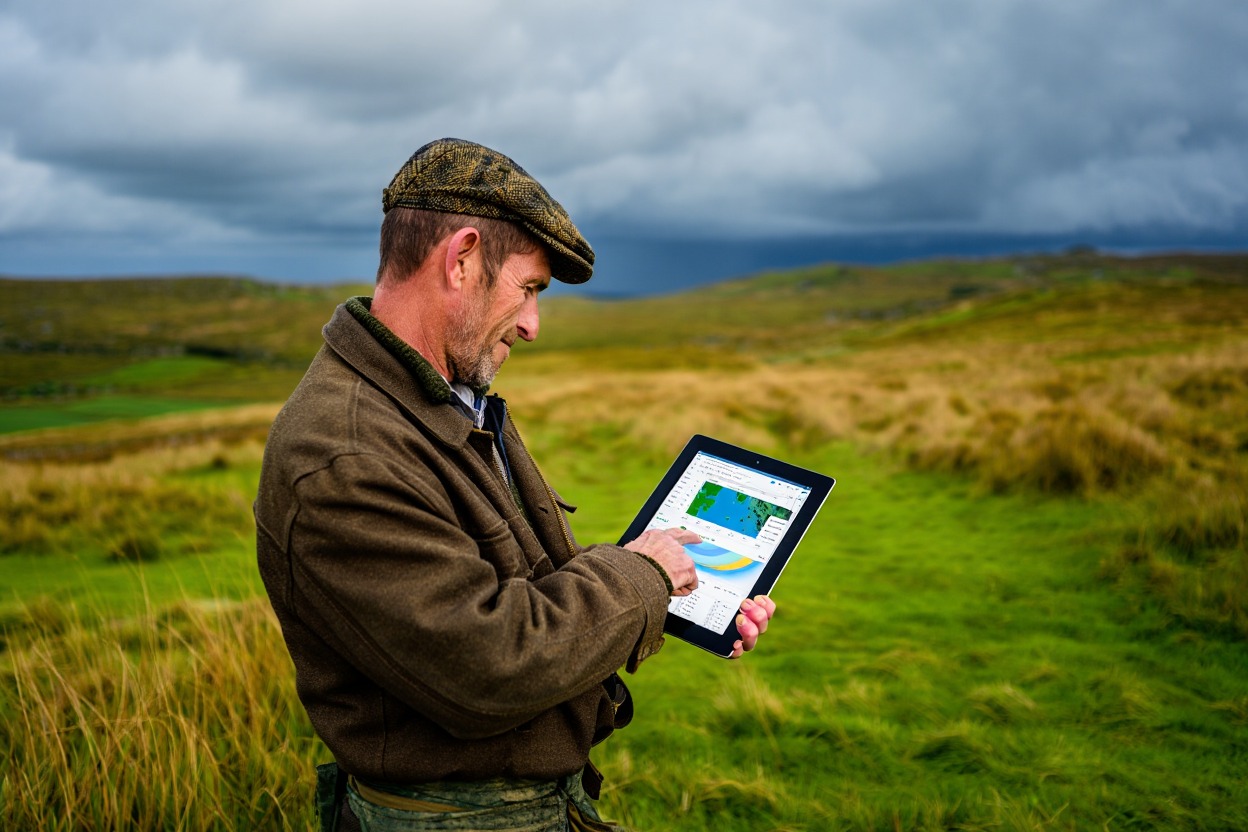
Satellite pasture monitoring, grass measurement apps and predictive weather tools allow farmers to react more quickly when weather conditions change.
While these tools cannot control the climate, they can help farmers manage risk more effectively.
A Region That May Farm Differently
Munster will almost certainly remain one of Ireland’s key agricultural regions in the decades ahead.
The soils are fertile, the infrastructure is well developed and the dairy sector remains deeply rooted in the local economy.
But the new climate model suggests that the way farms operate may gradually evolve.
Grazing seasons could shift.
Feed planning may require larger reserves.
Water management could become a bigger priority.
None of these changes will happen overnight.
Yet if the predicted trends continue, the farming landscape of Munster by 2050 could look noticeably different from the one farmers know today.
For now, the green fields of southern Ireland remain as productive as ever.
But beneath that familiar landscape, a slow transformation may already be beginning.

Contact details
Address:
Farmers Forum,
36, Dominick Street,
Mullingar,
Co. Westmeath,
Ireland
Phone:
+353 (0)44 9310206
Or email us:
For technical issues please check out our FAQ's page or email - [email protected]
For general Queries email - [email protected]
Request to add event to our Calendar - [email protected]
Send us your mart reports - [email protected]
Suggestions and feedbacks - [email protected]
News Items / Press Release - [email protected]
To Advertise on Farmers Forum - [email protected]