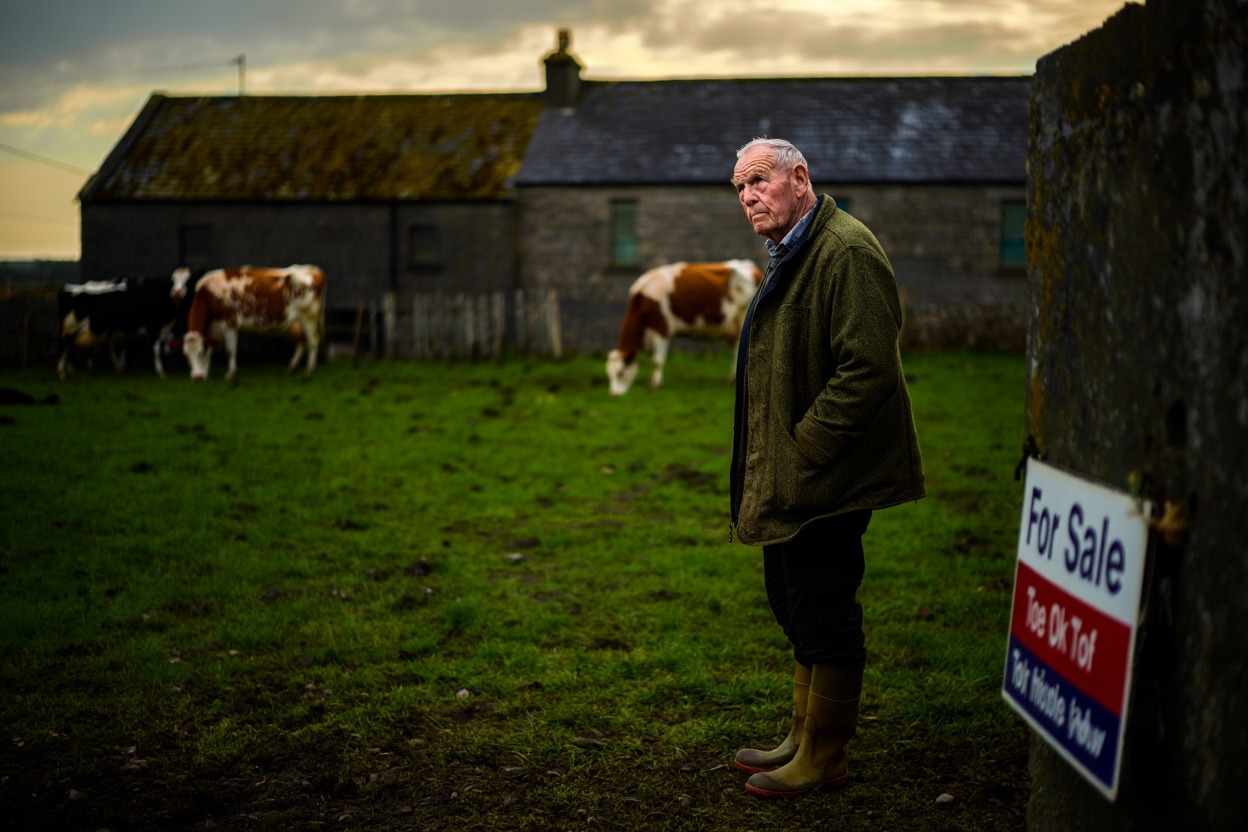
For generations, the image of Irish agriculture has been simple and familiar.
A family farmhouse.
A modest herd of cows.
Fields passed down from one generation to the next.
But across rural Ireland, a growing number of farmers are beginning to ask an uncomfortable question: can small dairy farms still survive in the modern agricultural economy?
The answer is not clear yet, but the structure of the sector is changing rapidly.
Fewer Farms, Bigger Herds
One of the most visible trends is consolidation.
Ireland still has thousands of family dairy farms, but the number of farms overall has gradually declined. Between 2013 and 2023, the total number of farms fell from about 139,600 to roughly 133,000, even while average farm size increased.
In the dairy sector, the shift is even clearer.
Average herd size has grown dramatically over the past decade. The typical dairy herd increased from about 64 cows to around 98 cows per farm.
That change reflects a broader reality: larger operations are often better positioned to absorb rising costs and market volatility.
For smaller farms, staying competitive is becoming more difficult.
Expansion After the End of Milk Quotas
A major turning point came in 2015, when the European Union abolished milk production quotas.
For decades, quotas limited how much milk each country could produce. Once they disappeared, Irish dairy farmers expanded rapidly. Dairy cow numbers increased significantly and milk production surged.
Many farms invested in additional land, milking infrastructure and larger herds.
While this expansion boosted exports and strengthened Ireland’s global dairy position, it also created new pressures. Farms that could not expand at the same pace began to face a widening economic gap.
Rising Costs and Volatile Markets
Modern dairy farming requires significant investment.
Feed, fertiliser, machinery, energy and labour costs have all increased in recent years. At the same time, milk prices fluctuate depending on global market conditions.
When prices fall, smaller farms often feel the impact more severely because they have less production volume to spread fixed costs.
Even when milk prices are strong, financial stability can remain fragile. Industry reports repeatedly highlight that dairy farm incomes can swing sharply from year to year depending on global market trends.
Environmental Pressure Is Growing
Environmental regulation is another factor reshaping the sector.
Ireland’s dairy industry has expanded quickly since the end of quotas, which has increased scrutiny around emissions, water quality and nutrient management. Policymakers are introducing stricter environmental targets and monitoring systems.
For many farmers, compliance requires investment in infrastructure such as slurry storage, nutrient planning systems and upgraded equipment.
Larger farms often have more capacity to finance these changes.
Smaller farms may struggle to justify the same level of investment.
Yet Small Farms Are Not Disappearing
Despite the challenges, small dairy farms are far from extinct.
Ireland’s dairy industry is still largely built on family-run operations. There are roughly 16,000 dairy farms in the country, most of them family-owned.
Many smaller producers are adapting rather than exiting. Some focus on efficiency rather than scale. Others diversify into value-added products such as cheese, yoghurt or farm tourism.
In certain regions, cooperative structures and local supply chains continue to support smaller producers.
A Turning Point for Rural Ireland?
What is happening in Ireland mirrors trends across much of Europe. Farms are becoming fewer but larger, driven by economics, technology and regulation.
The question is not simply whether small dairy farms will disappear.
It is how they will evolve.
Some may consolidate into larger operations. Others may specialise in niche markets or direct-to-consumer production. A few may leave dairy altogether and shift toward different forms of agriculture.
For rural communities, the outcome matters deeply.
Small farms have long been the backbone of Ireland’s countryside. They shape local economies, maintain landscapes and sustain rural populations.
Whether the next generation of farmers can maintain that model remains one of the most important questions facing Irish agriculture today.

Contact details
Address:
Farmers Forum,
36, Dominick Street,
Mullingar,
Co. Westmeath,
Ireland
Phone:
+353 (0)44 9310206
Or email us:
For technical issues please check out our FAQ's page or email - [email protected]
For general Queries email - [email protected]
Request to add event to our Calendar - [email protected]
Send us your mart reports - [email protected]
Suggestions and feedbacks - [email protected]
News Items / Press Release - [email protected]
To Advertise on Farmers Forum - [email protected]