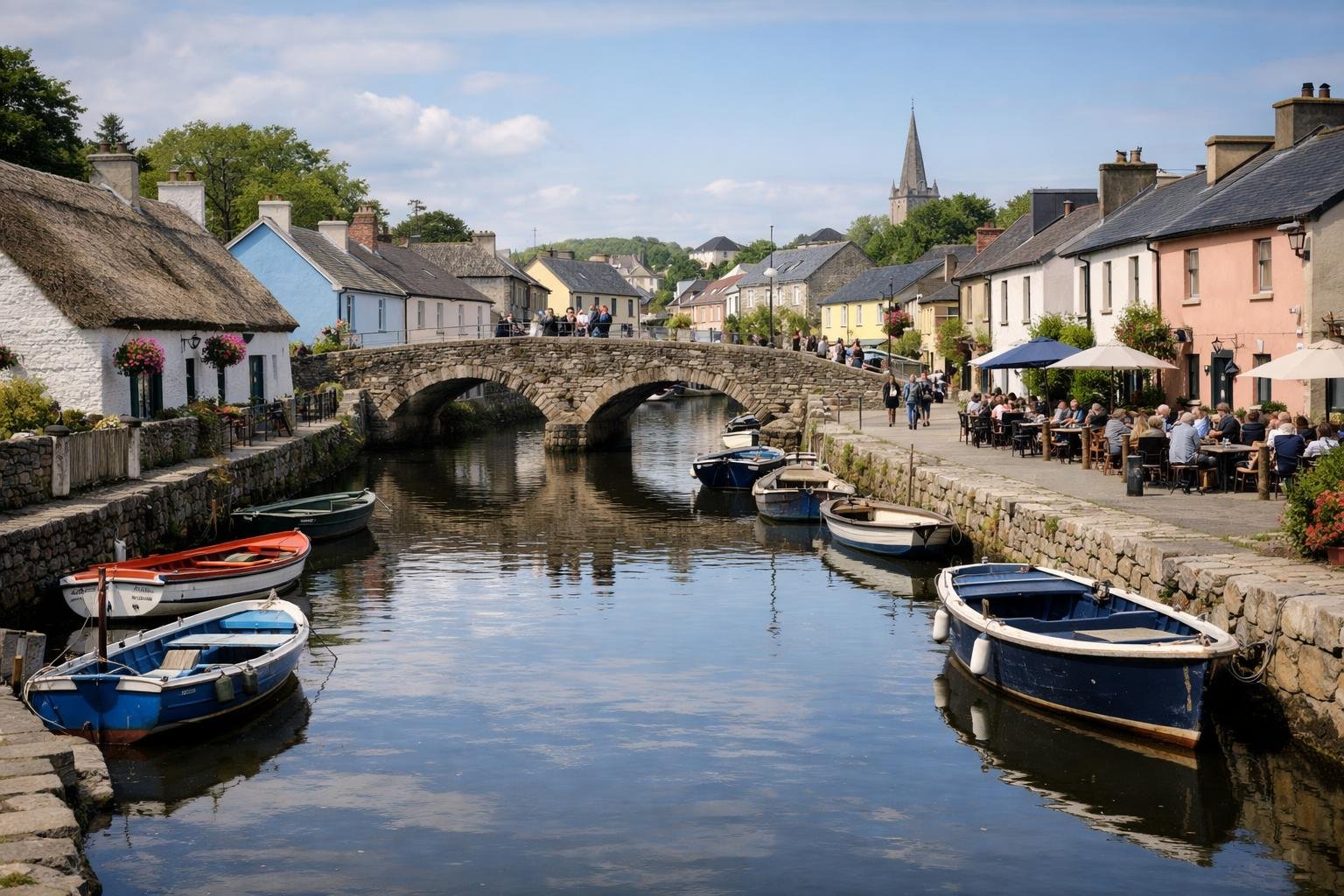
They say the town was drawn by water first, and everything else followed. Streets kink and taper where creeks once curled, shopfronts face the tide like theater seats, and low stone bridges stitch one quay to the next. In spring, that choreography turns kinetic: ferries, dinghies, and sunrise walkers sharing a shimmering stage, while signs outside cafés warn, with a wink, that “tide times trump timetables.” It’s no mystery why rooms are scarce; the place moves to a rhythm travelers want to keep.
Locals repeat the nickname with a grin, then point to the glinting channels as proof. “It’s where the town and the water hold hands,” says one boatman, “and neither lets go.” Between the gulls and the clink of halyards, you hear something else: a collective exhale from visitors who came for a weekend and suddenly wish for a week.
Where water writes the map
Stand on a quay at first light and the whole scene feels hand-tinted: soft pastels, moored masts, and the long hush of the tide. Narrow lanes tilt toward the harbor, and footbridges hopscotch over inlets to pocket-sized squares where fishermen trade weather wisdom for smiles. The town’s heart is liquid; even the breeze seems to arrive by boat.
You don’t need a guidebook to navigate; you need curiosity and shoes that forgive detours. Follow the scent of ropes and salt toward the marina, or drift inland along reed-fringed paths where swans rehearse their landings. Every turn yields a new angle, a fresh reflection, a doorway painted the exact blue of a winter wave.
Why every bed is spoken for
Spring is peak spellbinding, tucked between Atlantic squalls and high-summer bustle. The light is long, the air smells like lemon and peat, and coastal trails shrug off their winter slumber. That’s when inns flip their “No Vacancy” signs more days than not, and B&B ledgers fill with tidy ticks from March through May.
“It’s our sweet spot,” admits a baker as trays of warm soda bread appear like ships at dawn. “People come early for the quiet, then stay for the chatter.” The chatter, in truth, is part of the draw: evening sessions that spool out of pubs, market mornings that feel handmade, and boat trips that chase seals, puffins, or nothing at all—just the pleasure of a wake unspooling behind you.
What to do between tides
If you measure days by the waterline, you’ll never be bored. If you don’t, the town gently teaches you how.
- Rent a small kayak for the slack tide, then swap the paddle for a steaming chowder when the current turns.
Linger, get lost, repeat. That’s the itinerary, more or less, and it works astonishingly well.
Eating like a local
Menus here read like tide charts with seasoning. Chowders arrive deep and honest, buttery with stories; fish and chips taste like the pier; crab claws glisten beside lemon wedges that never make it back to the kitchen. You’ll find brown bread that breaks with a sigh, and desserts that smuggle sea salt into caramel like a beloved secret.
Ask for what’s landed that morning and you’ll see plates change with the weather. A casual lunch might be pollock with nettle pesto; dinner could be a bright plate of cockles and razor clams that still smell faintly of spray. “The boats teach the chefs,” a server says, “and the chefs teach the rest of us to listen.”
Staying afloat: tips for booking
Put simply: plan early, then plan a little earlier. Spring weekends vanish first, followed by Fridays that pretend they’re Saturdays. Midweek stays open more often, and shoulder weeks in late April or early May feel like a homeowner’s key to the town.
Consider splitting nights between a waterfront inn and a tucked-away cottage up the hill; you’ll get sunrise tides one day and chimneyed sunsets the next. Many places have two-night minimums in the busiest stretch; a blessing in disguise that grants just enough time to unlearn your calendar.
Getting there without losing the magic
Arriving by road is easy; arriving with your senses turned up is better. Park once, then walk everywhere. Let your first hour be aimless: follow whatever glints, creaks, or smells like cinnamon and diesel. If there’s a ferry across the channel, take it just because it’s there; the return is a new town entirely.
And if the sky drizzles, embrace it. The water writes brighter when it has ink. You’ll find shelter under eaves and in doorways painted with names you’ll try pronouncing twice. “It’s the only place my commute depends on the moon,” a kayaker jokes, balancing a coffee. With luck, you’ll leave with the same problem: a calendar you trust a little less, and a tide table you trust a lot more.
Spring ends, the bookings loosen, and the town exhales again. But the feeling stays: a place that moves at the pace of oars and footsteps, where bridges count as friends, and where every narrow street seems to lean in to listen to the sea. If you come, come lightly—carry less, watch more—and let the water trace your route.

What town is it? You never name it!
Can you tell us what this magical place in wexford is called by any chance?
Hi Keith
Unless I’ve read this article incorrectly you don’t say where this Wexford village is.
Could you please tell me.many thanks
What is the name of this town please