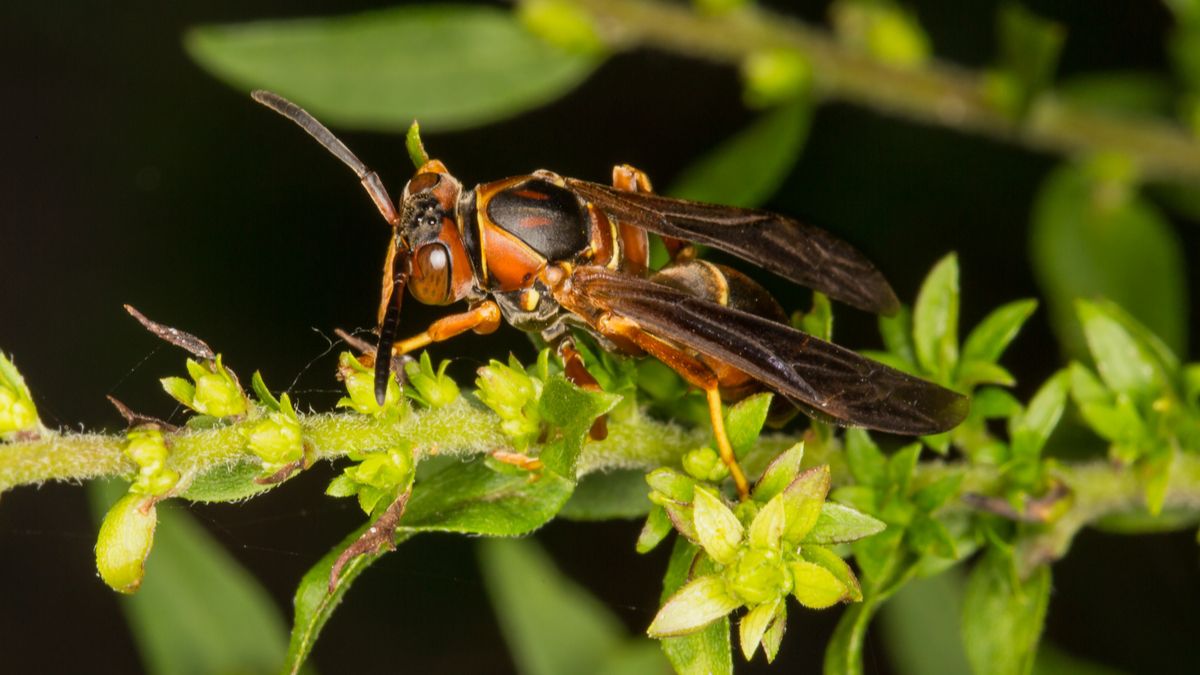
In Borneo, researchers documented the proliferation of predatory wasps, threatening a symbiotic relationship between ants and plants that has existed for millions of years.
Winged Squatters
While inspecting the stems of the tropical plant Macaranga pearsonii, whose cavities are known to harbor sizable populations of ants that defend them against pests, Dan Lestina and his colleagues observed unusual alterations. Upon closer examination of these sections, the team discovered that they were filled with flies devoured alive by the larvae of the predatory wasp Dasyproctus agilis.
The adults hunt and paralyze the flies, before storing them inside the plant cavities to feed their young, detail the authors of the new study, published in the journal PeerJ.
Analysis of 213 specimens of M. pearsonii revealed that the problem was widespread in Sabah, the Malaysian portion of the island of Borneo. According to Lestina, this marks the first known example of using a plant from the Euphorbiaceae family as a nesting site for this species of wasp.
Predatory wasps are colonizing Macaranga ant-plants in disturbed Bornean forests, displacing protective ants and potentially weakening forest regeneration and long-term plant defenses. https://t.co/IDIfOjnsYa https://t.co/teqkSgn6cB
— Phys.org (@physorg_com) April 15, 2026
It also turned out that this scenario occurred far more frequently in areas devoted to oil palm cultivation. While one M. pearsonii out of 41 was affected in logged areas, 12 out of 43 were affected near plantations. The team potentially links this phenomenon to the widespread use of pesticides, which would have a smaller impact on generalist species such as D. agilis.
A Winged Squared Mutualism in Peril
Not surprisingly, plants that were “squatted” by the wasps showed substantially lower ant populations. This suggests that the wasps drive them away, jeopardizing a balance that stretches back at least 10 million years: a precious refuge for the ants, M. pearsonii benefits in return from their presence, which helps limit attacks by caterpillars and other herbivorous insects.
“The loss of mutualistic benefits can lead to long-term evolutionary changes,” note the researchers.
Overall, such a situation once again illustrates the fragility of habitats for many essential species. “We do not know whether this wasp is native or introduced, but its spread is clearly linked to environmental disturbance,” conclude the researchers.
Earlier this year, a study had shown that for some ants, sacrifice was the remedy to disease.

Contact details
Address:
Farmers Forum,
36, Dominick Street,
Mullingar,
Co. Westmeath,
Ireland
Phone:
+353 (0)44 9310206
Or email us:
For technical issues please check out our FAQ's page or email - [email protected]
For general Queries email - [email protected]
Request to add event to our Calendar - [email protected]
Send us your mart reports - [email protected]
Suggestions and feedbacks - [email protected]
News Items / Press Release - [email protected]
To Advertise on Farmers Forum - [email protected]