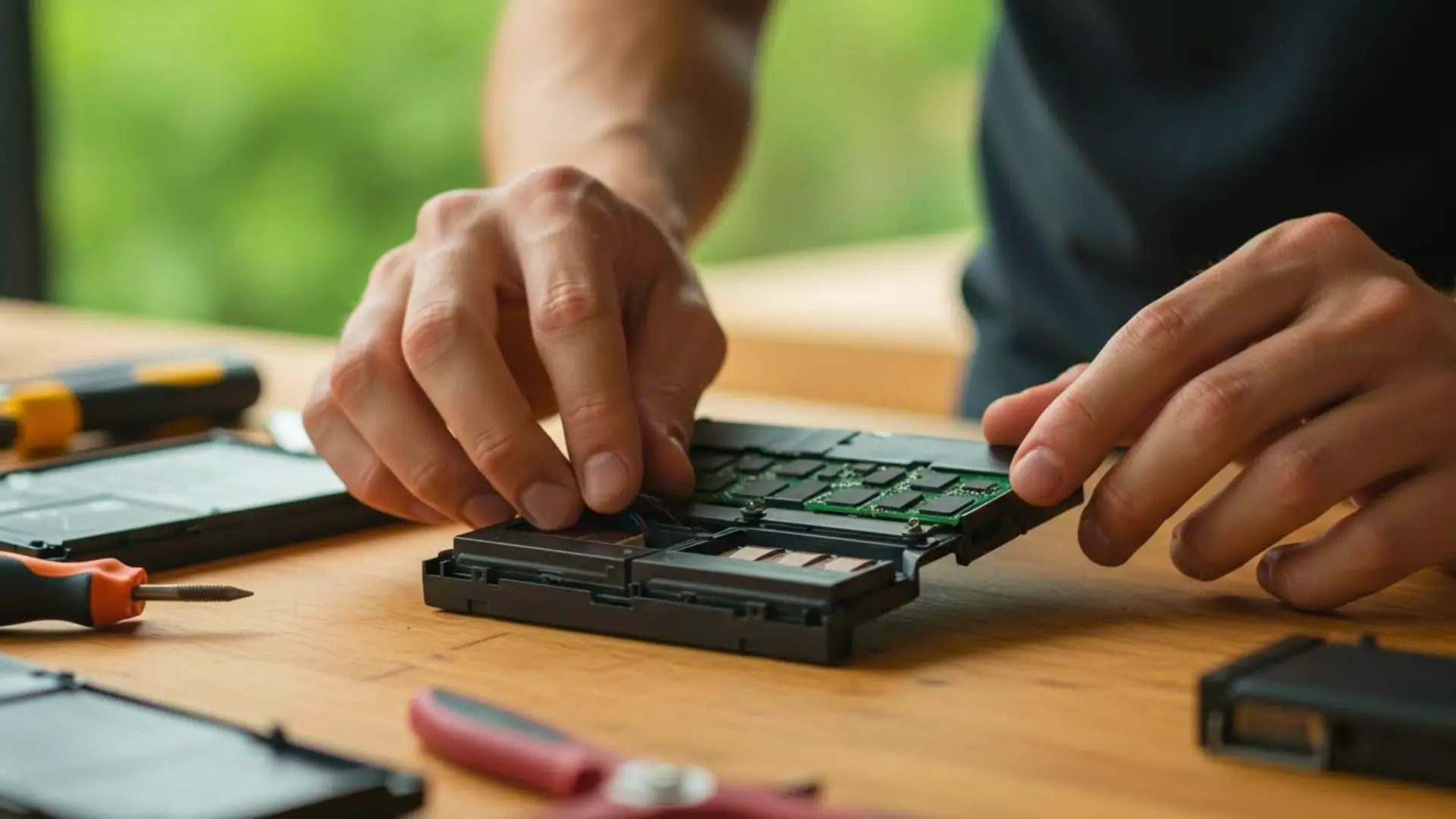
Five years ago, buying a refurbished smartphone was a bit of a shame. We pictured a branded device, slow, with a battery on its last legs, delivered in a crumpled cardboard box. In 2026, that image has completely changed, and those who still buy new devices as a rule are starting to question themselves seriously.
The refurbished market has reached its maturity. In France, around 3 million refurbished devices are now sold each year according to the Easy Cash barometer of February 2026. And this trend isn’t solely ecological: it is primarily economic and rational. The market now accounts for 22% of total smartphone sales in France, or about 1.2 billion euros, with a 15% year-over-year increase according to a Kantar study.
Planned obsolescence: a myth? Not really.
The term “planned obsolescence” irritates some manufacturers, but the figures speak for themselves. A high-end iPhone or Samsung Galaxy sold today will, within 24 to 36 months, be pushed to the sidelines not because it stops working, but because software updates slow down the user experience, because new features are no longer available, or simply because marketing communications create a sense of urgency to upgrade.
This artificial cycle carries a cost: environmental, financial, and ethical. The manufacturing of a smartphone is by far the most polluting stage of its life cycle: three-quarters of its environmental impact are attributable to it, mainly due to the extraction of the minerals needed for its design. A smartphone emits on average 85 kg of CO₂ equivalent before it has even been used once.
Buying new every two years, therefore, restarts this machine at full tilt, unnecessarily. In France, 62% of smartphones are replaced while they are still functioning perfectly.
Professional refurbishing: no compromises
The major development in recent years has been the professionalization of the sector. Reputable refurbishers no longer simply “clean” a device and resell it. They apply strict protocols:
- Comprehensive electronic diagnosis (battery, connectors, sensors, display)
- Replacement of defective components with original or equivalent parts
- Factory reset (data erasure, system reinstallation)
- Performance testing comparable to new devices
- Commercial warranty from 12 to 24 months
42% of consumers consider warranties a decisive criterion in their decision to purchase a refurbished device, and the market’s leading players have met this requirement.
It is within this ecosystem that specialists have built their reputation. Offering the purchase of a refurbished Samsung phone is no longer a gamble; it is a well-documented buying decision, with real guarantees and verified quality.
Refurbished Samsung: the case study
Samsung is one of the most represented brands in the refurbished market. In 2025, Samsung accounted for 17.5% of all trade-ins on specialized platforms, behind Apple, which structurally dominates this segment.
The Galaxy lineup offers exceptional depth: mid-range models to flagships like the S24 Ultra, there is a refurbished model for every need and every budget. A refurbished Galaxy S22 certified as being in very good condition today sits at a fraction of the original launch price, still with the same Dynamic AMOLED display, the same processor, the same user experience. The depreciation of new devices is absorbed; the product has proven its reliability over time.
For common professional uses — calls, emails, browsing, video conferences — the difference with a new model is almost zero in 90% of use cases.
What it says about us, consumers
There is a cultural dimension to this shift. According to the Kantar institute, nearly one in two French people now plans to buy a refurbished smartphone, compared with only 25% in 2019. The figure rises to 60% among 16-34-year-olds.
Choosing refurbished means stepping out of the cycle of overconsumption without sacrificing performance. It’s about making an intelligent trade-off between perceived value and actual value. It’s also about sending a signal to the market: product lifespans become a buying criterion.
The second-hand luxury market has understood this for a long time with Vestiaire Collective or Vinted. Market maturity is also reflected in more informed, more demanding consumers who compare quality grades, read warranties, and verify product traceability. Tech is following the exact same trajectory.
Refurbished is no longer a Plan B
Buying refurbished in 2026 is as much a matter of conviction as of reason. It’s choosing substance over marketing, measured impact over impulse buying, sustainability over a fleeting gadget.
The sector has matured, warranties are real, specialized platforms are reliable. If you’re still hesitating, ask yourself one simple question: what does “new” concretely offer you that certified refurbished cannot?

Contact details
Address:
Farmers Forum,
36, Dominick Street,
Mullingar,
Co. Westmeath,
Ireland
Phone:
+353 (0)44 9310206
Or email us:
For technical issues please check out our FAQ's page or email - [email protected]
For general Queries email - [email protected]
Request to add event to our Calendar - [email protected]
Send us your mart reports - [email protected]
Suggestions and feedbacks - [email protected]
News Items / Press Release - [email protected]
To Advertise on Farmers Forum - [email protected]