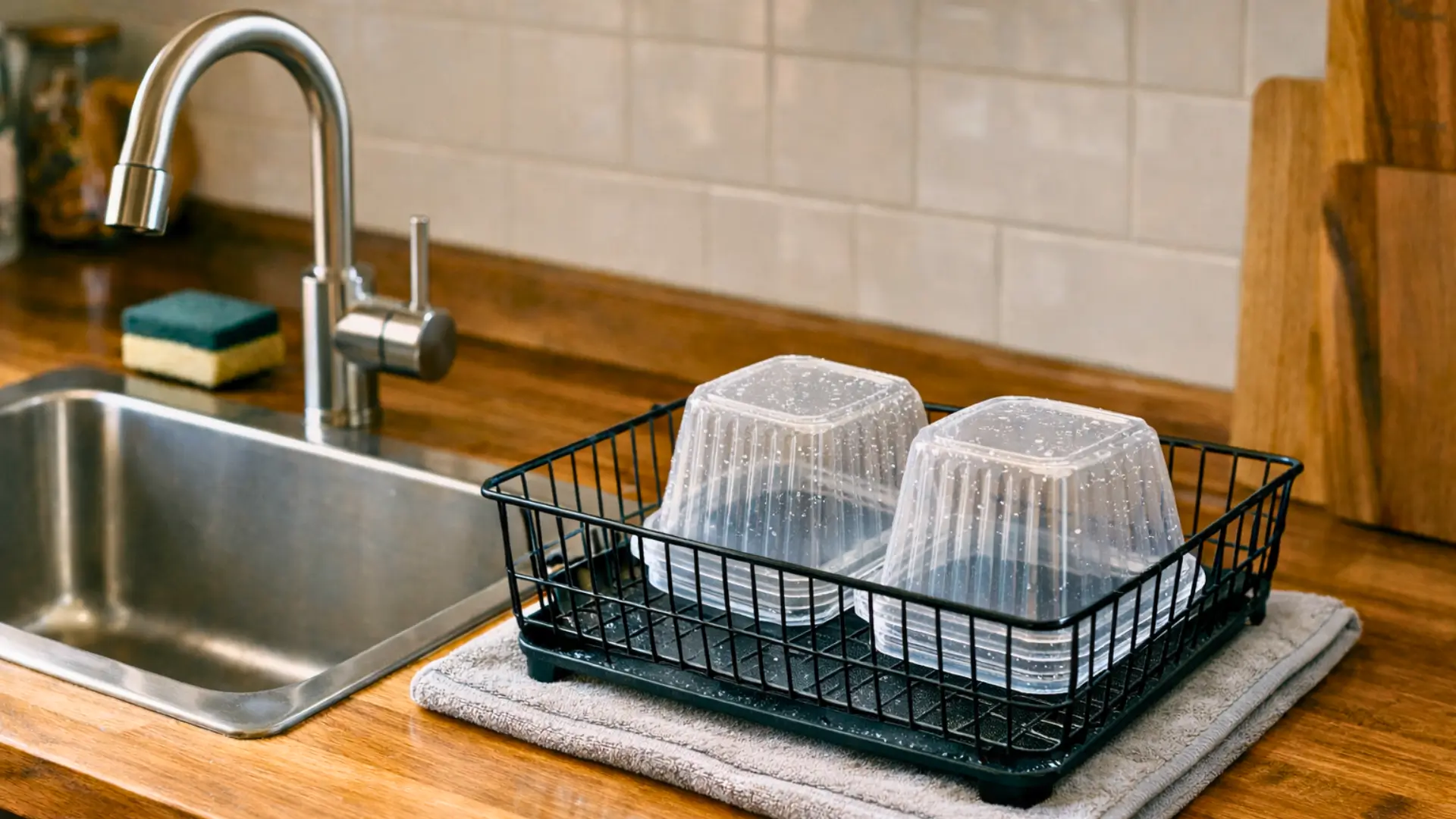
Is it really necessary to rinse every packaging under the tap before throwing it away? Behind this almost automatic gesture lies an industrial reality that is quite different. Between misconceptions and the real workings of recycling, it’s time to bring a bit of logic back into our daily habits.
The myth of perfectly clean plastic versus the reality of modern industrial recycling
When a tray still bears a few traces, a reflex persists in many households. The fear of mis-sorting takes hold and prompts systematic rinsing. Yet this obsession with absolute cleanliness rests more on a belief than on a real technical necessity.
In today’s sorting centers, engineers design equipment to handle imperfect waste. According to organizations like ADEME, it is sufficient for the packaging to be emptied properly. The presence of small tolerated residues does not prevent processing, which makes a large portion of domestic rinses unnecessary.
The actual operation of sorting centers and the pivotal role of industrial cleaning of plastics
Once collected, plastic waste follows a precise industrial path. The facilities sort, shred, and then turn this waste into flakes. At this stage, specialized processes remove impurities. High-temperature industrial washing largely replaces any domestic intervention.
Studies reported by the University of Leeds on recycling lines show that these systems use detergents and mechanical baths capable of removing grease and food residues. The already integrated cleaning operates in an optimized way to ensure efficiency and control.
In this context, rinsing a package at home doubles a step that is already planned. Worse still, it consumes potable water, sometimes heated, for an unnecessary result. The misleading “green” gesture may appear virtuous, but it is actually counterproductive.
The limit not to cross to avoid contamination and preserve the entire recycling chain
Not everything is allowed, however. Sorting centers tolerate packaging that is slightly dirty, but an overload of organic waste poses a problem. A container filled with sauce or liquid leftovers can contaminate other materials. This cross-contamination of waste represents a real industrial risk.
Materials like paper or cardboard are particularly sensitive. A simple infiltration of grease can prevent their recycling. In some cases, operators remove entire lots compromised to preserve the overall quality of recycling.
The sorting operators then redirect these wastes to incineration or landfill, a decision with consequences for the entire system. A single poorly emptied package can thus compromise the collective sorting effort, degrading the quality of flows and undoing the upstream work done by hundreds of households.
The essential actions to sort correctly without wasting water and to simplify daily life
The rule is simple and effective. You should empty a package, but not wash it. In practice, simply remove the leftovers with a spoon, a piece of bread, or a paper towel. This simple act of emptying without rinsing allows you to reconcile ecology and common sense.
Avoiding the use of running water also helps preserve a precious resource. According to data from the World Health Organization, drinking water remains a limited resource in many regions of the world. Every action truly counts, even in the kitchen.
Adopting this logic also simplifies daily life. Fewer constraints, less guilt, and better environmental efficiency. Sorting becomes a clear automatic practice, aligned with industrial realities and the current ecological challenges.

Contact details
Address:
Farmers Forum,
36, Dominick Street,
Mullingar,
Co. Westmeath,
Ireland
Phone:
+353 (0)44 9310206
Or email us:
For technical issues please check out our FAQ's page or email - [email protected]
For general Queries email - [email protected]
Request to add event to our Calendar - [email protected]
Send us your mart reports - [email protected]
Suggestions and feedbacks - [email protected]
News Items / Press Release - [email protected]
To Advertise on Farmers Forum - [email protected]