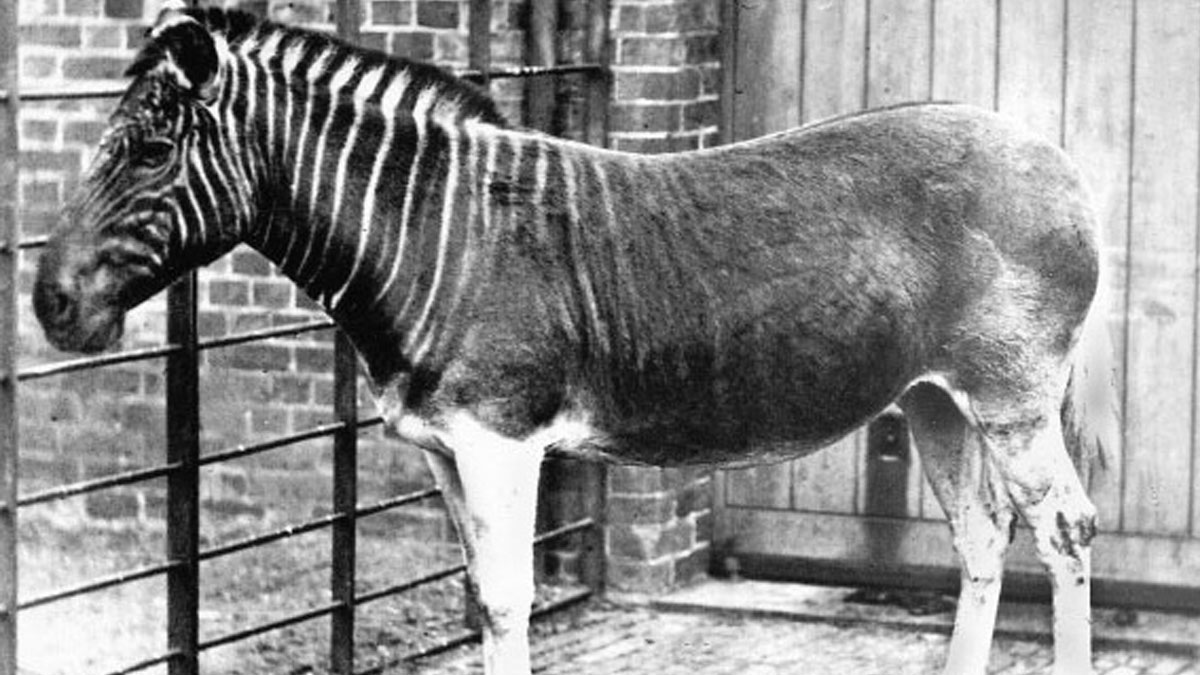
South Africa is today known for its sizable zebra populations, but a little under 150 years ago a subspecies with a variegated coat could still be seen there: the quagga.
Tragic Fate
Once thriving, the quagga was recognizable by its broad dark stripes on the head, neck, and mane. Fading gradually from the shoulders, they gave it the appearance of a creature halfway between a zebra and a horse.
Accused of ravaging crops and heavily hunted for its meat and hide, this large herbivore with the zebras-like build saw its populations collapse dramatically during the 19th century. It is estimated that the last wild quagga was shot in the very late 1870s, while the final specimen in captivity died on August 12, 1883 at Amsterdam’s Artis Zoo.
While this African equid had been regarded since the late 18th century as a distinct species, in 1984, genetic analysis of material from a museum specimen revealed that it was actually a subspecies of the plains zebra (Equus quagga), named Equus quagga quagga. This sequencing also marked the first ever carried out for an extinct animal.
More recent work, involving comparisons of DNA samples from eight quagga specimens to those of plains zebras, revealed a remarkably low genetic diversity in the former, which had diverged from the plains zebra about 140,000 years ago.
Reviving the Quagga
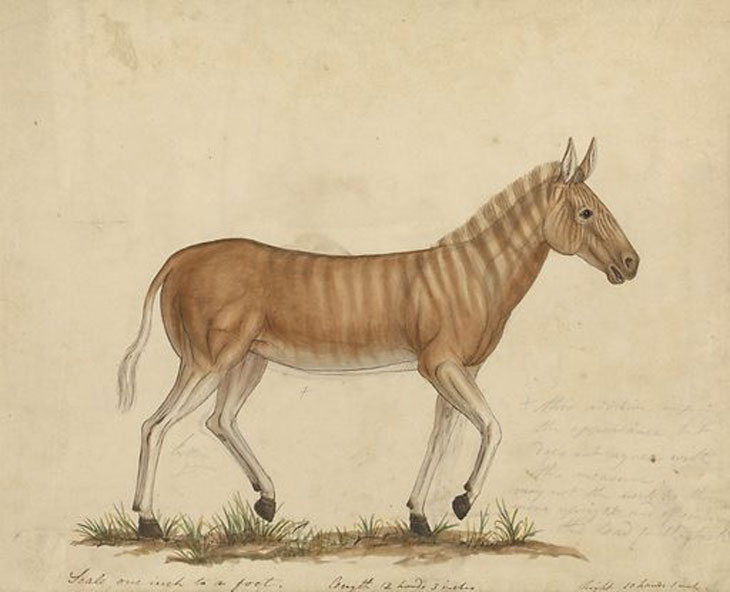
Launched in the late 1980s by the German taxidermist Reinhold Rau, the Quagga Project aims to bring Equus quagga quagga back to life through selective breeding.
Concretely, successive matings are intended, over generations, to fade the stripes starting at the neck, to prevent their spread to the mid-ventral region, and also to introduce a bay coat on the upper parts of the body and the muzzle, with white for the legs and the tail. Although there’s still a long way to go, foals displaying some of these traits have already been born.
“This project aims to correct a tragic error committed more than a century ago, driven by greed and illustrating a clear lack of long-term vision,” explains the site. “Ideally, herds displaying the quagga’s historical phenotype could someday once again tread the plains of the Karoo.”
If you were wondering, here is why zebras have never been domesticated.

Contact details
Address:
Farmers Forum,
36, Dominick Street,
Mullingar,
Co. Westmeath,
Ireland
Phone:
+353 (0)44 9310206
Or email us:
For technical issues please check out our FAQ's page or email - [email protected]
For general Queries email - [email protected]
Request to add event to our Calendar - [email protected]
Send us your mart reports - [email protected]
Suggestions and feedbacks - [email protected]
News Items / Press Release - [email protected]
To Advertise on Farmers Forum - [email protected]