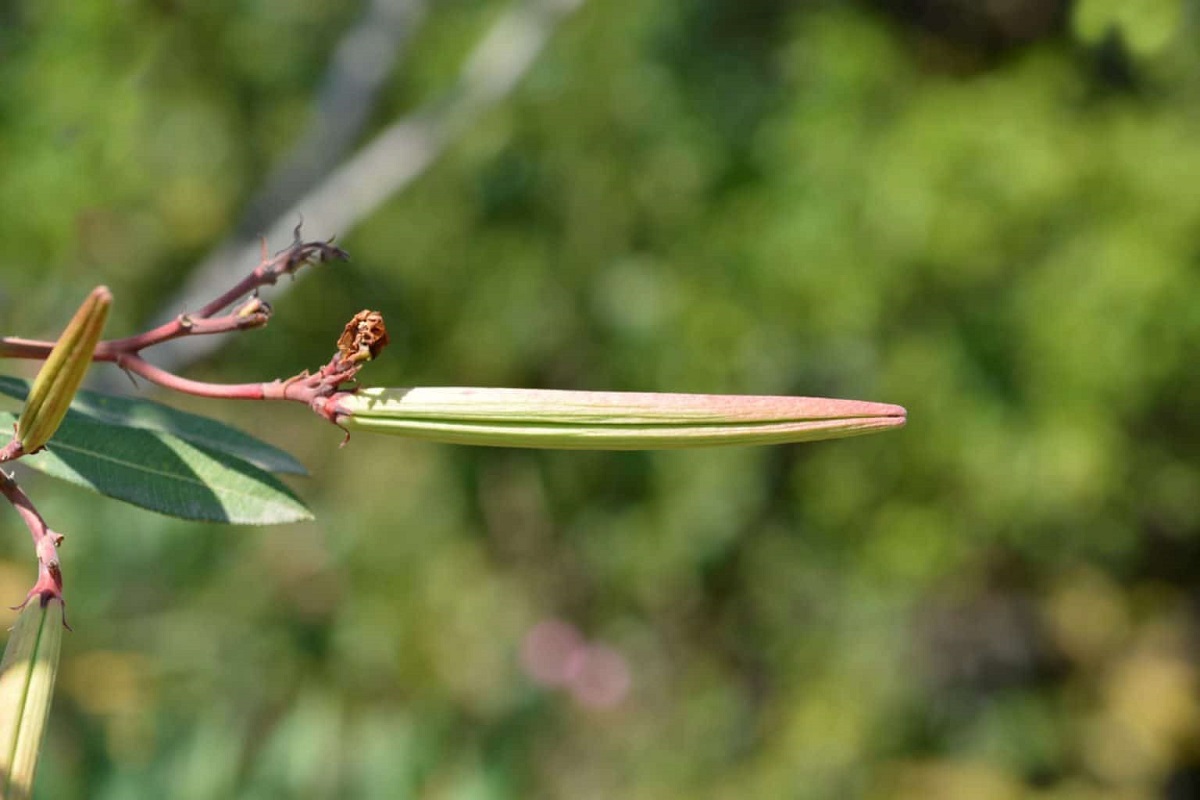
What those late-season formations really are
After bloom, oleander often displays slender, elongated pods that look like decorative accents. These structures are the plant’s true fruits, each capsule packed with silky, wind-dispersed seeds. While striking, their appearance raises a practical choice for gardeners: nurture the pods or channel energy back to future flowers.
Why pods can weaken next year’s display
Seed production demands substantial resources, much like an athlete burning through vital reserves. As pods mature, they divert carbohydrates and minerals away from bud initiation and floral development. The outcome is frequently fewer, smaller, or delayed blooms, reducing the plant’s seasonal impact.
The case for timely removal
In most gardens, the wisest move is to remove pods soon after they form. Deadheading lets the shrub focus on shoot renewal and next year’s flowering wood, not on seed maturation. This small intervention can translate into denser, longer, and more vibrant displays the following season.
When to act for best results
Act before pods ripen, ideally as they first appear. Early removal prevents the plant from committing heavy energy into seed filling and pod dry-down. If pods already swell, cut them promptly to halt further drain, protecting next year’s show.
How to prune safely and cleanly
Use sharp, sanitized pruners to snip pods just above a healthy node. Make clean, angled cuts that shed water and reduce infection risk. Avoid tearing or crushing tissues, which invites disease and slows wound closure.
Handle with care: toxicity matters
Every part of oleander is toxic, including pods and milky sap. Wear nitrile gloves, long sleeves, and eye protection during all handling and cleanup. Double-bag prunings for disposal, and keep debris away from pets and curious children.
- Wear protective gloves and wash exposed skin afterward
- Disinfect tools with alcohol or a 10% bleach solution
- Never burn or compost pod waste in household systems
- Keep cut material off edible beds and out of livestock reach
Are there good reasons to keep a few pods?
If you’re keen on seed saving, you can allow a limited set to mature. Choose one or two well-placed clusters on a vigorous branch, and remove all others. Label and monitor them, then collect mature, splitting pods before seeds drift.
Beyond pod removal: boosting bloom potential
Oleander thrives on bright light, lean nutrition, and measured water. Situate plants in full sun for at least six daily hours to maximize floral induction. Feed modestly with a balanced, bloom-forward fertilizer, prioritizing phosphorus and potassium over excessive nitrogen.
Water, soil, and airflow essentials
Provide deep, occasional watering, allowing the topsoil to partly dry between sessions. Ensure freely draining substrates, especially in containers or heavy clay. Maintain open canopies through light thinning to deter fungal pressures and pest buildup.
Common pitfalls to avoid
Do not postpone pod removal until they crack and fluff open. Skip harsh, out-of-season shearing that removes next year’s flower-bearing wood. Never ignore sticky honeydew, soot, or leaf curl, which signal pests needing timely control.
A simple rhythm for the year
In late spring and summer, enjoy peak color while deadheading spent trusses. As pods emerge, clip them early with clean, confident cuts. In late winter, perform light shaping, preserving young, pencil-thick shoots destined for bloom.
What experts emphasize
“Remove pods early to conserve floral energy; prioritize sun, sanitation, and steady care,” notes a Mediterranean-plant specialist. “Consistent, gentle maintenance outperforms sporadic, drastic interventions.”
The balanced verdict
For most gardeners, pod removal is a low-effort, high-return practice that safeguards abundant flowering. Leaving pods suits targeted seed collection, but it rarely benefits ornamental impact. Decide based on your goals, then act with timely, safe, and thoughtful cuts to keep your oleander brilliantly in bloom.

Contact details
Address:
Farmers Forum,
36, Dominick Street,
Mullingar,
Co. Westmeath,
Ireland
Phone:
+353 (0)44 9310206
Or email us:
For technical issues please check out our FAQ's page or email - [email protected]
For general Queries email - [email protected]
Request to add event to our Calendar - [email protected]
Send us your mart reports - [email protected]
Suggestions and feedbacks - [email protected]
News Items / Press Release - [email protected]
To Advertise on Farmers Forum - [email protected]