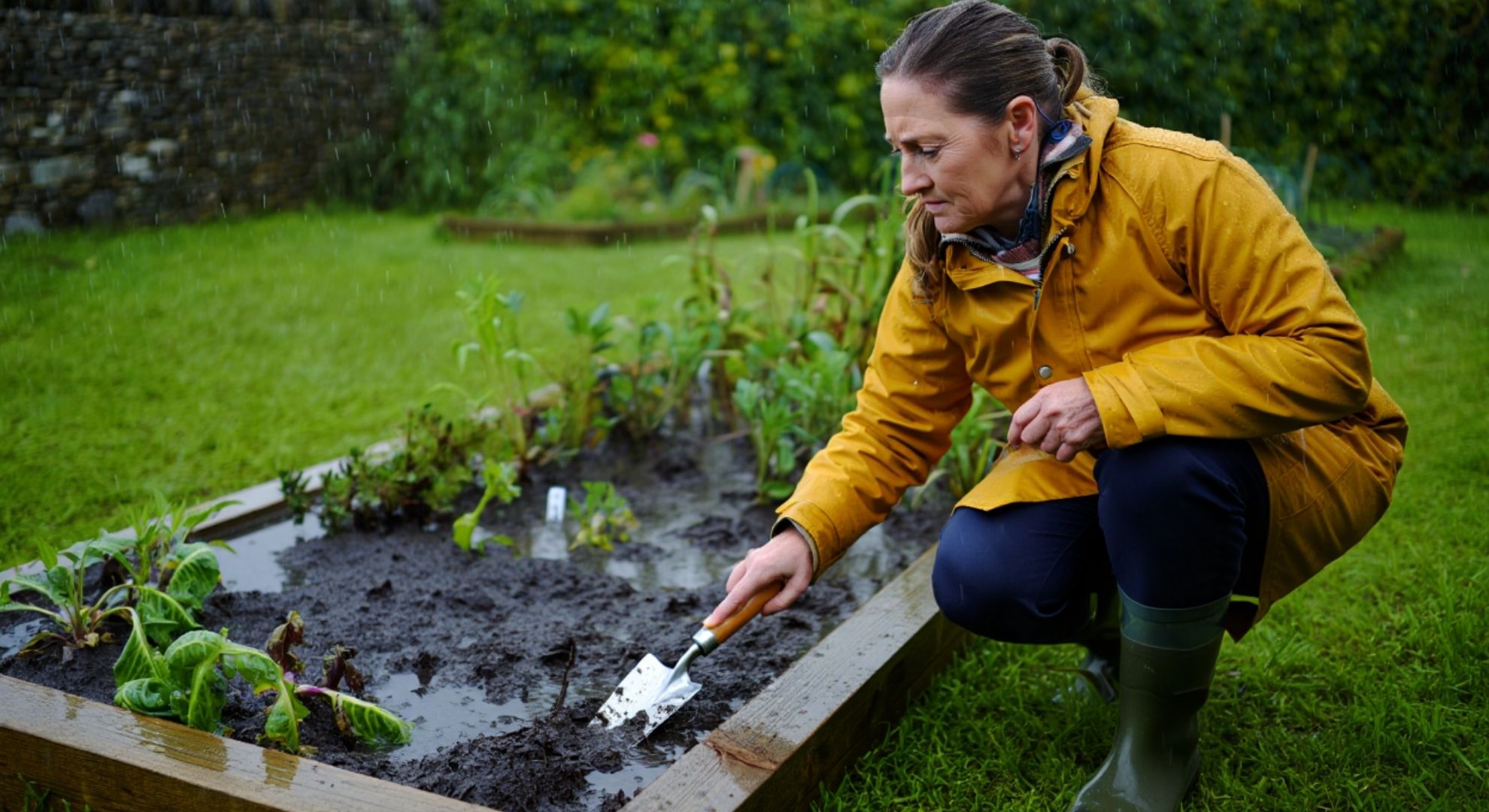
Irish gardeners love the neatness and promise of raised beds. They look tidy, warm up earlier, and keep soil life close at hand. Yet year after year, many beds underperform, slump, or drown. The culprit isn’t wind or slugs. It’s the habit of sealing the bottom with membranes, plastic, or timber bases that block the soil’s natural function.
Why beds fail in Irish rain
Ireland’s climate is wet and often windy. When you cap the underside of a bed with weed fabric or plastic, you create a perched water table that has nowhere to drain. Roots sit in cold, airless conditions; microbes suffocate; nutrients lock up. “It’s like putting your bed on a tray of water,” one Mayo grower told me. Plants may look fine in June, then stall as July rains arrive and the soil turns sour.
The second cost is biological. A sealed base cuts off contact with the living subsoil—worms, fungi, and microfauna that cycle nutrients and structure aggregates. “Beds need to talk to the ground,” a Dublin allotmenteer said. When they can’t, fertility becomes a bagged input problem rather than a self-renewing system.
Build for drainage and life
If your bed sits on soil, skip the membrane. Remove turf, lightly fork to open the subsoil, and set the frame straight onto earth. If you must deter rodents, use galvanized mesh with openings big enough for water and worms to pass through.
On hard surfaces like concrete, you either go deeper and treat it like a true container, or you lift the bed and build in generous drainage layers with side outlets. Most gardens are better served placing beds on open ground and letting life connect.
What to fill them with
Another linked error is filling the frame with 100% compost. Pure compost can slump, oversupply some nutrients, and get hydrophobic after a dry spell. Aim for a loamy blend that mimics good field soil:
- About half screened topsoil or sandy loam, a third mature compost, and the balance sharp sand or fine grit for structure and drainage.
Avoid peat-based mixes; Irish beds don’t need the extra water-holding in this climate, and peat extraction harms bogs. If you’re starting lean, add a sprinkle of rock minerals (basalt or granite dust) and a light charge of seaweed meal for trace elements.
Manage water the Irish way
Open-bottom beds still need smart water management. In heavy rain, add surface shape: keep soil slightly crowned, not flat, so water sheds rather than ponds. Leave a couple of small drainage notches at the bed’s edges. Mulch with shredded leaves or straw to slow splash, protect aggregates, and feed soil life.
Wind whips moisture from leaves even when the soil is wet. Low windbreaks—peas on mesh, willow hurdles, or staggered plantings—reduce stress and disease. “With a simple screen, my brassicas finally held their own,” reports a Sligo home-grower.
Crop roots want depth, not walls
When the base is open, roots don’t stop at the bed frame. Carrots find deeper coolth in August; parsnips chase moisture through September showers. An open base grants your plants a bigger pantry and steadier hydration. That’s why shallow frames on open ground often outgrow deeper boxes perched on plastic.
If your site is very boggy, consider French drains between beds or raise paths slightly so water has somewhere to go. The goal is movement, not mummification.
Quick fixes for existing beds
If you’ve already built with a sealed bottom, you don’t have to start over. Try this:
- Cut and peel back the membrane in large windows to reconnect with soil.
- Spike a few vertical “chimneys” with a bar to punch through compacted layers.
- Add coarse organic matter (wood chips on paths, leaf mold in beds) to feed structure.
- Create shallow side weep-holes so excess water can escape.
Within a season, you’ll see better tilth, fewer yellowed leaves, and sturdier, more flavorful crops.
Planting plans that suit the climate
Choose crops and spacings that respect moisture. Dense planting can trap damp, so give lettuces and brassicas a touch more air. Interplant with shallow-rooted herbs—dill, coriander, parsley—to keep the surface active and intercept rain splash. Succession sow in small, regular waves to dodge any single weather swing.
“Since opening the beds to the ground, I fertilise less and harvest more,” says a Galway grower. “The soil just feels alive under my hand.”
A habit worth changing
The raised bed is a brilliant tool when it enhances what the soil already does well: drain, breathe, and cycle life. The moment we trap it above a plastic plate, we invite stagnation and stress. Build beds that connect to the earth, choose balanced fills, and shape for Irish rain. Do this, and you’ll spend less on inputs, lose fewer plants, and gain the quiet satisfaction of soil that works with you, season after season.

Contact details
Address:
Farmers Forum,
36, Dominick Street,
Mullingar,
Co. Westmeath,
Ireland
Phone:
+353 (0)44 9310206
Or email us:
For technical issues please check out our FAQ's page or email - [email protected]
For general Queries email - [email protected]
Request to add event to our Calendar - [email protected]
Send us your mart reports - [email protected]
Suggestions and feedbacks - [email protected]
News Items / Press Release - [email protected]
To Advertise on Farmers Forum - [email protected]