
After having declined significantly over the two previous years, the Earth’s soils’ capacity to sequester carbon dioxide experienced a dramatic rebound in 2025.
Massive Recovery
The vegetation of forests, grasslands, and wetlands absorbs atmospheric CO2 during its growth, and re-releases it when it decomposes or burns. In recent decades, these ecosystems have tended to take in more carbon than they have released, thanks to rising global temperatures and the fertilizing effect of this greenhouse gas.
Under the influence of an exceptional El Niño and massive wildfires in the Amazon, this trend came to a near halt in 2023 and 2024, resulting in unprecedented CO2 concentrations in the atmosphere.
As new research, based on satellite observations and computer simulations, shows, the “terrestrial sink” recovered last year, sequestering about 2.36 gigatons of carbon, i.e. 0.71 more than the mean for the 2015-2022 period.
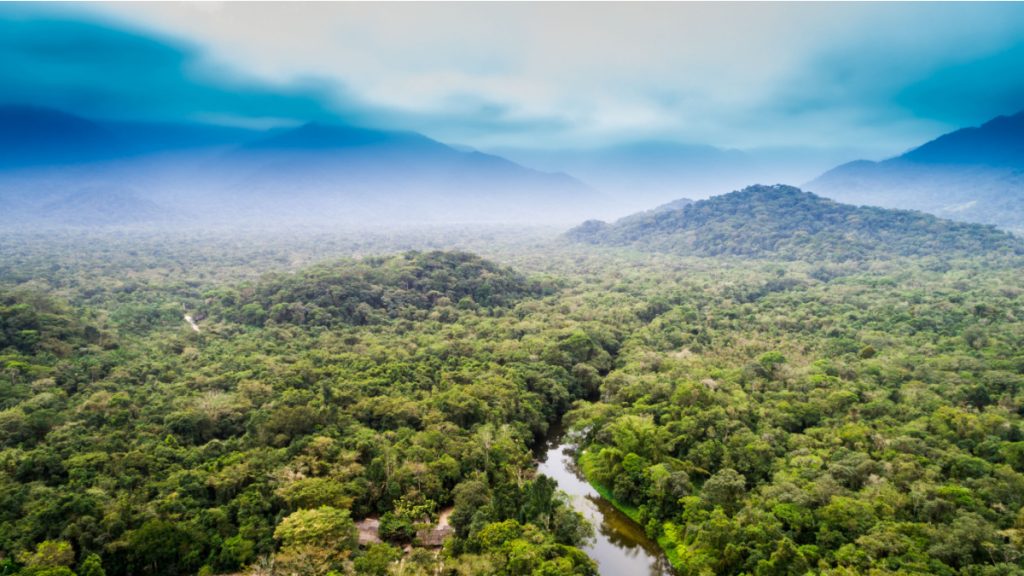
According to the authors of the study, preprinted on the arXiv server, this rebound is essentially explained by a spectacular vegetative growth in the world’s tropical forests. “The climate has normalized, notably in Africa and the Amazon, which has allowed plants to restore their capacity to sequester carbon,” explains Philippe Ciais, of the Laboratoire des sciences du climat et de l’environnement.
A Short-Term Resilience
Until now, natural sinks—both oceanic and terrestrial—are estimated to have absorbed roughly half of the CO2 linked to human activities. But this enormous “boost” will not last forever. Unless emissions of this greenhouse gas plummet drastically, there is concern that the Earth’s biosphere could transition from a carbon sink to a carbon source in the coming decades.
“The lands prove remarkably resilient in the short term, but as extreme weather events, driven by climate change, become more frequent, this capacity is compromised,” notes Mike O’Sullivan of the University of Exeter.
The ongoing “super El Niño” currently afflicting the Pacific raises fears of a fresh collapse in the soils’ capacity to sequester carbon as early as next year, with an increased risk of droughts and fires in key tropical regions.
Last year, a study had revealed that African fig trees were turning carbon dioxide into stone.

Contact details
Address:
Farmers Forum,
36, Dominick Street,
Mullingar,
Co. Westmeath,
Ireland
Phone:
+353 (0)44 9310206
Or email us:
For technical issues please check out our FAQ's page or email - [email protected]
For general Queries email - [email protected]
Request to add event to our Calendar - [email protected]
Send us your mart reports - [email protected]
Suggestions and feedbacks - [email protected]
News Items / Press Release - [email protected]
To Advertise on Farmers Forum - [email protected]