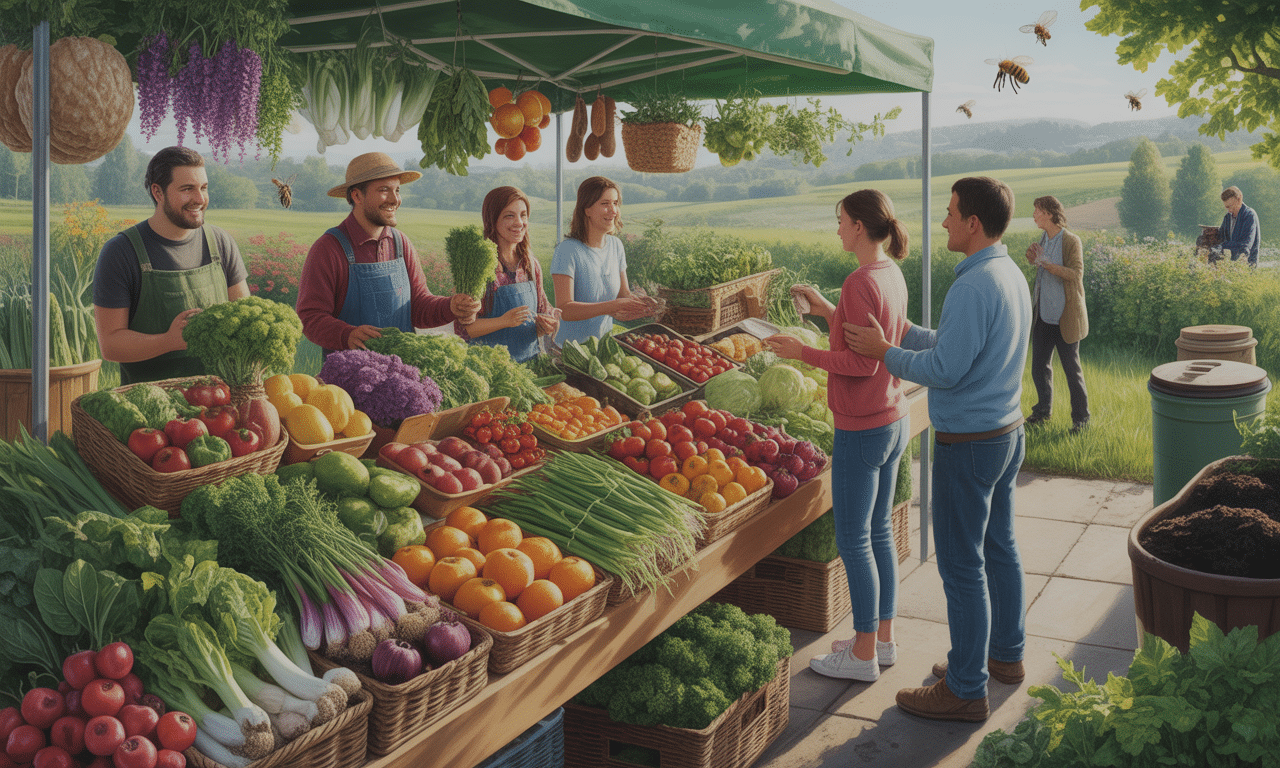
Adopting a sustainable and local diet is no longer a personal option: it is a collective necessity. By 2025, the footprint of our plate weighs heavily; according to ADEME, nearly 25 % of French greenhouse gas emissions come from food, while production explains most of the impacts (around 84 %) and transport accounts for only a small share. Yet our consumer choices make a difference: an out‑of‑season tomato can generate up to 7 times more emissions than its seasonal counterpart, and green beans imported by air multiply the carbon footprint per kilo by more than thirty compared with locally produced products. The rise of short supply chains and the growing interest in the “Less and Better” reflect a concrete social expectation; the Fondation Nicolas Hulot notes that nearly half of the French are more attentive to local products. Beyond the climate, choosing seasonal products and supporting local producers strengthens nutritional quality, food sovereignty and the resilience of territories.
Why prioritize local and seasonal products
Adopting a local and seasonal diet is not a mere taste preference: it is a strategy to reduce our carbon footprint and reinforce food sovereignty. Recent figures show that nearly a quarter of national emissions are linked to our food. This weight invites a reevaluation of our shopping and consumption habits. By targeting products grown close to home and respecting seasonality, we immediately reduce the need for artificial storage and long-distance transportation, while promoting superior taste quality.
The preference for local products also translates into a desire for transparency about where foods come from: 48% of French people say they are now more interested in local products, indicating a strong societal expectation. Short supply chains reduce intermediaries, improve producer remuneration, and limit supply disruptions revealed during recent crises. To delve into the concrete benefits of this approach, several resources detail the advantages of proximity-based eating, such as this synthesis or the practical analysis offered by Nutrition Positive.
Choosing seasonal products means following natural cycles, reducing energy-intensive interventions (heated greenhouses, prolonged storage) and prioritizing harvests at peak ripeness. Beyond the climate argument, seasonality supports tastier and more nutritious food. Associative actors and consumer guides emphasize the value of adapting menus to harvest periods, as noted by ADEME in its work on sustainable food. Supporting local, therefore, combines quality, resilience and reduced environmental impact.
The climate impact of agricultural production
The majority of the climate footprint of food comes from the production phase: farming practices, inputs, irrigation and livestock. Nitrogen fertilizers and effluent management account for a substantial portion of emissions. Nitrous oxide released during fertilizer application has a warming potential far exceeding that of CO2, placing production at the heart of the actions to be taken if we want to reduce food-related emissions in a durable way.
The role of animal farming is also decisive. Methane emissions from digestion and manure weigh heavily in the carbon balance: a cow can produce large daily volumes of methane, a greenhouse gas whose climate impact is substantially amplified relative to CO2. Intervening in farming systems (feeding, anaerobic digestion, agroforestry) can mitigate these emissions. Practices such as anaerobic digestion convert effluents into energy, reducing gas leaks and generating useful resources for the farm business.
The differences in impact depending on origins and modes of transport can be dramatic but must be interpreted in context: transportation accounts for a smaller share of total emissions than production itself. This does not negate the harmful effect of frequent air transport: the example of green beans imported by plane clearly illustrates how transport mode amplifies emissions. For analyses and methodological tools, consult practical resources like Green Code or the studies published by ADEME.
Health and nutritional quality of local foods
The health benefits constitute a central argument in favor of a local and seasonal diet. Products harvested at full maturity and consumed soon thereafter retain more vitamins, antioxidants and sensory qualities. A fresh product, picked nearby and quickly delivered to the consumer, often offers higher nutritional density than a product stored and transported for a long time. This quality manifests in flavor as well as in the ability of foods to positively contribute to health.
Residues of pesticides are also crucial. Many imported fruits show traces of substances prohibited or tightly regulated in Europe; comparisons reveal regulatory and phytosanitary practice differences according to country of origin. Reducing dependence on imports helps limit exposure to certain residues that do not meet European standards. Moreover, short supply chains often encourage farming practices that are less intensive and favor better traceability.
Beyond pesticides, reducing additives and preservatives is an advantage of consuming locally: fewer preservation treatments and diminished need for prolonged industrial processing extend the natural quality of foods. Traditional alternatives like preservation in vinegar or brine allow for healthy, artisanal storage. For practical tips and local initiatives promoting these approaches, consult experiences published on Vivredemain or practical guides on CLCV.
Limiting reliance on imports: the limits of “eat local” alone
Choosing local is necessary but not sufficient: the environmental balance of a product depends mostly on its mode of production. A locally produced item from intensive farming, dependent on chemical inputs or heavy irrigation, can have a larger footprint than an imported product produced using sustainable methods. The life cycle analysis must accompany every responsible consumption choice.
Agricultural systems that diversify crops and favor polyculture reduce soil pressure and promote biodiversity, unlike intensive monocultures. Legumes, for example, play a crucial agronomic role by fixing nitrogen and reducing the need for mineral fertilizers. Likewise, cattle raised on pasture often have a better carbon balance than those fed heavily on imported cereals, provided that pasture management is sustainable.
Organic farming and agroecology show significant emission reductions: some studies estimate between 20 and 50% fewer greenhouse gases compared with conventional systems. The low-carbon label and durable certifications steer farms toward measurable and verifiable practices. Finally, relocalization must be thought through strategically: replacing imports with local production without adapting practices can create new problems (soil degradation, water stress). Resources and detailed analyses, such as those from ADEME or specialist sites, help evaluate these trade-offs and guide public policies and private choices.
Economic and social benefits of short supply chains and tools to act
The development of short supply chains benefits more than the climate: it restructures the local economy, creates jobs and strengthens the resilience of territories. Supporting local producers improves value distribution and reduces dependence on long import chains. In regions where market gardening belts are developing, costs related to logistics drop and the quality of supply for communities and institutional catering improves.
Public policies can amplify these dynamics: the objective of increasing the share of organic agriculture and locally sourced food in school canteens demonstrates a desire to embed these practices over the long term. Such measures also promote education about seasons and products, as well as more thoughtful consumption from a young age. For concrete examples of territorial and educational initiatives, see experiences published on Vivredemain or articles on turning leftovers into resources.
Digital tools facilitate the transition at both individual and collective levels: traceability apps, geolocation of producers and carbon ratings help make informed choices. Platforms like “C’est qui le patron ?” or “Les Ruches qui disent Oui” connect consumers directly with producers and improve supply chain transparency. A concise overview of useful tools helps guide choices:
Concrete daily actions — consulting seasonal calendars, prioritizing sustainable labels, supporting local markets — help align consumption with values. Every action counts and, together, strengthens a fairer and more resilient food transition. To go further, practical readings and resources are available on Vivo-Green, Green Code or the concrete advice listed by Vivredemain.
Adopting a sustainable and local diet is not a trend: it is a necessity in light of current climate challenges. Food accounts for nearly a quarter of national greenhouse gas emissions, which makes every consumption choice meaningful. Favoring locally sourced products directly reduces our carbon footprint and supports food systems less dependent on distant transportation.
The environmental argument is solid: most impacts originate from production methods, but seasonality and short supply chains limit the need for artificial energy inputs. An out-of-season tomato can multiply its emissions by seven compared with a seasonal one; vegetables imported by plane can generate thousands of percent more emissions. Consuming locally and seasonally reduces these energy and water wastes.
From a health perspective, produce harvested at maturity and consumed promptly retains more nutrients. Choosing seasonal fruits and vegetables, along with respectful supply chains, reduces exposure to pesticides and imported preservatives. This link between dietary quality and personal health reinforces the case for rethinking our eating model.
Economically and socially, supporting local producers creates jobs and strengthens territorial resilience. Reducing reliance on imports, localizing strategic production and promoting practices like agroecology contribute to a fairer and more sustainable economy.
Finally, the philosophy of “Less and Better” for animal products, crop rotation, and increasing organic surfaces shows that concrete, measurable solutions exist. Moving toward a local and sustainable diet means aligning daily habits with choices that protect the climate, biodiversity and health, while empowering communities.
Frequently asked questions — Why adopt a sustainable and local diet
Q. Why should I favor locally produced and seasonal foods?
R. Choosing local and seasonal foods immediately lowers the carbon footprint of daily choices, supports local producers and enhances the nutritional quality of the plate. By 2025, rethinking our eating habits is no longer a luxury: it is a necessity to reduce emissions associated with food and to strengthen the economy of territories.
Q. What is the overall impact of our diet on emissions?
R. Food accounts for a major share of emissions: about 25% of emissions in France are linked to it. Moreover, a large portion of environmental impacts comes from production itself (around 84% of ecological impacts), showing that changing what we buy and how it is produced is essential.
Q. Do off-season products really pollute more?
R. Yes: cultivating out of season often requires heated greenhouses or energy-intensive imports. For example, an out-of-season tomato can generate up to 7 times more emissions than its in-season counterpart. Similarly, green beans imported by air can multiply the carbon footprint by more than 30 times compared with locally grown beans.
Q. Is eating locally enough to be sustainable?
R. No: local is a good part of the solution, but it does not by itself guarantee a low environmental footprint. The production methods (monocultures, animal feed, fertilizer use) often determine the bulk of emissions. Locality must be combined with sustainable agricultural practices.
Q. How do production methods influence the carbon footprint?
R. Agricultural inputs, such as nitrogen fertilizers, and intensive practices generate the majority of emissions (for example, nitrous oxide, a highly powerful greenhouse gas). Conversely, organic farming and agroecology significantly reduce emissions (estimates range from 20 to 50% fewer emissions) by preserving soils and biodiversity.
Q. What is the role of livestock in climate change?
R. Rearing animals contributes substantially to greenhouse gases, particularly methane from ruminants. Choices about animal feed (grazing versus cereals) and technical solutions such as biogas or agroforestry can reduce these emissions; the guiding principle of “Less and Better” for animal products remains central.
Q. Are locally produced foods better for health?
R. Yes: foods harvested at maturity and consumed quickly via short supply chains retain more nutrients. They also limit exposure to pesticides and preservatives used to extend transport and storage, reducing health risks tied to residues that are forbidden under European standards.
Q. How does local food benefit the economy and social fabric?
R. Buying local supports farmers, creates jobs and strengthens territorial resilience in the face of crises (think peri-urban market belts). Reducing dependence on imports redirects added value toward local supply chains and secures food supply.
Q. What about biodiversity?
R. Diversified farming systems (polycultures, rotations) support biodiversity and protect ecosystem services (pollination, living soils). On average, extensive or agroecological practices preserve far more biodiversity than intensive agriculture.
Q. How can seasonality be applied to fishing and seafood?
R. Seasonality also applies to marine resources: respecting breeding periods and favoring sustainable fisheries (labels and best practices) is essential to avoid overfishing. For example, many Mediterranean stocks are already under pressure, making it wise to choose responsibly caught products.
Q. What tools should I use to eat local and seasonal?
R. Seasonal calendars and apps that connect producers help identify nearby products easily. Some platforms include traceability, QR-code scanning, geolocation or carbon ratings, simplifying daily decision-making.
Q. What concrete actions can I take today?
R. Favor local and seasonal products, reduce the share of animal products following the “Less and Better” principle, prefer organic or low-carbon certified supply chains, and support short supply chains. At the collective level, demand ambitious public policies to develop sustainable agriculture and strengthen the region’s food autonomy.

Contact details
Address:
Farmers Forum,
36, Dominick Street,
Mullingar,
Co. Westmeath,
Ireland
Phone:
+353 (0)44 9310206
Or email us:
For technical issues please check out our FAQ's page or email - [email protected]
For general Queries email - [email protected]
Request to add event to our Calendar - [email protected]
Send us your mart reports - [email protected]
Suggestions and feedbacks - [email protected]
News Items / Press Release - [email protected]
To Advertise on Farmers Forum - [email protected]