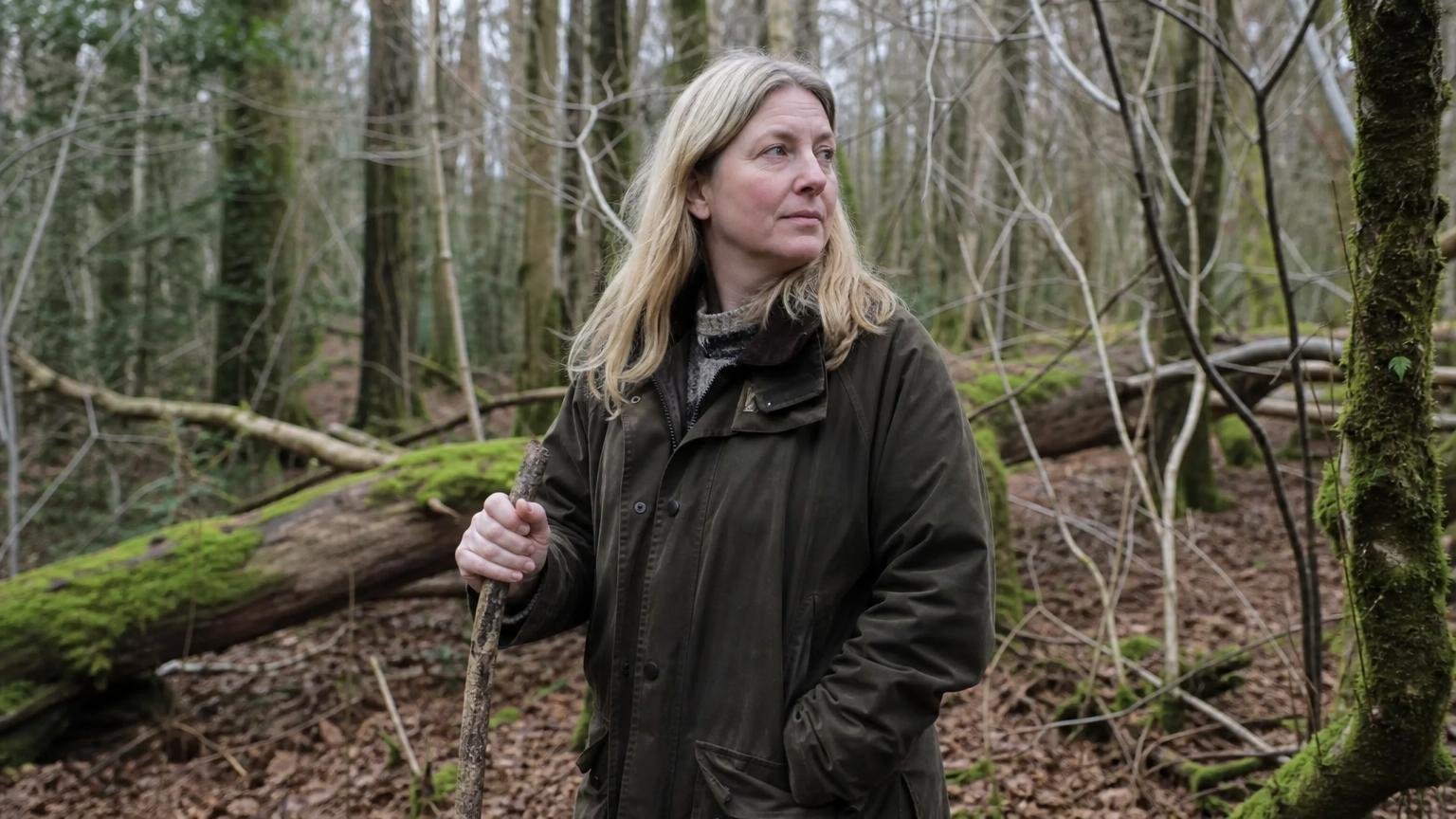
The path curls through foxglove and bramble, and a small wooden gate leans as if pleased to see you. On the other side, a dozen acres of Longford light filter through oak and birch, a soft green the color of kept promises. She walks it with quiet steps and a pocketknife, pausing the way some people pause at altars.
“Nothing fancy,” she says, her voice even and low. “He taught me to keep time with the trees, not the clock.” The old man is gone now, but his ways remain, marked in pencil and mud across the woodland floor.
The Neighbor’s Way
They were an odd pair: she with bags of groceries and he with hands stained by tannin, swapping recipes for stews and the names of moths at the kitchen table. When he died, the solicitor handed her a short letter and longer silence: the wood, and the responsibility that comes with it.
She doesn’t call herself a manager or a steward. “I’m just keeping the rhythm he set,” she says. Her days are small acts—a thorn pulled from a bootlace, a ride cleared by hand, a hazel stool coppiced on a good moon.
The Ledger and the Seasons
The old man left a brown ledger, its spine held with tape, neat rows of jobs for frost and for drought. He wrote in months, not in deadlines, and she follows them like a cook follows heat.
- Winter: cut hazel clean, stack cordwood to season, leave brash for wrens and beetles.
- Early spring: open the rides a hair, let sun stitch bluebells from the shade.
- Midsummer: pull no ivy, mend no nests; what is living stays living.
- Autumn: lift a ditch lip, lay a hedge with patience, thank the rain for what it carries.
“Never sweep a wood bare,” his notes warn, the ink blotted where a raindrop once fell. “Leave the mess that feeds the world.”
Tools You Can Carry
There are no tractors here, no flinty noise of engines. Just a bow saw, a billhook, a wheelbarrow with a tire that sighs but still turns. She prefers tools that sleep under her stairs, not ones that ask for fuel and fresh parts from far away.
“The work should be felt in the palms,” she says, showing the crescent callus at the base of her thumb. “Steel, wood, and a patient back. That’s most of the magic.”
Quiet Economies
Money comes in small parcels: a stack of logs to a neighbor, a batch of green sticks for a basket maker, a Saturday walk for a school group learning which trees sing in wind. Nothing hurried; nothing forced.
She marks each sale with a pencil cross and a note on what was taken and what was left. “You can’t keep taking from a wood and calling it care,” she says. “It feeds you when you feed it back.”
What the Woods Remember
Every bend has his touch on it: a ditch re-cut with a spade, a hedge laid low and then risen into feathered green. She keeps those lines, even when it would be easier to run a strimmer through and be done by noon.
“Sometimes I hear him,” she laughs, “complaining I’m late to the ride edges.” She nods toward a shallow glade where sunlight warms an ant hill the size of a small stool. “He’d say, ‘Leave that. Ants are the nervous system.’ And he’d be right.”
Creatures That Return
Since the first winter she cut hazel, dormice nested in the brash, and a tawny owl stitched the twilight with question marks. Bluebells have poured across the banks, and a slow-worm showed its mercury back on the path one warming day.
Not everything is gentle. Deer browse the saplings, and ash dieback has left chalky sockets where trees once stood. She doesn’t gloss it with sentiment. “There’s loss in any living place,” she says. “You hold what you can and let time mend what it will.”
The Neighbors, Then and Now
He had a way of waving people in and sending them out with mud on their boots and a pocket of stories. She tries to keep that door unlatched. On Sundays, she brews a thermos of tea and leans the saw against a stile for whoever wanders through.
“They help stack a pile, and I tell them why the pile matters,” she says. “That’s the trade: time for understanding, and a biscuit for the road.”
A Future Kept Simple
There’s a plan pinned with a drawing pin above her sink: not a blueprint, just a sloping list of seasons curling into the next. It ends with two words the old man wrote, then underlined twice: “Keep noticing.”
So she walks—light boots, light touch—and listens for what the wood is asking. To open a ride here, to let a windthrow stay where it fell, to cut only what can be carried without breaking more than you mend.
“His way wasn’t a method, really,” she says, setting down the thermos and reaching for the saw. “It was a kind of kindness you could practice with your hands. That’s all I’m trying to keep.”

Contact details
Address:
Farmers Forum,
36, Dominick Street,
Mullingar,
Co. Westmeath,
Ireland
Phone:
+353 (0)44 9310206
Or email us:
For technical issues please check out our FAQ's page or email - [email protected]
For general Queries email - [email protected]
Request to add event to our Calendar - [email protected]
Send us your mart reports - [email protected]
Suggestions and feedbacks - [email protected]
News Items / Press Release - [email protected]
To Advertise on Farmers Forum - [email protected]