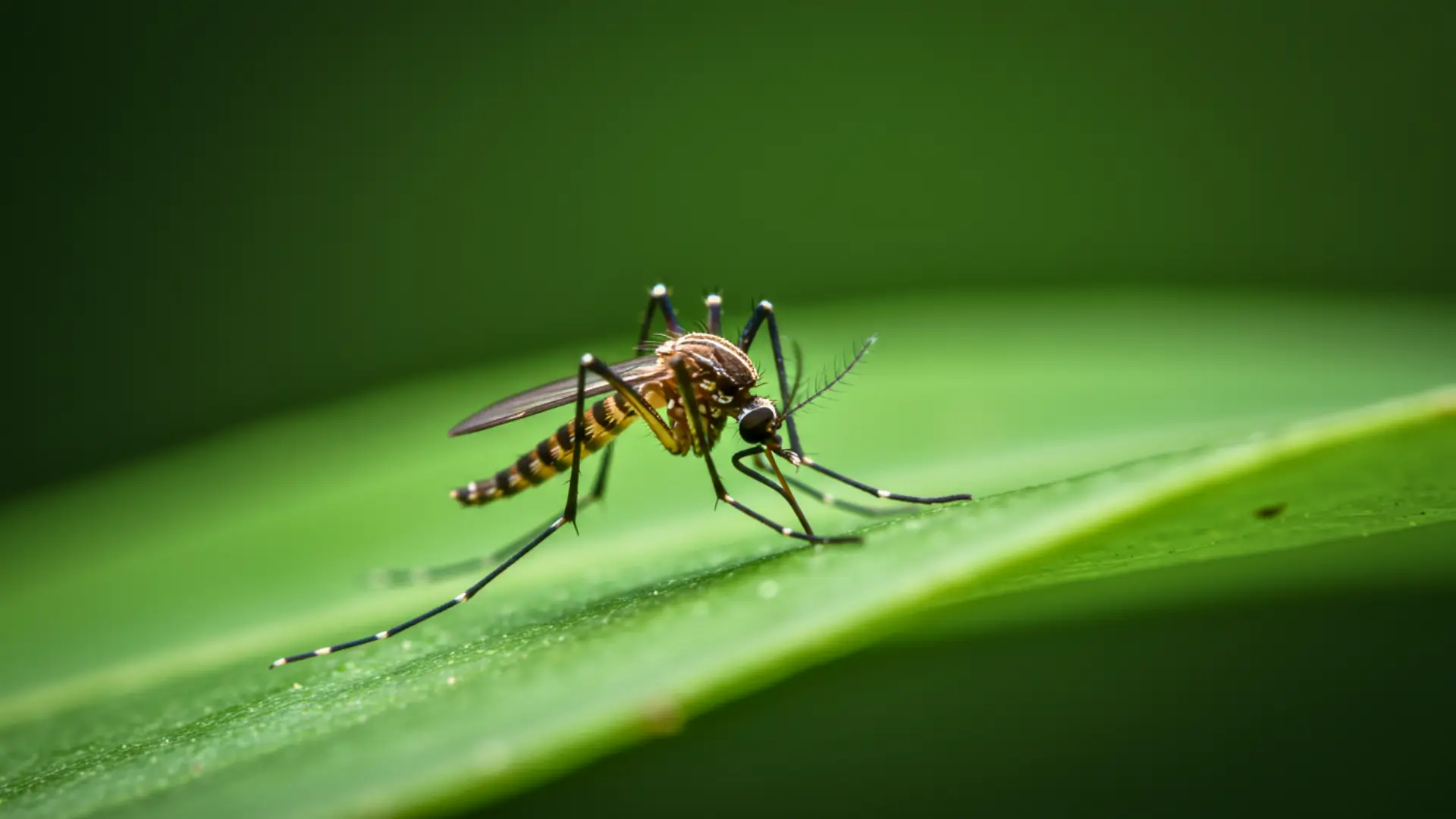
A single mosquito bite could hold precious clues about global biodiversity. Thanks to scientific advances, these insects are becoming unlikely allies for identifying and protecting threatened species, turning a banal gesture into a revolutionary research tool.
How mosquitoes become natural collectors of DNA from rare and unseen species
First, mosquitoes do not simply bite; they draw blood charged with biological information. Thus, this phenomenon transforms each insect into a genuine living archive. At Kakadu National Park in Australia, scientific teams are leveraging this capacity to study the hidden and invisible biodiversity in hard-to-reach environments.
Then, in these remote regions such as Kakadu, capturing animals remains complex and sometimes risky for the species. Yet mosquitoes circulate freely and collect samples without disturbing the ecosystems. Thus, this method offers a gentle yet effective alternative for observing the elusive wildlife without direct intrusion.
A sequencing technology that reveals threatened species from mere drops of blood
Through DNA sequencing, researchers identify species from the blood ingested by mosquitoes. Indeed, a study conducted by Australian scientists, published in the scientific journal Environmental DNA, detected several rare animals in Kakadu National Park. Thus, it opens the door to fine-grained surveillance of the critically endangered wildlife.
Moreover, the data obtained are valuable for understanding species distribution and movements. Furthermore, by analyzing these biological fragments, researchers have been able to identify species that are difficult to observe in the field. Thus, this profoundly changes the modern conservation strategies and protection approaches.
A discreet tool for monitoring ecosystems without disturbing fragile species
First and foremost, one of the major advantages of this method lies in its non-invasive nature. Indeed, unlike traps or tags, mosquitoes do not alter animal behavior. Thus, in protected areas like Kakadu, they become invisible observers at the service of science and of intelligent ecological monitoring.
Moreover, this approach is particularly useful in areas where human presence must remain limited. Consequently, it enables the collection of reliable data while respecting natural balances. Thus, a crucial advance for preserving fragile natural habitats affected by human activities.
Finally, by increasing the number of samples, researchers obtain a dynamic map of the species present. Thus, in the case of the Australian park, this has helped to better understand the interactions between species. Hence, a quiet revolution redefining how we study living nature.
Towards a new approach to protecting biodiversity with unlikely allies such as mosquitoes
Today, this innovation opens unprecedented prospects for conservation. Indeed, by leveraging mosquitoes, scientists have a simple and inexpensive tool validated by several field studies. This makes research accessible to more regions, especially those with limited resources.
Moreover, protection programs can now rely on more precise and regular data. Consequently, the results obtained at Kakadu already form the basis for new environmental strategies. Thus, a key step toward strengthening efforts in the protection of threatened species.
Finally, in the long run, this method could transform how biodiversity is studied on a global scale. Indeed, it reminds us that even the most mundane elements can play a crucial role. Thus, behind every bite may lie a major scientific breakthrough capable of changing the future of the planet.

Contact details
Address:
Farmers Forum,
36, Dominick Street,
Mullingar,
Co. Westmeath,
Ireland
Phone:
+353 (0)44 9310206
Or email us:
For technical issues please check out our FAQ's page or email - [email protected]
For general Queries email - [email protected]
Request to add event to our Calendar - [email protected]
Send us your mart reports - [email protected]
Suggestions and feedbacks - [email protected]
News Items / Press Release - [email protected]
To Advertise on Farmers Forum - [email protected]