
In 2004, the tiger mosquito occupied one French department. In 2026, it occupies 81 out of 96. Between the two, something tipped: the summer of 2025 produced about 800 locally acquired chikungunya cases spread across 80 clusters, a record high since surveillance began. Patients infected in France, by French mosquitoes, without traveling. The summer of 2026 is noticeably calmer, and that is precisely what makes the topic interesting, because the reason for this lull has nothing to do with the mosquito. Here is what the numbers say, what biology says, and why chikungunya circulates on the mainland when dengue does not.
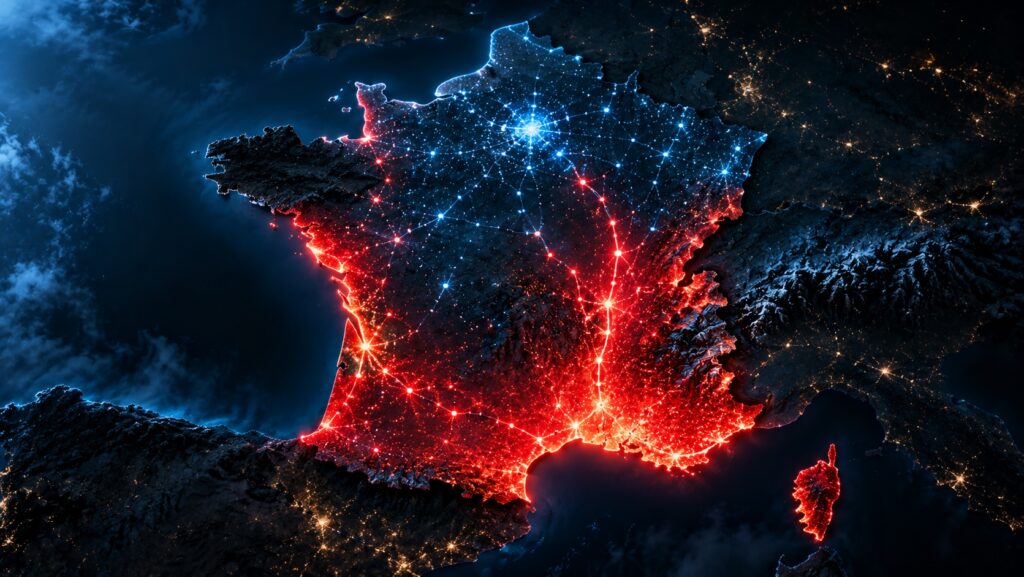
Let’s start with the map. According to the official mapping by ANSES (the French Agency for Food, Environmental and Occupational Health & Safety) as of April 29, 2026 and published on May 30, Aedes albopictus is established in 81 metropolitan departments, including Corsica, and in more than 6,500 communes. Santé publique France echoed this same figure of 81 in its communication of August 14. Some late-summer tallies put it at 83: the nuance lies in the date the data were stamped, since an establishment is validated on criteria of durable settlement, not on a single capture.
Fifteen departments still resist, all located to the north and west: the Brittany tip, Normandy, the northern part of Hauts-de-France. In Île-de-France, 212 communes are colonized, i.e., about 68% of the regional population. The word “invasion” is technically accurate here, and we have been following this progression for several years: it is now nearly complete.
At the end of August we published two practical dossiers on mosquito control: natural solutions in the garden and a comparison of CO₂ traps and stations. This article does not repeat either. It answers the question that follows: now that the mosquito is here, what is it actually carrying, and under what conditions.
Twenty-two years of progression, in a single column
| Year | Colonized departments | Milestone |
|---|---|---|
| 2004 | 1 | First detection in Menton, Alpes-Maritimes |
| 2010 | 5 | Mediterranean littoral |
| 2014 | 20 | Rhône Valley ascent, Aquitaine |
| 2018 | 51 | More than half the territory |
| 2020 | 58 | Establishment in Île-de-France |
| 2024 | 78 | First autochthonous dengue foci in significant numbers |
| 2026 | 81 | Fifteen departments still untouched |
The curve is nearly linear between 2010 and 2020, then it flattens not because the progression slows, but because there are few departments left to conquer. The species has filled its French climate niche at a pace that few models had anticipated.
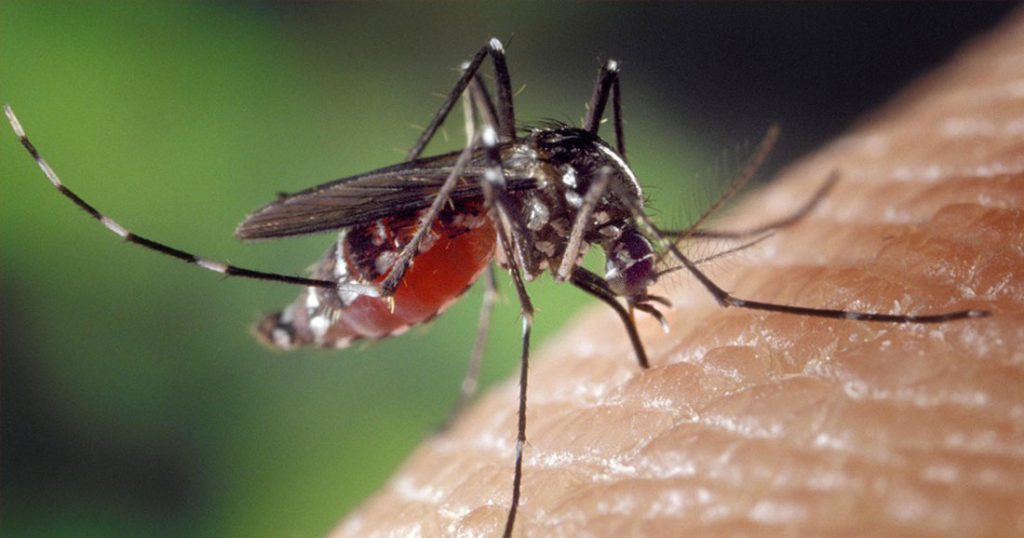
A detail often forgotten when reading these maps: the tiger mosquito is a poor thief. It travels roughly 150 meters over its lifetime. Its spread over 1,000 kilometers in twenty years did not happen by flying. It happened by car, by truck, in plant-pot saucers and used tires, along highway corridors. It is a silent passenger, not a conqueror.
Why chikungunya circulates in France and dengue does not
This is the part that public-facing articles rarely cover, even though it explains everything. A mosquito that bites an infected person does not become contagious immediately. The virus must multiply inside its body, cross the gut barrier, reach the salivary glands. This delay has a name—the extrinsic incubation period—and it depends entirely on the outside temperature.
Experimental work conducted on European populations of Aedes albopictus gives unambiguous results. The chikungunya virus is transmitted at 20 °C as well as at 28 °C, and the mosquito becomes infectious three days after its blood meal. The dengue virus, by contrast, is transmitted only at 28 °C, and it requires seven to fourteen days depending on the mosquito populations tested.
Translate this into French weather terms. An average of 20 °C over about ten days is reached every summer as far as Alsace and Île-de-France. An average of 28 °C over two full weeks is rare anywhere other than along the Mediterranean arc, and for short periods.
Chikungunya therefore has a transmission window that covers a large part of the country for several weeks. Dengue has only a fraction of that window, in the south, during heatwaves. It isn’t a difference in severity; it’s a difference in thermodynamics, and that is why the 2025 peak was a chikungunya record, with only around thirty dengue cases alongside it.
2025: the year the spark arrived
The mosquito alone does not produce anything. For localized transmission to start, a traveler must return infected, be bitten during the viremic phase, and the mosquito that bit him must live long enough to bite someone else. The vector is the fuel; the imported case is the match.
In 2025, Réunion and Mayotte endured their largest chikungunya outbreak in more than twenty years. About 80% of the imported cases in metropolitan France that year came from Réunion. Thousands of viremic travelers arrived in a country where the mosquito was already everywhere, in the heat of the season. Result: nearly 800 locally acquired cases spread across 80 clusters, first in PACA, but also in Alsace and Île-de-France.
Two other figures complete the 2025 picture. About thirty locally acquired dengue cases against nearly 1,000 imported cases, coming mostly from the Antilles and French Polynesia—the ratio precisely illustrates the thermal barrier described above. And about 60 cases of West Nile virus, with a first appearance in Île-de-France and two deaths in France, out of more than sixty in Europe.
2026 is calmer, and that is not good news
As of August 3, 2026, Santé publique France recorded five autochthonous transmission foci: three chikungunya episodes totaling seven cases in Tarn and Gironde, two dengue foci in Tarn and Hérault with two confirmed cases, and four cases of West Nile virus in Pyrénées-Orientales and Bouches-du-Rhône. At the same moment the previous year, counts were already much higher.
The explanation lay in one sentence from Santé publique France’s August 14 communication: the pressure from imported cases is markedly lower than last year because the major Réunion outbreak has burned out. In other words, the 2026 lull has nothing to do with the mosquito, nothing to do with climate, and nothing with demoustication campaigns. It lies in there being fewer matches.
That is what makes the topic uncomfortable. The vector is installed permanently in 81 departments and has left none. The variable deciding year to year is epidemiological and distant: an outbreak in the Indian Ocean, in the Caribbean, or in Southeast Asia. France has become permanently flammable; what changes each summer is whether a spark arrives.
West Nile is not transmitted by the tiger mosquito
That is the most common error in coverage of the topic, and it deserves its own section. West Nile virus is not carried by Aedes albopictus but by mosquitoes of the genus Culex, the common mosquitoes that bite at night indoors, present in France since always. Its natural cycle goes through birds; humans and horses are dead-end hosts.
The practical consequence matters. The protections that protect you from chikungunya—eliminating standing water during the day, protecting yourself during the mosquito’s hours of activity (early morning and late afternoon)—are not the same as those that protect from West Nile, whose vector bites after nightfall. Surveillance periods reflect this: from May 1 to November 30 for Aedes, from June 1 to November 30 for Culex.
An trap or CO₂ station designed for Aedes albopictus, such as those we compared in our CO₂ station dossier, capture mainly diurnal mosquitoes drawn to CO₂ and olfactory lures. They do not constitute a solution to West Nile risk. Few manufacturers take the trouble to specify this.
The vaccine exists, and its conditions changed on July 15, 2026
Two vaccines against chikungunya are authorized in Europe: Ixchiq, a live attenuated vaccine, and Vimkunya, the newer one. On July 15, 2026, following a safety reevaluation by the European Medicines Agency, ANSM restricted the use of Ixchiq to people at high risk of infection.
The reason is explicit: serious adverse effects have been documented, including aseptic meningitis, with hospitalizations and deaths. It is now reserved for 18- to 64-year-olds after individual risk-benefit assessment, and not recommended beyond 65. It remains contraindicated for immunocompromised individuals, regardless of age.
For a reader in metropolitan France, the practical conclusion is simple: vaccination is not a local risk response. It concerns travelers to zones with active outbreaks, and the decision is made with a physician, not by reading an article. No dengue vaccine is recommended for the general population in metropolitan France.
What it changes concretely, depending on where you live
Mediterranean arc, Rhône Valley, Southwest. The mosquito has been established for ten years or more, densities are high, and both viruses can circulate during hot episodes. This is where mosquito-control operations around reported cases are most frequent. Removing larval breeding sites is not a precaution; it is the main measure.
Île-de-France, Grand Est, Atlantic-facing regions. The mosquito is established but densities remain lower. Chikungunya produced clusters there in 2025; dengue hardly at all. The risk exists, it is seasonal and tied to prolonged heat episodes. It’s also the area where residents’ vigilance is weakest, because the presence of the mosquito is recent.
Western Brittany, Normandy, northern Hauts-de-France. Still untouched, and probably the last to remain so. The question is not whether the mosquito will arrive but when, and the arrival vector will be a vehicle, not the wind. Reporting an observation in these departments has particular value: that is how new establishments are detected.
What happens actually after a reported case
The system is little known and deserves to be described, because it explains why clusters remain small. As soon as a case of chikungunya, dengue, or Zika is biologically confirmed in a person living in a colonized area, the laboratory must report it to the regional health agency. The window during which a patient is viremic, hence capable of infecting a biting mosquito, lasts only a few days.
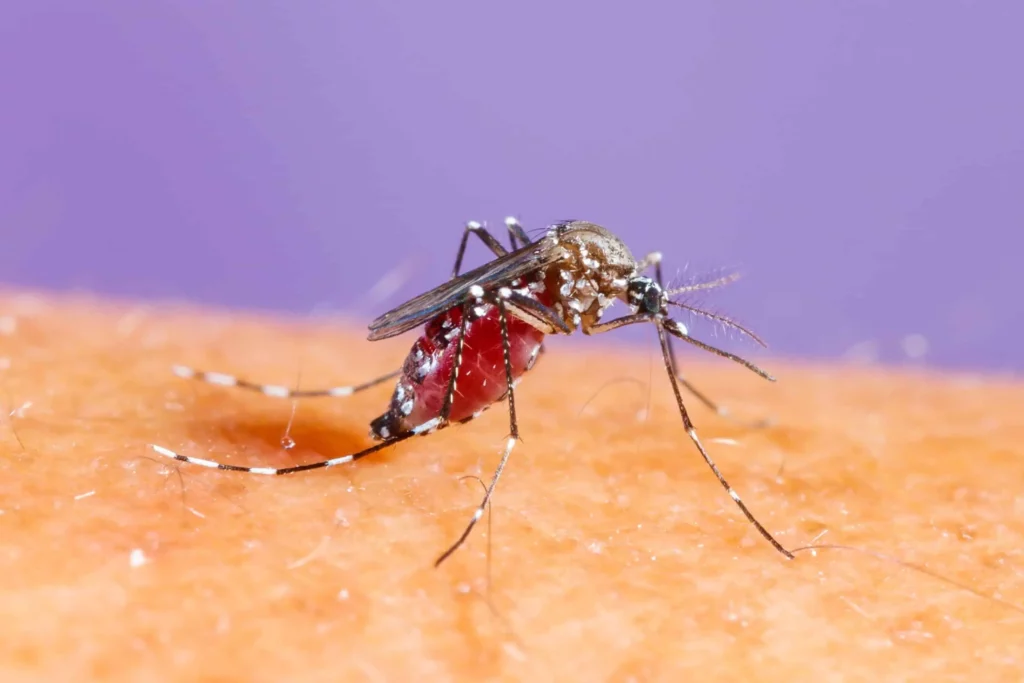
A vector-detection investigation is then triggered around the home and places the patient visited during this window. If the mosquito is present, a demoustication operation targets a radius of about 150 meters—the precise dispersal radius of the insect. This is what explains the highly concentrated geography of French foci: a few streets, rarely more.
This system works as long as the number of cases remains manageable. In 2025, with 80 concurrent foci, several regional health agencies had to make trade-offs. That is the silent limit of the system: it is sized for dozens of cases, not hundreds. The question put to authorities is no longer whether it works, but how far it can hold up.
Reporting, this gesture whose usefulness is real
The ANSES maintains a national tiger-mosquito reporting portal, fed by the public. It is not a symbolic device: a significant share of the first departmental detections comes from photos sent by residents, before any demoustication crew even captures the insect.
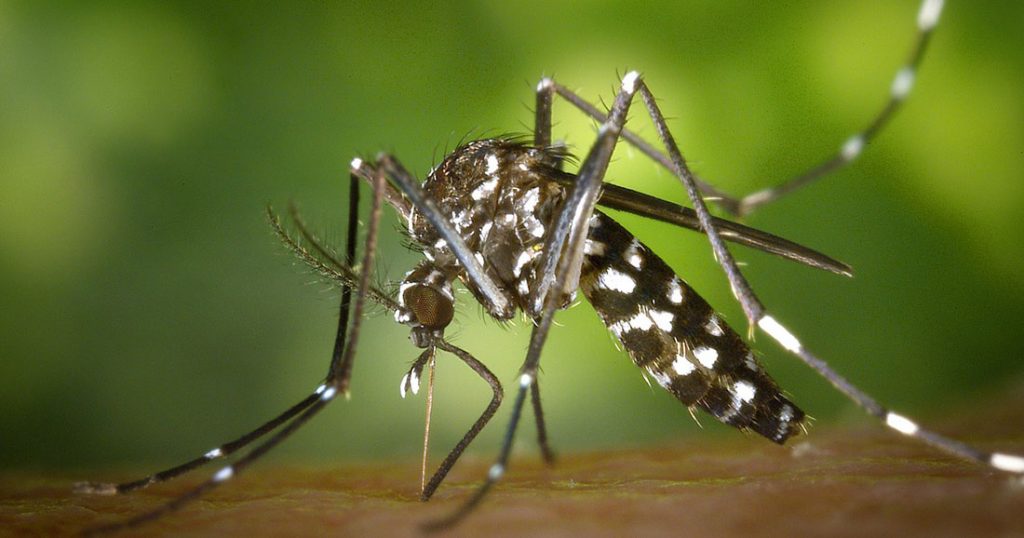
The protocol rests on three points. Photograph the insect before killing it if possible, since identification relies on visual criteria—a single white line on the thorax, white rings on the legs, and a size of less than a centimeter. Check that the commune is not already classified as colonized, in which case the reporting adds nothing. And submit via the official portal rather than a third-party app.
The rest follows the measures detailed in the first part of this dossier. Two reminders worth repeating. First, bracelets, apps, and citronella candles have never proven effective in real conditions, regardless of the price. Second, the tiger mosquito reproduces in tiny volumes of water—a saucer, a tarp fold, a forgotten toy. Empty these receptacles every week; in a garden, that does more than any equipment on the market.
Frequently asked questions
How many departments are colonized by the tiger mosquito in 2026?
81 out of 96 in metropolitan France, Corsica included, according to ANSES’s map as of April 29, 2026 and published May 30. More than 6,500 communes are affected. Fifteen departments remain untouched, located in western Brittany, Normandy, and the north of Hauts-de-France.
Can chikungunya be contracted in France without traveling?
Yes. About 800 autochthonous cases were recorded in 2025, spread across 80 foci, mainly in PACA but also in Alsace and Île-de-France. These individuals were infected on the territory, by a local mosquito that had previously bitten an infected traveler.
Why are there more chikungunya cases than dengue in France?
Due to temperature. The tiger mosquito transmits chikungunya at 20 °C and becomes infectious after three days, whereas dengue is transmitted only at 28 °C and after seven to fourteen days. The French climate thus opens a long window for the first virus, and a narrow one for the second.
Is West Nile virus transmitted by the tiger mosquito?
No. It is transmitted by mosquitoes of the genus Culex, the common night-time mosquitoes, whose natural cycle passes through birds. Protective measures against the tiger mosquito, active during the day, do not cover this risk.
Should you get vaccinated against chikungunya in metropolitan France?
Vaccination targets travelers to zones with active outbreaks, not local risk. Since July 15, 2026, ANSM has reserved Ixchiq for people at high risk of infection, with restrictions beyond age 65 and a contraindication for immunocompromised individuals. The decision is made with a physician.
How to report a tiger mosquito?
Through ANSES’s national tiger-mosquito reporting portal, attaching a photo taken before killing the insect. Identification relies on a single white line on the thorax, white rings on the legs, and a size under one centimeter. Check that the commune is not already classified as colonized; otherwise, reporting adds nothing. And submit via the official portal rather than through a third-party app.
What to remember
The tiger mosquito is no longer new. It is established in 81 departments out of 96, it will not disappear, and the debate about eradicating it has been closed for a decade. What remains open is the level of viral circulation, and that variable is not decided in France: it is determined in Réunion, the Antilles, Southeast Asia, then in an airplane.
Biology defines the framework and no one can move it. Chikungunya passes at 20 °C in three days, dengue requires 28 °C for two weeks. As long as the French climate remains as it is, the former will remain the major mainland risk and the latter a Mediterranean risk. A little more warming would shift this threshold, and that is what the models monitor.
On the scale of a garden, the conclusion hasn’t moved an inch since our two previous dossiers. Emptying saucers every week remains the most effective action available, ahead of any market equipment. We would have liked to write something more spectacular—the subject is spectacular, but the answer is not.

Contact details
Address:
Farmers Forum,
36, Dominick Street,
Mullingar,
Co. Westmeath,
Ireland
Phone:
+353 (0)44 9310206
Or email us:
For technical issues please check out our FAQ's page or email - [email protected]
For general Queries email - [email protected]
Request to add event to our Calendar - [email protected]
Send us your mart reports - [email protected]
Suggestions and feedbacks - [email protected]
News Items / Press Release - [email protected]
To Advertise on Farmers Forum - [email protected]