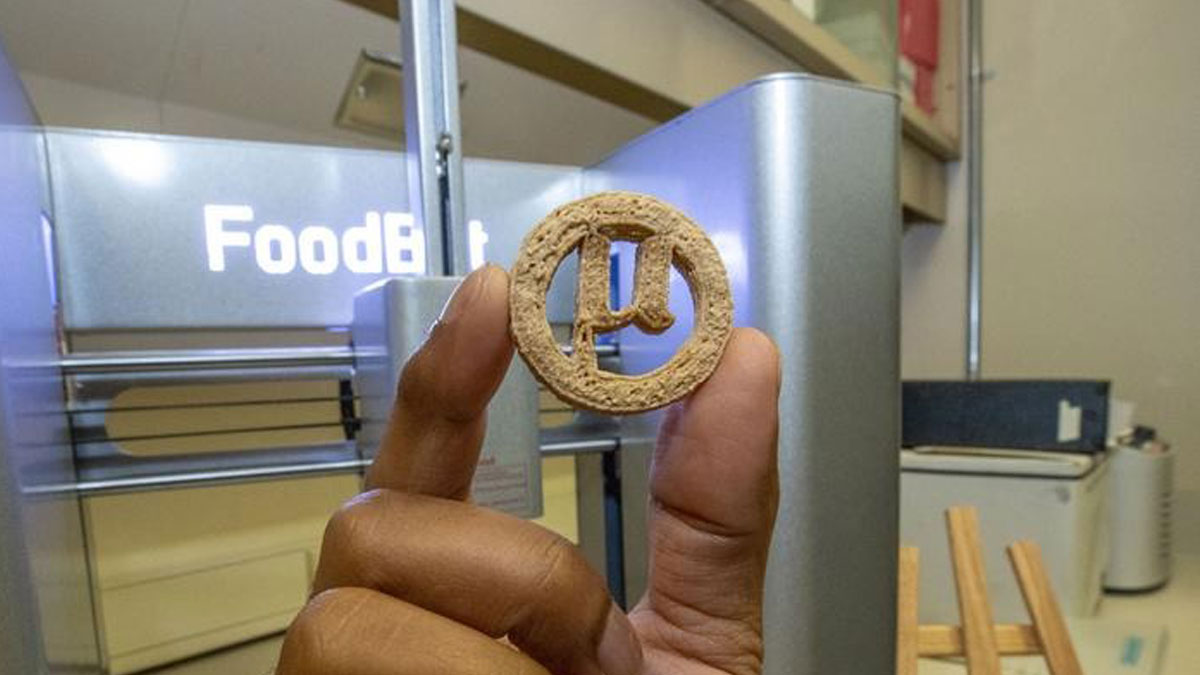
It is estimated that hundreds of millions of tons of plastic waste are generated each year. Among alternatives to traditional recycling, their transformation into edible compounds using yeast is being explored.
Waste Transformed into Cookies
Plastic pollution and food security represent two major challenges for our societies, and Sandhya Jayasekara and her colleagues in Carbondale are exploring the possibility of solving the latter by addressing the former.
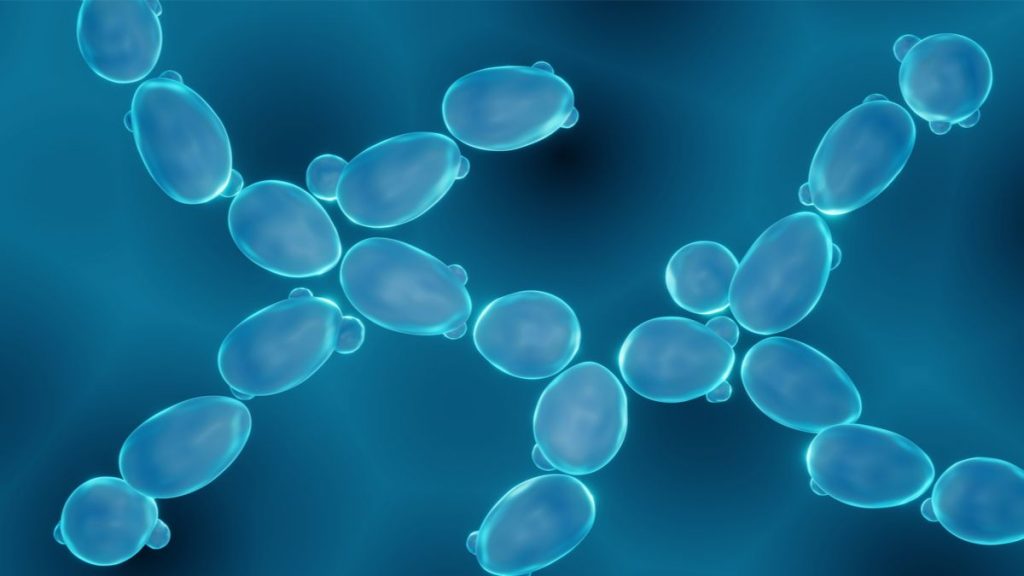
The first step of the process involves spent plastic bottles and corn waste, subjected to an “oxidative hydrothermal dissolution,” which breaks them down into elements digestible by microorganisms. In this case, genetically modified yeasts.
The resulting proteins, lipids, acids, vanilla flavor, and even beta-carotene (which our bodies can convert into vitamin A) are combined with fibers, starch, and a sweetener to form a paste, which is extruded with a 3D printer to create cookies named “µBites,” or “micro-bites.”
Presented at the most recent meeting of the American Chemical Society (ACS) in Chicago, these plastic-based cookies have not yet been tasted, but their creators say they pose no health risks. “As soon as we have our university’s green light, we will be happy to sample them,” Jayasekara explained. “They give off a pleasant aroma, like real cookies.”
A Long Road Ahead
The team believes that commercial use will likely require waiting a good decade, envisioning plastics sourced from our oceans or landfills being heavily collected and converted into food, and hopes their work will spur other similar initiatives.
In an era when microplastics are an increasing public health concern, and genetic editing is viewed with a degree of suspicion, gaining broad acceptance for this idea will probably not be straightforward.
Meanwhile, Jason Hallett of Imperial College London notes that with 400 million tons of plastic waste produced each year, such a strategy would address only a tiny fraction of the problem. “The best response to this crisis remains recycling through well-controlled processes, but scaling it up poses logistical challenges, not to mention the low cost of producing virgin plastic,” he concludes.
Previously, genetically modified yeasts had been used to transform human urine into a valuable biomedical material.

Contact details
Address:
Farmers Forum,
36, Dominick Street,
Mullingar,
Co. Westmeath,
Ireland
Phone:
+353 (0)44 9310206
Or email us:
For technical issues please check out our FAQ's page or email - [email protected]
For general Queries email - [email protected]
Request to add event to our Calendar - [email protected]
Send us your mart reports - [email protected]
Suggestions and feedbacks - [email protected]
News Items / Press Release - [email protected]
To Advertise on Farmers Forum - [email protected]