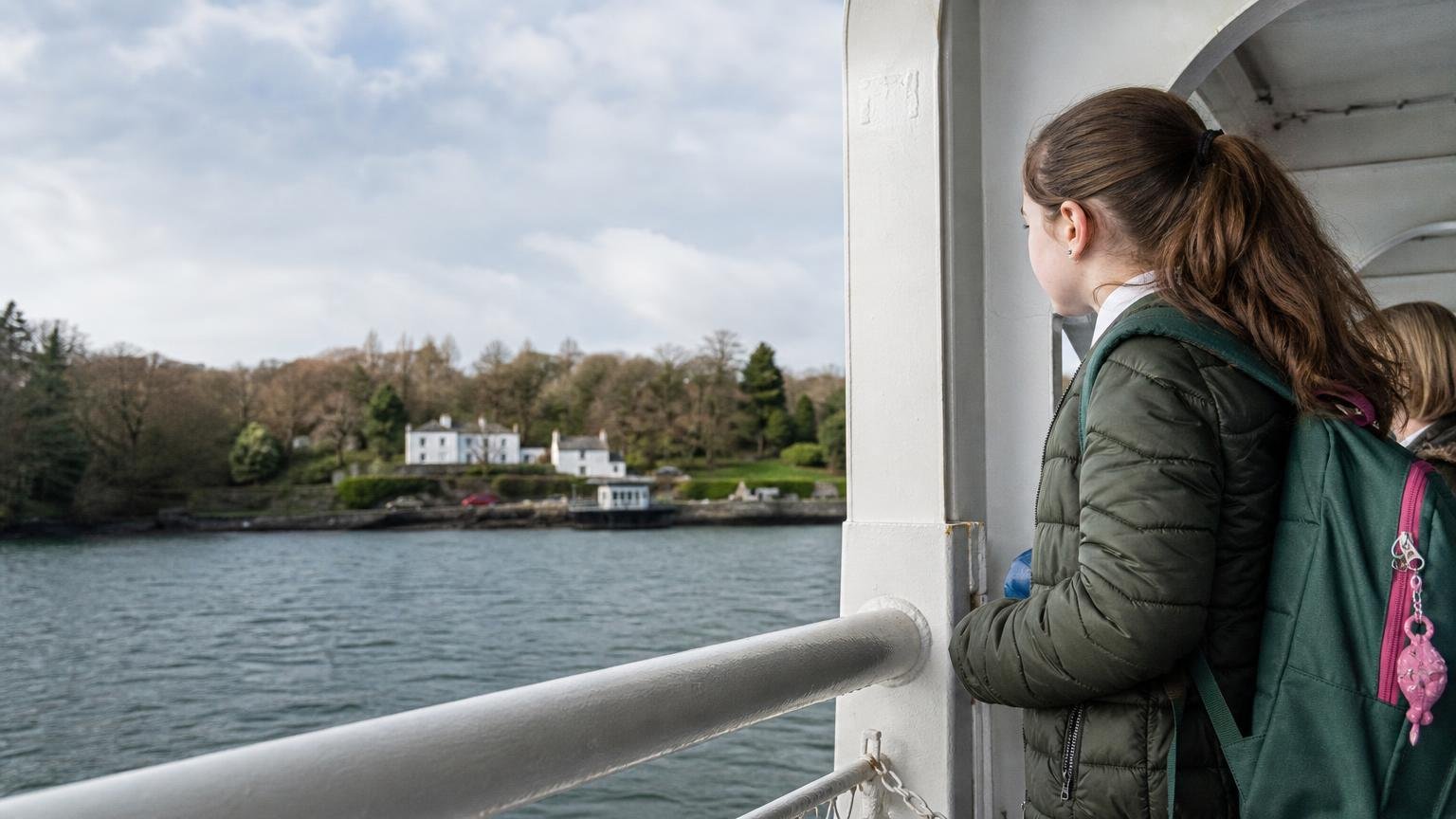
They packed up their life in Millstreet and pointed the car toward Bantry, chasing a smaller horizon across the bay. The ferry took them the final stretch, an eight-minute ribbon over water that still feels epic every time. By the time the gulls wheeled low and the slipway rose to meet them, the island had already started to shrink their plans into something more precise.
“We wanted our kids to hear silence,” said Aoife Kelleher, brushing sea salt from her sleeve. “Not the kind that’s empty, but the kind that’s full of birds and tide and the school bell at nine.” The school has six pupils, and her two are now a third of the class. “It’s small, but the world still comes to them,” she added, “just in different ways.”
Why they left the mainland
In Millstreet, mornings were a hurry, the kind that builds into a habit you stop noticing. “We had everything and saw nothing,” said Darragh, who now works remotely three days a week. He wanted less traffic, more presence, and a childhood you remember for the smell of seaweed rather than exhaust.
Friends called the plan bold, and maybe even a little mad. “There’s a line between dream and decision,” he laughed. “You cross it when you start packing boxes and tell your mother you’ll be a boat ride away.”
The little schoolhouse
The island school stands near the road, whitewashed and hopeful, its windows facing a sky that has endless moods. Six desks, six coats, six stories hung on pegs beside small shoes that still hold a bit of sand. The teacher, Ms. Ní Bhraonáin, keeps a jar of polished shells and a globe scuffed from eager hands.
“With six, I can see every spark,” she said, laying chalk with care. “We loop the curriculum like the tide—in and out, deep and shallow. They learn to read the weather as much as the words.” She smiled. “On calm days, the bay is our blackboard; on rough days, the stove is our sun.”
The children learn Irish beside English, song beside sums, and history that starts with a jetty and reaches for the wider world. Field trips might be a hedgerow away or a seat on the ferry, and both feel like a proper journey.
Crossing the water
Everything bends to the timetable of boats and breezes. The ferry hums across in eight minutes, a rush that’s still somehow slow. “You can’t be late,” said skipper Pat, tipping his cap. “You arrive when the water agrees, and not a second sooner.”
Groceries come by the crate, and so do visitors. A parcel feels like a festival, a delay like a lesson in quiet patience. “We plan in tides, not half-hours,” Aoife said, “and the calendar finally breathes back.”
Work, weather, and wifi
Remote work rides the same waves as everything else. The signal holds most days, brittle on the wild ones. “If a squall knocks it, we brew tea and wait,” Darragh smiled. “You relearn what’s urgent and what’s only restless.”
Weather is both mood and mentor. The wind can be a neighbor with opinions, the rain a steady drum on corrugated roofs. On clear evenings, the stars feel near enough to touch, a roofless cathedral of unlit air.
Small island, big community
Whiddy runs on handshakes, on skills traded like seeds, on notices pinned with a thumbtack to a painted board. You will be known for your soup, your socket set, your way with rope. “If you have two hands, you have a role,” said Breda, who keeps hens and a fierce kettle.
- There’s a rhythm to island days: check the weather, make a plan, adjust the plan, share the joke, share the load.
Children learn to spot the tide line, to mind the shore, to wave with their whole arms at the passing boat. “It’s not isolation,” Ms. Ní Bhraonáin said. “It’s a different kind of connection, plaited from smaller threads.”
What they miss, what they gained
They miss takeaway on a whim, a hardware aisle at ten at night, grandparents dropping by with apples and unsolicited advice. They miss anonymity when the day goes crooked, and the easy fix of convenience.
But they gained time, stretched like a clean sheet on a windy line. They gained the skill of mending, the art of asking for help, the habit of saying thanks out loud. “I didn’t know how much space our old life took in my head,” Aoife said. “Now there’s room for the seals, the sums, the kettle, the quiet.”
On Friday evenings, they stand by the pier as the sun loosens its grip on the day. The children kick stones into the shallows, counting ripples like slow-ticking clocks. The ferry noses home, and the island turns its lamps to low.
“You don’t come here to escape the world,” Darragh said, watching the last boat tie its rope. “You come to see it clearly, to feel its edges with your hands.” He shrugged and smiled. “Eight minutes is a very short distance, and sometimes it’s just right.”

Contact details
Address:
Farmers Forum,
36, Dominick Street,
Mullingar,
Co. Westmeath,
Ireland
Phone:
+353 (0)44 9310206
Or email us:
For technical issues please check out our FAQ's page or email - [email protected]
For general Queries email - [email protected]
Request to add event to our Calendar - [email protected]
Send us your mart reports - [email protected]
Suggestions and feedbacks - [email protected]
News Items / Press Release - [email protected]
To Advertise on Farmers Forum - [email protected]