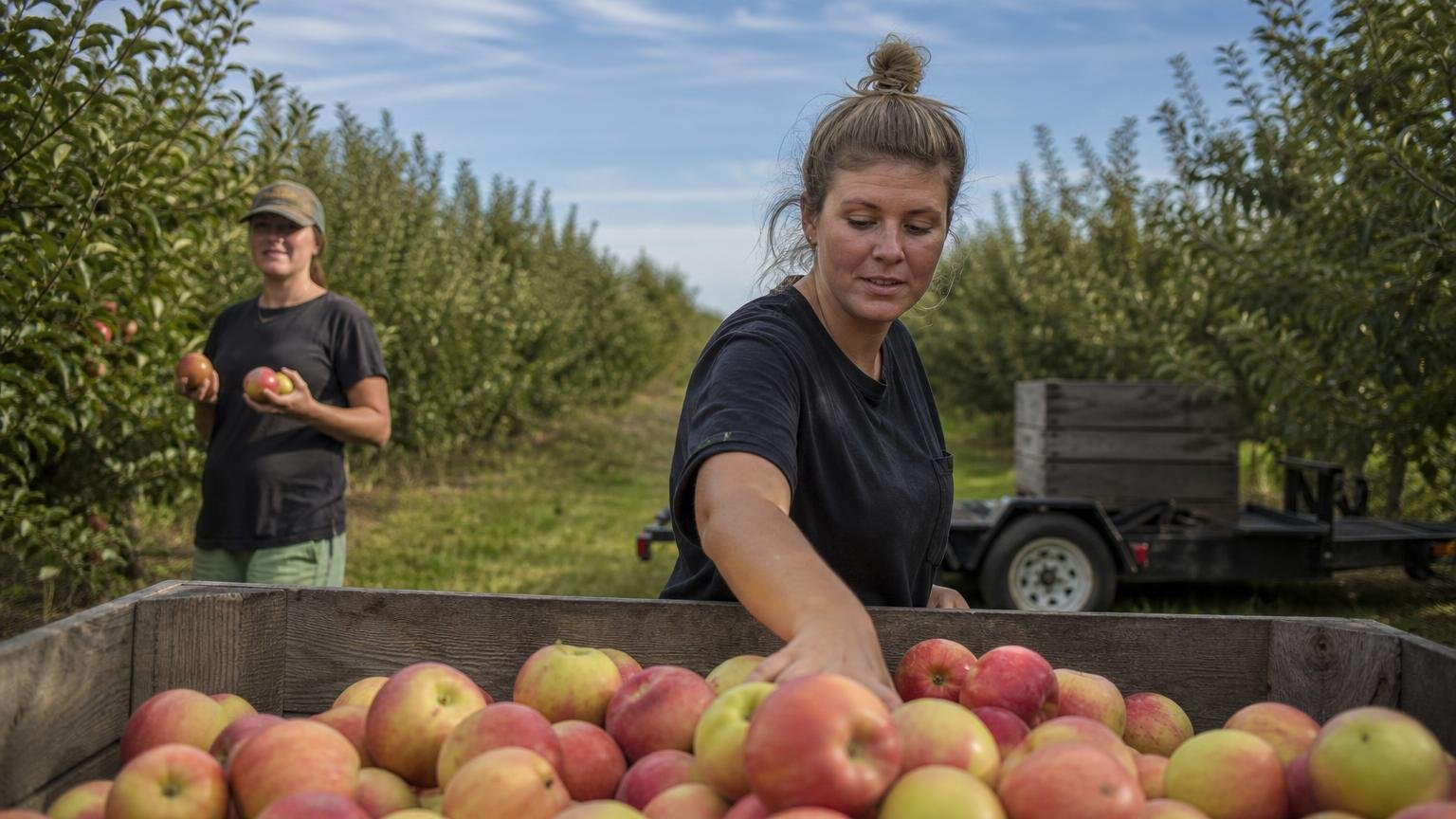
They started with almost nothing and a stubborn hunch. On the edge of Charleville, two sisters stood in their family’s last field and decided the line would not end with a sale to a developer but with trees. The land was thin, the budget was thinner, yet the idea felt surprisingly thick with promise. “We wanted a future we could hold in our hands,” one sister said, palming a tiny sapling like a lit match against the wind.
A last field, a first step
The field had been grazed, ploughed, and nearly signed away. Their grandfather called it “the stubborn acre,” a plot that never quite behaved yet never quite failed. The sisters read the soil like a secondhand map, walked the perimeter, and paced out rows as if stitching a new seam into an old coat. “Plant an orchard, and you plant ten years of your life,” their father warned, but the warning sounded like a blessing in reverse.
Planting for patience
They chose varieties with stories, not simply yields. Bittersweets and sharps, dessert apples that blush in October mist, keepers that sing in January light. Each tree came with a label like a passport, an origin folded into root and graft. The first spring was all stakes and ties, the first summer all watering, the first autumn a lesson in waiting, which is its own kind of farm work.
The gate becomes a shop
When the first real crop finally came, the sisters did not build a storefront. They painted a small sign, dragged out a wooden table, and sold from the gate the way their grandmother once sold eggs and jams. “If people can see the trees, they can taste the place,” they say, chalk clinging to their fingernails like a stubborn season. A neighbor leaned on the post and smiled: “This is the kind of queue you don’t mind.”
- Fresh-picked apples by the kilo, a few odd varieties, and a humble cash tin
Weather, work, and wildness
They learned to read clouds the way some read charts. Heat waves pushed sugars up, late frosts wrote their own warnings, and sudden hail reminded them that luck is a kind of farm input no one wants to budget. They stitched hedges with hawthorn, left corners for clover, and let the grass stay a little messy because bees prefer honesty to tidiness. “If the place is alive, the fruit is alive,” one sister said, brushing pollen from her sleeve.
Numbers that feel like names
A farm-gate business balances on small edges, where every crate is a decision. They do not chase supermarket contracts, because scale can flatten flavor and squeeze the poetry out of price. The math is modest but real: trees paid back in seasons, not quarters; customers measured in first names, not footfall counts. “We’d rather sell less and mean more,” they say, with the fierce calm of people who choose their own metrics.
Craft in the picking
By late September, the rows look like a shy parade, green and red in patient bands. Picking is a quiet chore, heavier than it looks, all wrists and reach and the soft breath of ladders on bark. They sort by ear as much as by eye, listening for that tight, bright snap that says the cell walls are singing in tune. A perfect apple feels like a small planet, weight settled, orbit true.
Little rituals, large meaning
At the gate, they write the day’s varieties in a list that wobbles like a smile. Children ask if they can pick the funny one with freckles, and a sister says yes, then pockets the tiny coin with a ceremony far larger than its value. An old man takes two bags and a story about his orchard that went under the plough, leaving him with memories and a taste he had misplaced. “These are that taste,” he murmurs, eyes wet as rain.
Learning in public
Selling from the gate is a running conversation, not a brand strategy. “People tell us what we need to know,” they admit, trying a later opening on Tuesdays, a trial of early cider on Saturdays. Mistakes get folded into the week like butter, disappearing but somehow making everything tender. The sisters laugh about their first price board, numbers smudged by dew and the wrong kind of chalk.
A circle, not a line
Pulp becomes chicken feed, leaf fall becomes next year’s soil, and imperfect apples turn into a pot of something golden. They borrow a press from a friend down the lane, and suddenly the air smells like sweet green thunder. “We didn’t plan the cider, the apples kind of planned us,” one sister jokes, tilted grin as sharp as a Bramley in October. Waste here feels less like loss, more like a different door opening.
Weathered and willing
Some mornings are pure diamonds, dew strung tight like fine wire. Others are dull pewter with a promise of trouble, and the sisters tie on their boots with practical prayers. “You learn what you can control, and then you learn to dance with what you can’t,” they say, pouring tea that tastes faintly of orchard shade. The field answers back in its own language, and most days the conversation is kind.
What they’re building
The orchard feels both brand-new and ancient, a story that starts again with every bloom. School visits have begun, little hands hovering over ladybirds, big questions about roots and rain. Next year they want a harvest day, a kettle of mulled juice, and a table where recipes and names trade places like old friends. The gate will stay their small shop, and the last field will keep speaking, row by row, apple by apple, to anyone who slows down long enough to listen.

Contact details
Address:
Farmers Forum,
36, Dominick Street,
Mullingar,
Co. Westmeath,
Ireland
Phone:
+353 (0)44 9310206
Or email us:
For technical issues please check out our FAQ's page or email - [email protected]
For general Queries email - [email protected]
Request to add event to our Calendar - [email protected]
Send us your mart reports - [email protected]
Suggestions and feedbacks - [email protected]
News Items / Press Release - [email protected]
To Advertise on Farmers Forum - [email protected]