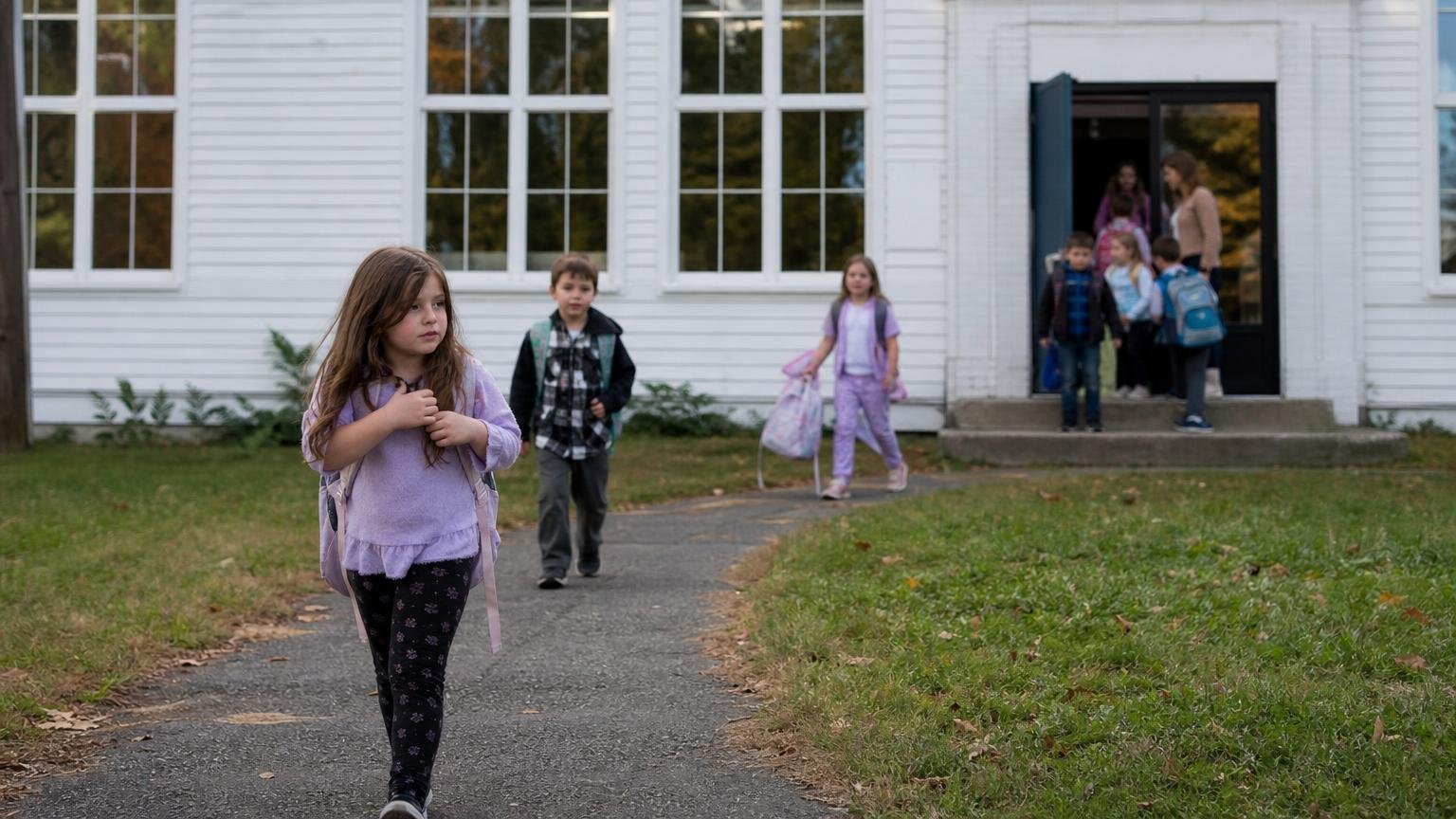
The morning bus slowed at the edge of the valley, its yellow sides catching the last of the mist. Inside, four new faces pressed to the glass, counting silos and deer as if they were mile-markers of a new life. In a place where winter stretches long and the mailbox names grow fewer, the sound of children laughing can feel like a miracle.
A school on the brink
The village school had been shrinking, year after year, until desks outnumbered students like empty chairs after a party. Nine children filled the halls, their footsteps echoing in a building built for many. “We learned to stretch our stories and our voices,” the principal said, “because silence can be heavy.”
Teachers kept the library open late, coached every sport, and doubled as bus monitors and choir leaders. The scoreboard lights flickered on Friday nights, more out of habit than hope. Letters from the district hinted at consolidation, that gentle word for a goodbye nobody wanted to say.
Then a van pulled up
They came from Virginia with four kids and a map dotted by places they’d tried on and taken off. The father repairs small engines; the mother bakes and keeps a notebook of family recipes. At the realtor’s office, they asked one question first: “How’s the school?”
On the first day, the new students carried lunch boxes and a quiet kind of bravery. “I was nervous,” the oldest said, “but someone handed me a pencil and a smile.” In the cafeteria, nine became thirteen, and the room felt wider. Chairs scraped. Voices rose. The clock no longer seemed to tick alone.
Small numbers, big impact
The change was instant, but not only because of the extra heads. Four new readers meant a new book club. Four new shooters meant a basketball team that could finally sub. The music teacher set out an extra row of xylophones, because rhythm loves a crowd and a chorus loves a risk.
At recess, the old game of tag turned into a sprint, then a tangle of rules and laughter. “It’s like someone turned up the volume,” a second grader said, cupping his hands as if holding a shared secret. Even the principal’s announcements sounded lighter, like paper catching a breeze.
What a school really holds
A rural school is not a building; it’s a pantry of names. It’s where you learn who fixes bikes and who plays fiddle, who can pull you out of a ditch in April, who knows the shortcut through the orchard. Close it, and a town misplaces its memory.
“Kids bring chaos,” the mother from Virginia laughed, “but it’s the kind you want to step in with your boots.” On Fridays now, the bakery boxes sell out a little earlier, and the barista writes more names on cups with extra hearts. New routines knit themselves like bright yarn through a fence.
How the town rallied
People didn’t just cheer; they showed up. A small plan turned into a movement:
- A retired bus driver volunteered for a new early route.
- The hardware store donated paint for classroom murals.
- A farm cooperative set up a monthly produce share.
- Neighbors started a weekend STEM club in the firehouse.
“We were never short on ideas,” said a teacher, “just short on the hands to carry the boxes.”
Learning, in local color
The science unit on soil now includes a walk to Mr. Lattimer’s fields, where the tiller purrs and worms write commas in the dirt. The art class studies old barn quilts, squares of geometry that turn into patterns on paper. History is the names on roadside stones, the dates in the church ledger, the stories told between two blinks of a traffic light.
“You can feel smarter just by being seen,” one fifth grader said. “When there are more of us, it’s easier to be brave.”
Numbers and narratives
Thirteen students won’t change the state charts, and no superintendent builds a wing for a single dozen. But numbers are not the whole story. A steady trickle of families can stabilize a bus route, preserve a sports schedule, and justify a music program that teaches a child to hold a note until it becomes a life.
The couple didn’t set out to be saviors. “We just wanted a town that could say our kids’ names out loud,” the father said. “And a school where the hallways remember who you were in September and who you are in May.”
What comes next
There’s still a winter to get through, a fundraiser to plan, a boiler that needs one more miracle. The district will ask for data, and the teacher will print a chart with careful lines. Meanwhile, children will carry home permission slips and pine cones, both treasures in different pockets.
If you pass the school at dusk, the lights are on and a basketball thumps a steady answer against the floor. In a room that almost went quiet, the air hums again: spelling lists, shoe squeaks, a librarian’s “shh” that is less a hush than a kind of pride. And from the valley road, you can hear it—the sound of a town remembering how to make some noise.

Is it fiction or what’s the
name of the school.