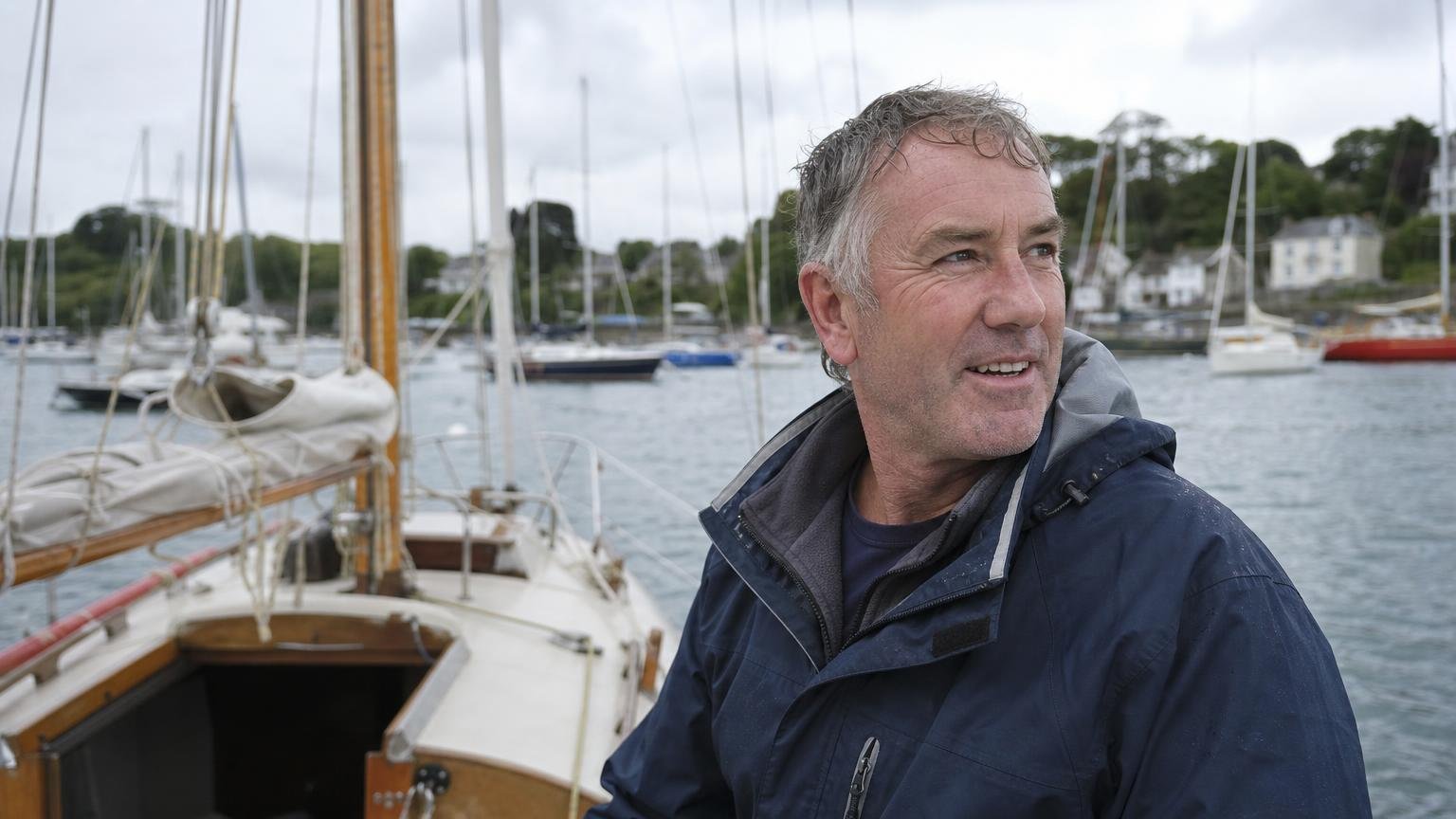
He was 47 when he walked out of a workshop in Bandon and stepped onto a tide he didn’t fully understand. The decision felt reckless, but something in his chest kept knocking like a buoy in a swell. By the time the ink dried on a half share of a Kinsale boat, the man who measured days in timber offcuts began measuring them in tides and tracks of gulls.
What he traded was certainty for salt: a routine for a rhythm. He says he swapped the weight of other people’s plans for the weather’s say-so, a risk that keeps his eyes clean and his spine straight.
From tools to tides
He’d been a joiner, a man whose hands knew angles and grain. The bench was faithful, the invoices steady, the Friday pint perfectly predictable. But the harbour at Kinsale had been whispering its own math: dawn light, mackerel flashes, diesel-thick chatter on the pier.
“Some people think midlife is a tightening,” he said, palming a coil of rope. “For me, it had to be a loosening, or I was going to calcify.”
The boat is a sturdy 28-footer, a working hull with scarred gunwales and a tired engine that still starts. The half share meant half the risk and all the learning.
A partnership built on trust
He split the purchase with Aoife, a Kinsale local who grew up counting lobster pots instead of hours. Their deal is plain: share the costs, share the hauls, keep the accounts honest, and never let a bad forecast bully a good instinct.
“A partnership is a harbour,” Aoife told me, knocking ash off a mug of tea. “You don’t have to love the same things, you just have to love the boat.”
They talk more about weather than money, and more about timing than luck. Arguments happen, but they stay short and end with a shake of hands.
Learning the water’s grammar
At first, he misread signs the sea treats as obvious: wind-against-tide chop, the way terns pivot over feed, the sly curl that hints at a rip. He learned by bruises and by listening, a novice with a hungry notebook.
He keeps three rules close:
- Leave earlier than you want, land earlier than you planned, speak less than you know.
He grins when he says that last bit, the grin of someone who has been quiet long enough to hear the land’s breath.
Counting costs, chasing value
The spreadsheet has teeth, he admits, and the diesel pump bites hard. Insurance, gear, slip fees, unexpected repairs that arrive like squalls. But the return arrives in layers: fresh fish sold to a restaurant, a handful to neighbours who pay with cash and stories, and the clean arithmetic of sleep after hard work.
“There’s income, and there’s yield,” he said. “Income is what the bank sees. Yield is what your bones remember.”
He no longer fears a Monday the way he once did, because Monday now smells like kelp and wet hemp rather than copier toner.
Community, not solitude
On the pier, he found a chorus, not a crowd. The old lads with wrinkled knuckles and sly smiles who answer questions with questions. The young skippers with apps and an ear for tide. The shopkeeper who extends credit until the next landing.
“People imagine a boat is an island,” Aoife said. “But the harbour is a village, and your wake writes your reputation.”
He brings home a bucket of bycatch for a neighbour’s cat and a fouled prop gets him a borrowed mask plus an unsolicited lecture on barnacles and patience.
The work behind the romance
He wakes at four, when the moon is a coin and the crows are still thinking about it. He eats with one hand, checks the barometer, and steps into weather that belongs to no one. The deck is wet, the knot in his back is stubborn, the horizon wears its secrets with a crooked smile.
Days stack into weeks: rig, steam, set, haul, bleed, box, ice. The language is muscle, not metaphor, but the poetry is real enough.
He still keeps a small toolbox aboard, a reminder that wood and water both punish the careless. A loose cleat gets tightened, a split stave gets sistered, and yesterday’s mistake gets written onto tomorrow’s routine.
No regrets, only weather
Asked if he misses the trade, he smiles the way a man smiles at an old road he’ll happily never drive again. “I miss the people, sometimes,” he said. “But not the fluorescents, not the waiting, not the sense of living someone else’s calendar.”
He’s still paying down the loan, still chasing better prices, still filing the forms that crowd a working life. But his shoulders sit lower, and his voice has a quiet that didn’t exist before.
Some evenings he idles outside the harbour, letting the tide finish its sentence. “The sea doesn’t offer guarantees,” he said, tapping the wheel with a salt-white thumb. “But it offers clarity, and I’ll take that any day.”
What comes next
There’s talk of a potter refit, maybe a small tour license for shoulder-season runs. There’s a notion of teaching kids to tie a bowline that will hold through weather and time. There’s a plan—a simple, stubborn plan—to keep leaving at dawn until the body says it’s had enough.
He says the measure of a choice is the space it opens in your chest. By that measure, the boat has been a key, and the harbour an open door. He doesn’t look back, because forward has finally given him something to see.

Beautifully written. But, who is he?