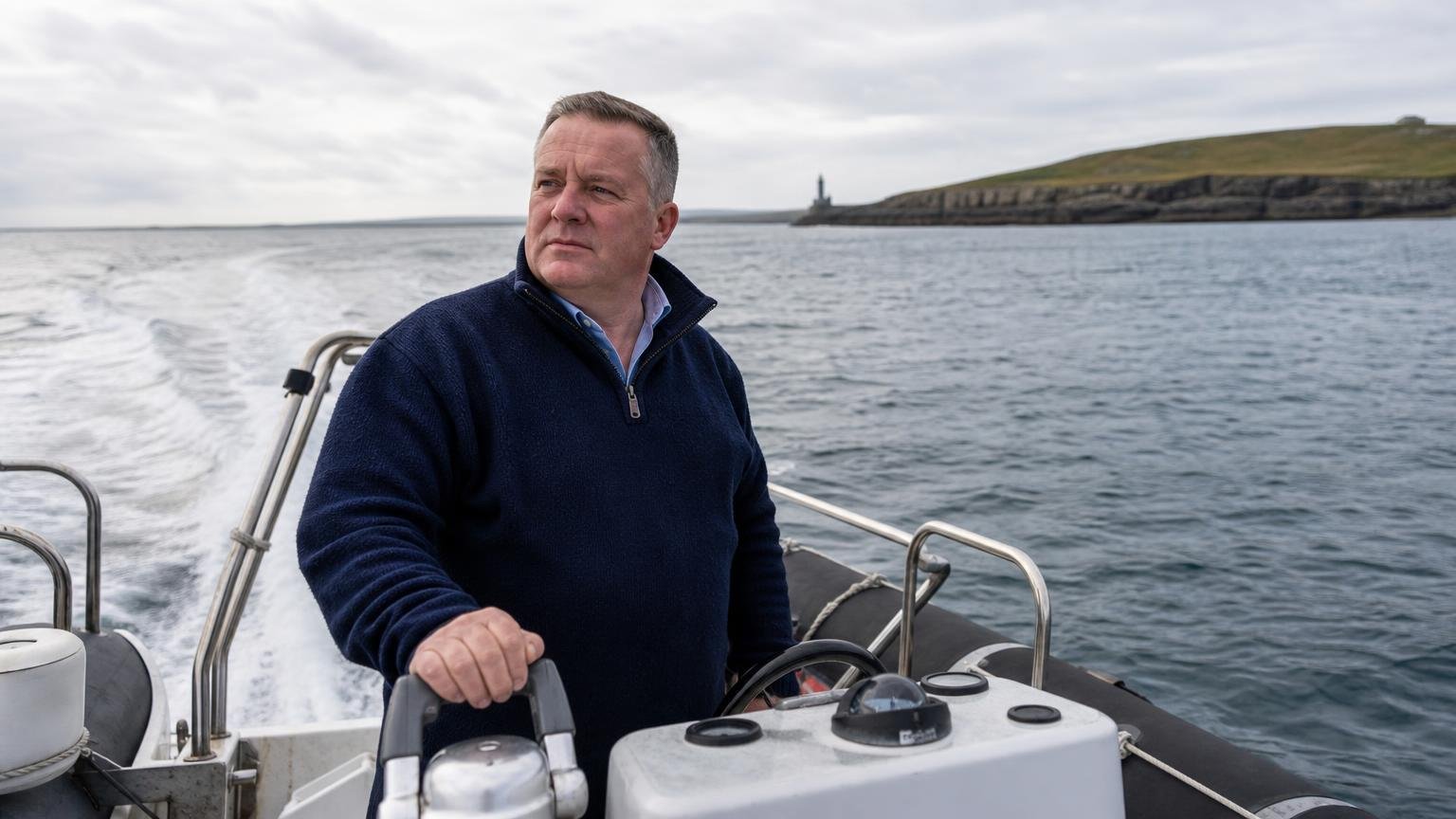
The morning starts when the light finds the curtain and the gulls begin their gossip. He brews a strong tea, checks the wind on a weather app, and walks towards the marina as the river loosens its sleep from the night’s tide. No sirens, no duty roster, no hum of a patrol car’s radio.
His name is Liam Hogan, once a Garda in Newcastle West, now the skipper of a small passenger boat threading the Shannon Estuary to a quiet island off the Clare coast. He left the force a little early, trading blue lights for blue water, paperwork for polished cleats, and the clipped rhythm of shift work for the sea’s breathing and broader sky.
From blue lights to blue water
The decision came like a slow tide, nudging and then pulling with a steady insistence. “I loved the work and the people, but the clock was always the loudest voice,” he says, turning a coiled line softly in his hands. He wanted to be useful and to be present, to measure days not by incidents but by weather and wake.
There was stillness at first, then a plan, then a spreadsheet of courses and costs and a few doubtful glances from old colleagues. He learned charts and buoys, got his skipper’s ticket, and spent long evenings reading weather systems like a language he’d once misheard.
Learning the tide’s timetable
Now his world is tidal, not top-down, ruled by pressure lines and swell forecasts. “I haven’t set an alarm in nearly three years,” he says with a grin that is part relief and part defiance. “The tide tells me what’s possible, and the wind tells me when.”
He knows the channel’s quirks, the shallows that shift like moods, and the sleepy seals hauled out on pale stone. On good days the estuary is a sheet of hammered silver, and on the bad ones it’s a muscle knotted with weather, asking for patience and close attention.
Scattery’s slow clock
The island greets you with a low hush—a round tower, old stones, and paths that insist on walking rather than rushing. Families step onto the jetty blinking at the sudden quiet, and Liam points to the monastic ruins as if introducing old friends. “You’ll hear your own footsteps here,” he tells them, “and that’s rarer than you think.”
He ferries school groups, heritage buffs, and couples carrying picnics wrapped in crinkly paper. On the ride back they’re slower and more careful, as if any loud words might spill from the boat into the soft water and drift to the lighthouse.
A different kind of duty
If policing taught him to stand steady, skippering taught him to yield. “On the water, the ego goes early,” he says, tapping the wheel with easy fingers. “You’re not in charge, you’re in conversation.”
What he carried from the Garda station—calm in a tight moment, a human tone in tense weather—still fits like a well-worn jacket. He notices the kid who looks a bit green, the granny who’ll want the best seat out of the spray, the farmer who judges the wind by the ripple on his cap and keeps his counsel.
- The sea rewards quiet listening, not loud certainty.
- A plan is a raft; flexibility is the oars.
- Respect is a two-way channel between skipper and sea.
Counting days by swells, not shifts
He keeps a small notebook of weather, a tally of swell heights, and a page for boat maintenance where he lists every new rattle and solved squeak. In winter, work turns inward—paint, grease, a stubborn bolt, and the kind of thinking you can only do with cold hands and a quiet yard. “You pay your debts to the boat in the off-season, and she pays you back in July,” he says, smiling at the engine’s clean purr.
Home is still Newcastle West, still the same town, now slower in the best way. He makes school runs, cooks on Tuesdays, and times his laundry to the gaps between tides. “It’s a small life, but it’s big where it counts,” he says, looking out past the marina’s masts to the long, low horizon.
What the water keeps
There are days when the fog sits thick, when judgment is a careful flame, and you climb each metre of visibility like a slow ladder. There are days of laughing passengers, a seal that tailgates the stern, and a sunset that stains the estuary a deep, soft wine the colour of old stories. He holds both with the same grip, light but ready.
“I was never chasing escape,” he says, “I was chasing a better sort of presence.” The boat gave him a new uniform—oilskins and salt—and a different kind of radio: the wind, the hull, the relentless, trustworthy metronome of water against wood.
The wake he wants to leave
Ask him what’s next and he lifts a shoulder, half shrug, half sail catching a small, friendly breeze. There’s talk of a late service for sunset walkers, maybe a winter birdwatching run for the hardy curious. “If the sea keeps inviting, I’ll keep going,” he says, already glancing at the telltale and the shifting light.
For now, the tide is making, the ropes are loose, and the island is waiting in its own time with its own held breath. He casts off with a gentle push, steers into the deeper channel, and lets the morning decide the pace. Somewhere behind him a siren fades in a different town, and ahead the day opens like clean, bright water.

Lovely article, lovely turn of phrase. 🙏
Where can I get this boat and where exactly does it go to