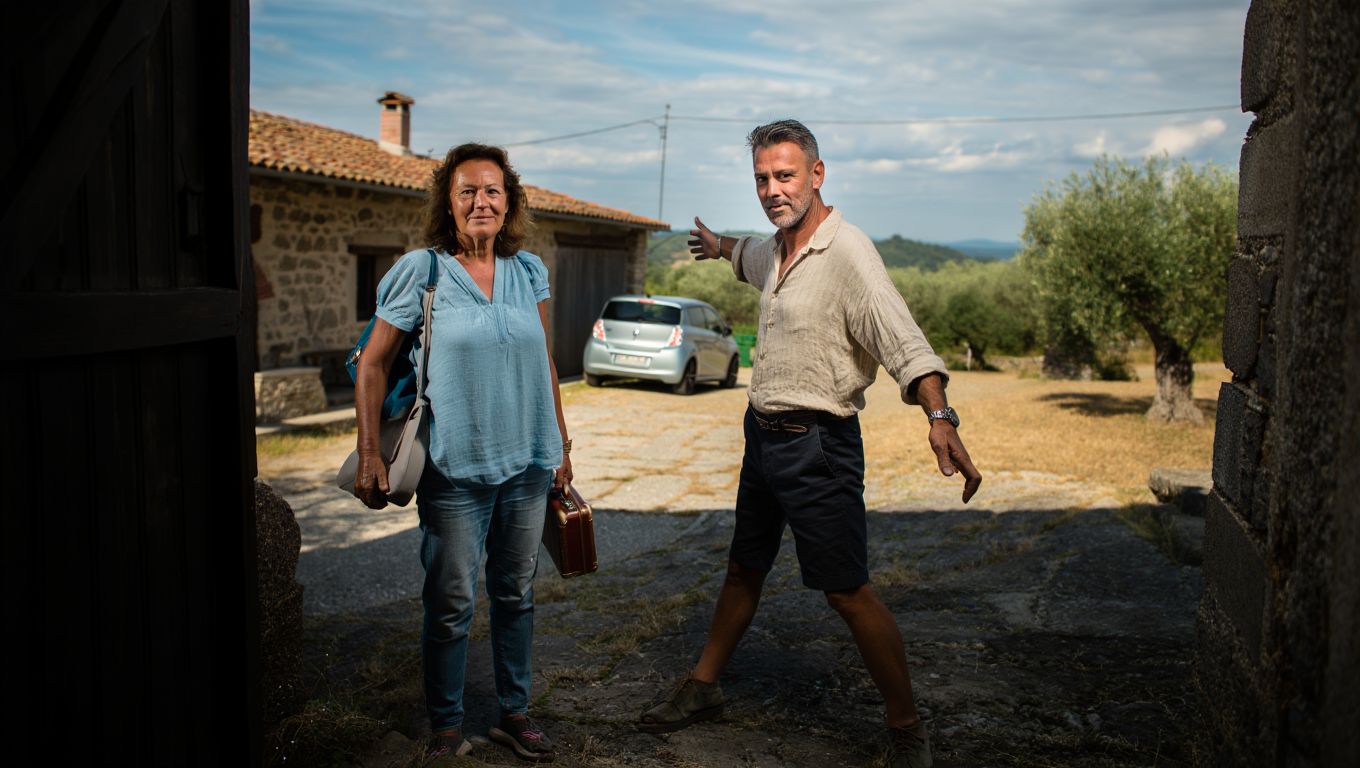
They step off a winter flight into lemony light, shoulders unclenched, the Alentejo’s soft air peeling away the damp that clings to Irish bones. Seven years on from selling up in Athenry, they’ve stitched a two-country life together: winters among cork oaks and whitewashed lanes, summers where the hay sweetens the Galway breeze. “The flights cost less than the oil bill did,” they say, half amused, half relieved.
Trading drizzle for dry heat
They didn’t chase a postcard fantasy, just a practical pivot. “We wanted sun on our backs, not a bigger mortgage,” she says, rolling a market orange across the kitchen table. The Alentejo’s broad skies, slow rhythms, and silver olive groves offered exactly that: a winter that is gentle, bright, and walkable.
Back home they keep a modest base—small, snug, and paid-for—close enough to the Burren and the bogs to feel rooted. Down here, they rent a simple apartment near a tiled square, five minutes from a bakery that sells warm papo-secos and gossip in low tones.
The sums that made sense
The arithmetic started as a dare on a bitter January. They’d watched the oil tank swallow euros and still leave the rooms cold. The winter before the move, heating had cost over €2,000, and that was with sweaters and a cautious thermostat. “We ran the numbers one evening,” he says. “Flights for the two of us, plus a few months’ rent, versus barrels of oil and grey skies. It wasn’t even close.”
Down here, they spend mornings in sunlight, not in a queue for the boiler man. Electricity is predictable, winter produce is cheap, and the need for heavy heating simply fades. “We learned the difference between spending to endure and spending to enjoy,” she says, lifting a bag of mandarins that would cost twice as much at home.
How the rhythm works
They move with the seasons, not with a schedule. In late October, when Atlantic wind starts to gnaw, they fold sweaters into a carry-on and book two seats to Lisbon or Faro. By mid-May, with Ireland greening like a new notebook, they’re back among wildflowers, mending gates and minding nephews.
- Winter: walks, markets, language class on Tuesdays, volunteer shifts at a local library.
- Spring: slow trains north, early mornings in airports, first tea in the Galway light.
- Summer: family tables, GAA on the radio, barbecues fought by heroic midges.
- Autumn: lists, packing, and the familiar click of the seatbelt.
“We don’t collect countries,” he says. “We collect habits.” There’s a café where the owner knows their order, a bench where the river answers the wind, a grocery list that reads like a warm poem: bread, tomatoes, sardines, smiles.
Work, time, and the lighter bag
He kept a part-time contract, remote before remote was fashionable. She shifted to freelance, pinning deadlines to the slow tilt of daylight. “Portugal gave us hours, not just weather,” she says. Without a car, they walk to errands and walk off their frowns. Without central heating, they learned layers and timing: sun in the window by ten, stew on the hob by five.
Their things shrink to the useful: a well-worn pan, a short stack of paperbacks, sandals that know the cobbles. “I thought I’d miss the clutter,” she says. “Turns out I miss it like I miss a headache.”
The heart’s logistics
None of it is all rosé sunsets and perfect tiles. There are doctors to register, forms to translate, and the odd burst of bureaucratic theatre. “We learned to smile, to ask twice, to carry three photocopies,” he says. Language arrived in patches—enough to say please, thank you, and where exactly the good bread is.
Homesickness still nips. A funeral you can’t attend, a storm you want to watch together. “On those days we phone home, then walk to the sea and let the horizon do its work,” she says. Distance hurts, but so did the winter doldrums, the afternoons swallowing light by four.
What they’ve learned, and what they keep
The biggest gain is clarity. Back in Ireland, the summer stretches; they plant herbs, paint sills, and greet neighbours by full name. In Portugal, winter softens; they write, cook slowly, and remember to sit in the sun while it’s there. “We didn’t chase more,” he says. “We chased less of what made life small.”
They don’t brag, but the phrase returns like a refrain: “The flights cost less than the oil bill did.” Money was the lever, but time was the door. They traded noise for notes, hurry for habit, and found their year dividing into two bright, legible pages.
If the world tilts, they’ll adapt. If rules change, they’ll pivot. “We’ve learned to pack light and love what we use,” she says. Galway remains their anchor, Alentejo their winter harbour. Between them, a slim ticket and a wide sky.

They don’t exist
The pictures are getting more ridiculous. People don’t exist