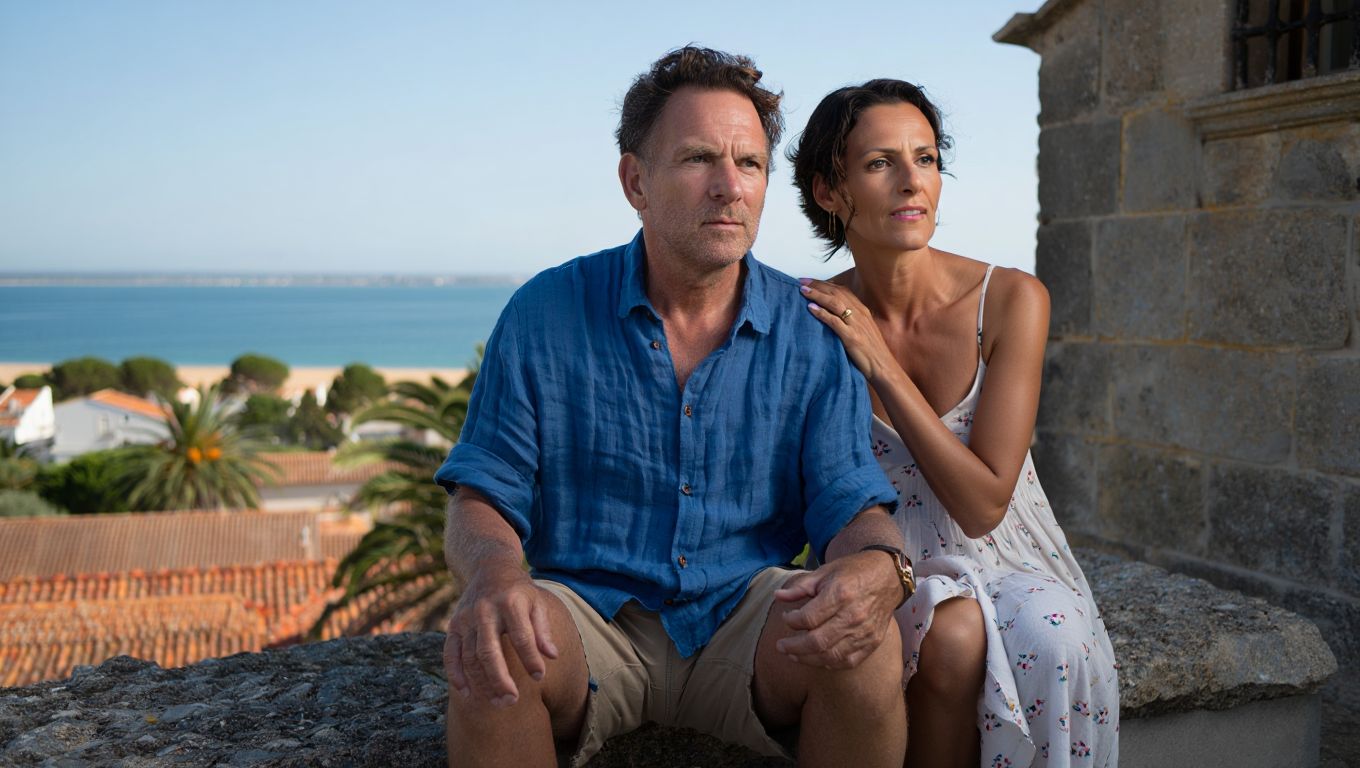
They landed in southern Portugal with two rucksacks and a scribbled budget, promising themselves a year. Eight years later, the Roscrea couple are still there, feeling oddly lighter—in the wallet, in the bones, in the daily noise that once filled their lives.
From drizzle to daylight
The first shock was not the heat, they say, but the length of the days. “In winter we still get a soft glow at 5 p.m.,” says Eileen, who counts the light like currency. “Back home I clock-watched through grey, then raced dinner against the dark.”
What a month costs when you slow down
Money was the nudge, not the whole story. Still, the arithmetic feels simple. “We spend less in a whole month now than we used to in a racing fortnight,” says Kieran, almost sheepish. “It’s not that we live ascetic—we live different.”
- Rent for a modest, bright apartment: about €750 per month
- Fresh food from the market: roughly €220 for two, including local fish
- Utilities, internet, and a prepaid phone: around €140 in an average month
- Coffee on the square, two glasses of local wine, the odd pastry: €90–€120
They laugh at their old habits—standing in a soggy shop queue while a takeaway clock blinks €19.50, repeating the ritual three times a week. Here, they cook, they share, they linger. “You spend less when you hurry less,” Eileen says, lifting a bowl of tomatoes so red they feel lit from within by August.
Learning the grammar of elsewhere
The first summer, they learned to say bom dia with a round, open mouth, then stumbled through the verbs that make a life: to pay, to ask, to mend. “We carried a pocket notebook,” Kieran says. “We drew tiny forks for café and little taps for the hardware shop.” Language came patient and crooked, like a vine that finds its wire.
They found a rhythm of errands on foot: butcher, bakery, pharmacy, the post with its tidy stamps. They learned the wait at the municipal office, the sudden kindness of a clerk who slides a form across the desk and says, slowly, “No stress.”
Health, heat, and the sensible midday
Their bodies adjusted in tidy increments. Fewer aches, more sleep, better feet from walking the long promenade. “We miss Irish rain, not the cold that gets into your knuckles,” Eileen jokes. They made friends with the siesta logic and an early swim, lying low through the high sun. “It’s not a beach poster,” Kieran says. “It’s a way to pace yourself.”
Healthcare felt navigable after the paperwork maze. A neighbour introduced them to a clinic, where the doctor listened with neat, careful questions. The costs were reasonable, the pharmacy kind, the advice practical: walk more, cook simply, avoid noon heroics.
Work that folds into the day
They did not retire; they retuned. Eileen tutors English over video, Kieran edits short guides for a travel website. The work is light, but precise, with deadlines that keep the mind brisk. “We measure ambition in hours, not in titles,” he says. Afternoons belong to the sea, to a chair in a patch of shade, to the slow mending of a shirt.
“Back home the week ate our energy and we bought it back on Saturdays,” Eileen says. “Here, our time is our luxury, and it costs very little.”
Friends found in small habits
They built a circle the way you build bread—by tending the same starter, day after day. Same café, same grocer, same wave to the man who trains his dog at the pier. The talk is mixed—Portuguese, Irish, stray German—held together by small courtesies. “We bring biscuits to the market lady; she saves us the last figs,” Eileen says. “That’s a better exchange rate than any bank.”
What they miss, what they don’t
They miss the deep green, the long stories in pubs where the rain drums the roof. They do not miss the rush, the bills that seemed to breed in the post, the heavy Sunday shop that ate the evening whole. “We miss people,” Kieran says, “but when they visit, we get the best of them, and the best of here.”
Not paradise, but a decent bargain
They don’t romanticise the bureaucracy or the whiff of mould after a damp winter spell. Rents edge upward; summers crowd the roads; a new tax rule demands a fresh read. “Every place asks for a kind of tithe,” Eileen says. “Ours is patience and a good fan.”
Still, the ledger balances on the right side. The calendar feels wider. The sky does a different kind of blue. They cook with garlic smashed under a knife, tomatoes cut thick as coins, herbs bruised to release a smell that says dinner will be early and unfussy. They watch neighbours argue kindly about football, then apologise with tiny cups of coffee.
“People think we came for sun, but really we came for space,” Kieran says. “Space in the day, space in the mind.” Eileen nods, turning a page in her book as the kettle rattles in the small tiled kitchen. The window is open to a breeze that smells like orange peel and hot stone, and there is nowhere in particular they need to be—except, quietly, together.

Beautifully written. I’d be on the next plane if I could
We measure ambition in hours.
How fortunate they are to have arrived where they find themselves.
They don’t exist
I don’t blame them for wanting to get away from roscrea, what a depressing town and if they seen it now they be even more shocked
All of these articles are fiction. The people don’t exist. The story isn’t real the picture is fake
Algarve is expensive been there over 35 years holidays go there every year so its fictional a
Roscrea is one of the most beautiful towns in Ireland with a wide variety of beautiful vape shops and kebab houses. It also has a beautiful hotel called the ‘Racket Hall’.
The Algarve is fine for a few days, but you’d get fed up of the sun.
Take car of yourself. Love Dinny
Sorry Dinny we no longer have a hotel in Roscrea. They beautiful Racket Hall is no longer a hotel you’d hardly recognise it. Nothing in Roscrea. Monthly there is always some business closing.
The town is unrecognisable .
I’m a frequent visitor to the Algarve and away from the tourist hotspots on the coast, in the beautiful rural communities, it is not expensive.
I enjoy lovely coffee and either a pastel da nata or an almond version for less than 4 euros. A glass of vinho verde for 1.5 euros.
The food in restaurants is rustic. Everyone is friendly and welcoming.