The ferry noses into the Atlantic and the mainland fades, replaced by sky and spray. Boats rise, gulls tilt, and a low smudge of land gathers itself on the horizon like a secret promise. You arrive with pockets full of salt and a head newly cleared by the big weather.
Where the map thins out
This is a sliver of rock off Donegal’s weather-etched coast, a place where time loosens its grip and people still know each other by footfall. The island is small, bare-boned, and ringed with cliffs that drink the sea. Gaelic place-names snag on the tongue like nettles, yet they bloom into meaning with a little patience.
Locals move with purpose but no rush, a rhythm set by tides and the long light of northern summers. “You’re not late here,” a fisherman says, “you’re just elsewhere,” and it feels both joke and gospel.
Getting here is half the story
Summer ferries skip across from the Donegal mainland, a lean hour of rollers and foam that scrubs city thoughts clean. On calm days the ocean is a lacquered shield; on lively ones it bucks like a colt. Either way, you step ashore with your balance reset and your senses widened.
There are no taxis to hail, no motor-thrum to follow—just your feet, the hiss of wind, and the soft rattle of gravel. Luggage is light because there’s not much to need, and what you do need fits in a jacket pocket.
Two beacons, one horizon
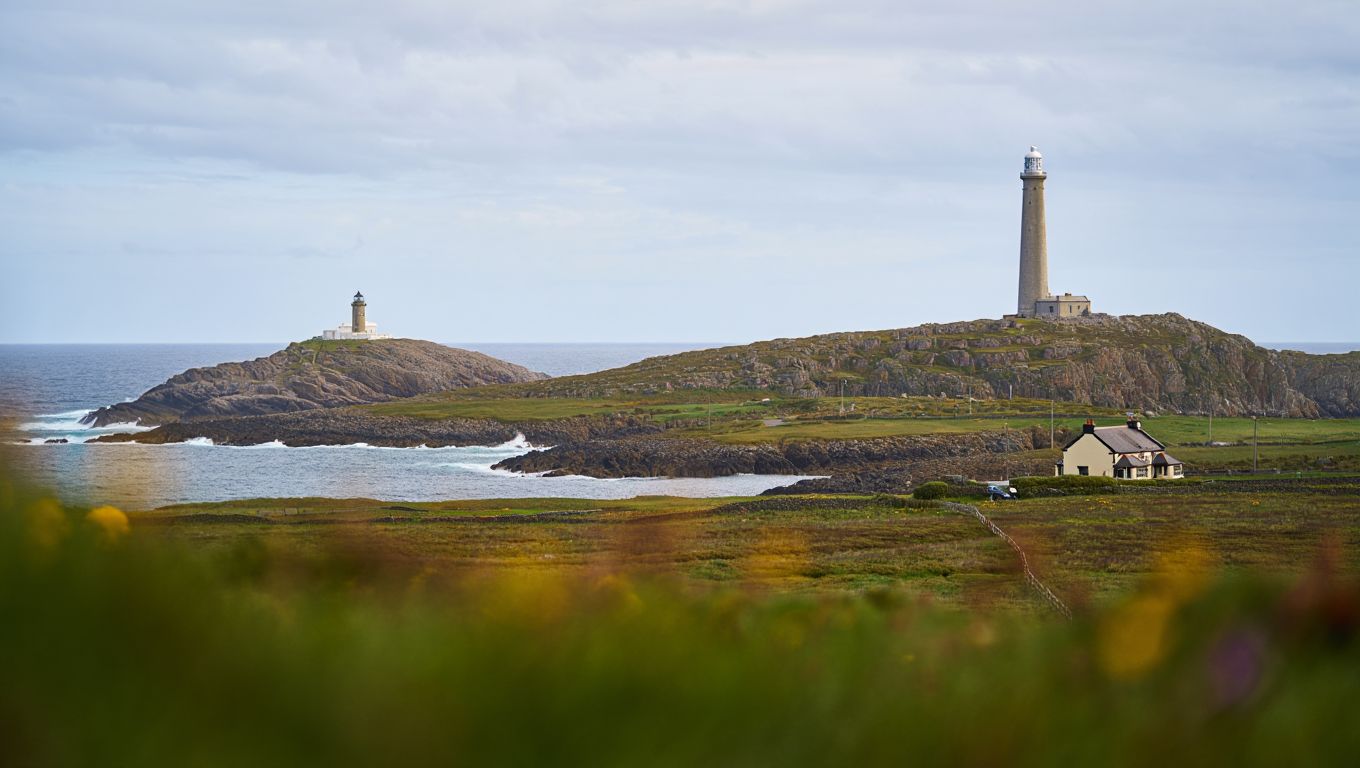
At opposite ends of the island, twin lighthouses keep their quiet vigil, shouldering centuries of fog and storm. They’re not for show; they’re work-worn sentinels with iron in their spines. Walk to them along cropped grass and peat-brown paths, and you’ll hear the ocean’s grammar punctuated by kittiwake cries.
You may not step inside, but the approach is its own theatre, with waves rehearsing their endless lines on black-boned rock. The glass eyes look seaward, but the island looks back, stitched together by light that has saved more lives than it will ever count.
The pub that knows your name by the second night
There’s one pub, and it is a compass, a hearth, a noticeboard, and a stage where songs lean into the smoke. Fishermen warm their hands on pints, musicians tune by instinct, and visitors learn to keep conversation low when a fiddle is finding its weather.
“Have a seat; you’re already a regular,” someone laughs, sliding over to make room. Stories pool around the tables—some true, some almost true, all better for the telling. The floor knows the pattern of reels, the bar knows the weight of rain, and the night knows when to end without looking at a clock.
Walk it, don’t rush it
Feet are the island’s currency, and the best miles are slow. Cliffs stack like dark poetry, and the wind writes fast notes across your sleeves. Look for a stone cross that’s as thin as a gull’s wishbone, a relic held upright by more than faith.
Art lives here in fierce color, born from sea-light and the stubborn joy of making. You’ll find paintings pinned to walls like weather-maps of the heart, quick strokes capturing boats, cattle, and a horizon always becoming. Even the gulls seem to fly with intent, scouting for metaphors in the tidal wrack.
Birds, legends, edges
Corncrakes rattle their secret castanets, and skuas patrol with military swagger. Puffins arrive like painted gossip, darting between wave-worn ledges. On the headlands, myths meet granite—forts once gripped by ancient rulers, their stories salted by centuries.
Stand there and the world seems temporarily paused, a record needle set between tracks. The Atlantic doesn’t roar so much as pronounce, and the cliffs reply in a choir of echoes and spray-flung punctuation.
What to pack, what to expect
- A windproof layer, even on bright days; weather here is a talented shape-shifter.
- Good shoes for stone and bog, because paths have their own temper.
- Cash for the pub and small shops, where cards can be a maybe.
- An appetite for silence and the slow luxury of unbusy hours.
Time, pared back
On a weekday afternoon, you might hear only the spin of a distant reel and the click of a latch in the breeze. The absence of traffic becomes a kind of music, a metronome set by waves and boots on stone. Your phone gives up and you don’t mind; the island gives back every bar it takes.
By evening, the light stretches like honey, and shadows knit tidy stitches across fields grazed to velvet nap. Somewhere a dog makes its uncomplicated point, and laughter skips across the pub’s low lintel.
Leaving isn’t simple
When the ferry turns, you take a last long look, the kind you offer to someone you know you’ll see again. The island recedes but doesn’t diminish; it threads itself into your inner weather, a small unmoving star. You return to roads and email pings, walking a little slower, ears tuned to a remembered wind.
“Come back when the days are longer,” someone said as you waved goodbye. You will, because once you’ve stepped into this quiet, all other quiet sounds slightly borrowed.

Tory is just beautiful and the locals very welcoming, l could easily live there, love the place, visited many times while working for hse. Next time l will go on the boat. Thanks to all the islanders for your hospitality. Vera
Erm, there’s only one lighthouse!!
Liam kennedy. Tory island is amazing! Maybe you should actually go sometime!
Also if this comment leads to an auto subscription to this site I will be unsubscribing