
As it ages, the Sun grows brighter and expands. While it may literally bake the Earth before swallowing it, new research suggests a far more resilient and complex life than previously thought.
Blazing End
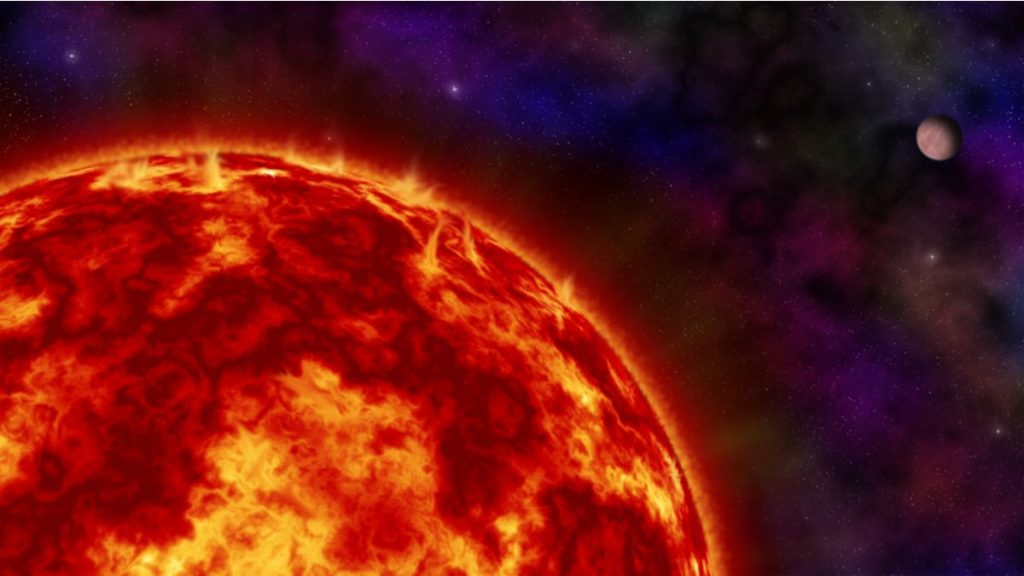
Based on observations of stars at a comparable, more advanced stage, the Sun is gradually evolving into a (very slowly) red giant. If this scenario ends up vaporizing our planet in roughly five billion years, the world will become uninhabitable well before then. As for complex life, there is little doubt that the plant biosphere (aquatic and terrestrial plants) will be the last to vanish.
Its survival will hinge mainly on atmospheric levels of carbon dioxide, a key ingredient for photosynthesis.
« The greenhouse effect resembles Earth’s thermostat, which keeps surface temperatures within a livable range », explain the authors of the new study, published in the journal JGR Atmospheres. « As the mercury climbs, CO2 is locked away in rocks, reducing its atmospheric concentration and allowing some of that heat to escape. »
As our sun expands, concentrations of this gas become, therefore, the principal limiting factor for vegetation. Earlier work concluded that below 10 parts per million of atmospheric CO2, plants would perish and only micro-organisms would persist. The models used at the time suggested crossing this threshold in about 1.35 billion years.
A Plant Biosphere Still Present in 1.8 Billion Years
Relying on a more intricate set of parameters, the new simulations incorporate a more efficient form of photosynthesis known as crassulacean acid metabolism. Used notably by cacti and pineapples, this mechanism could lower the previously mentioned threshold to 1 part per million, granting the biosphere a 500-million-year reprieve, with a eventual end around 1.8 billion years from now.
While such timescales may feel abstract to us on our small-scale planet, evolution and natural selection could potentially stretch their survival even further. “These organisms will have all the time needed to adapt to the gradual warming brought about by the Sun’s expansion,” notes Jacob Haqq-Misra, the study’s lead author.
Overall, these new projections suggest that Earth’s complex biosphere is still in its early stages chronologically, and they also boost the likelihood that we might one day detect its counterparts on other worlds.
Previously, Japanese researchers had estimated that the Earth’s atmosphere could lose its oxygen within as little as ten thousand years.

Contact details
Address:
Farmers Forum,
36, Dominick Street,
Mullingar,
Co. Westmeath,
Ireland
Phone:
+353 (0)44 9310206
Or email us:
For technical issues please check out our FAQ's page or email - [email protected]
For general Queries email - [email protected]
Request to add event to our Calendar - [email protected]
Send us your mart reports - [email protected]
Suggestions and feedbacks - [email protected]
News Items / Press Release - [email protected]
To Advertise on Farmers Forum - [email protected]