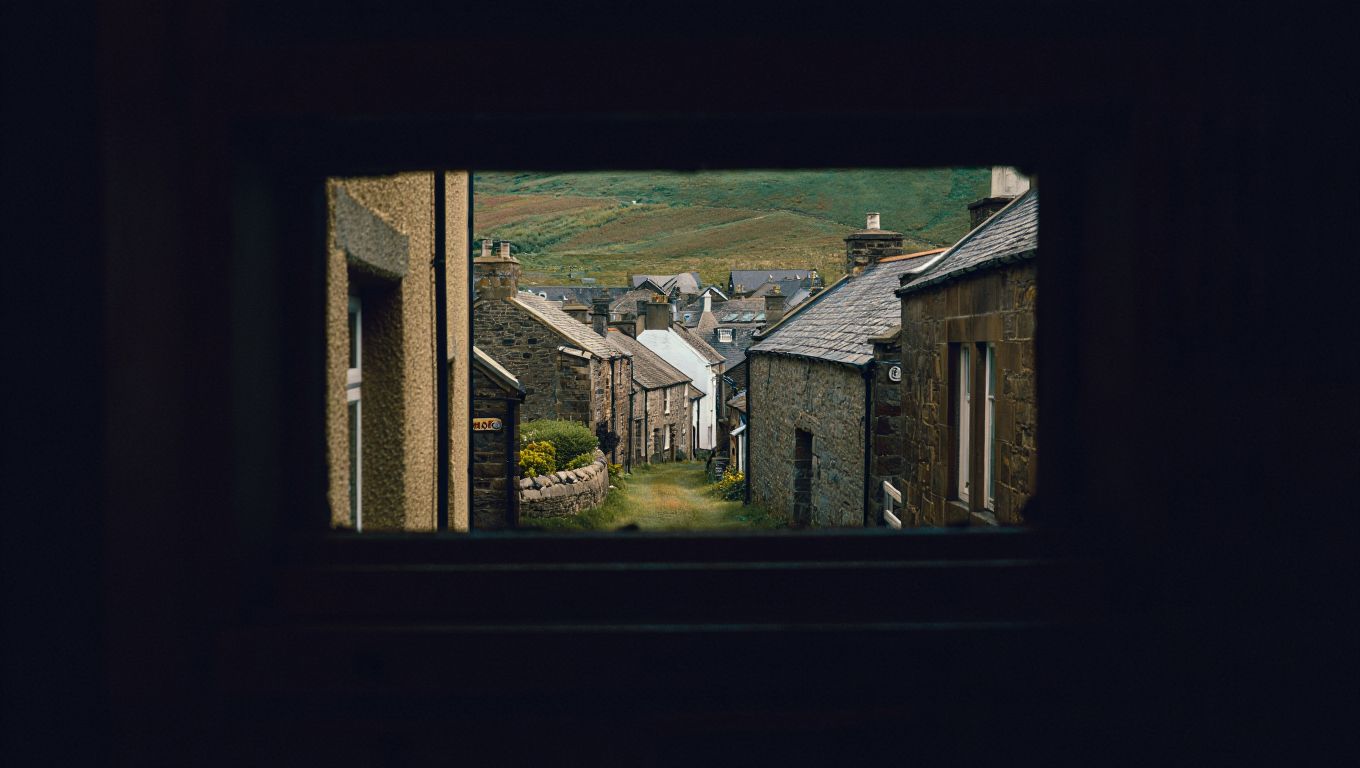
A hush often follows big announcements, and on Ireland’s far west coast that hush feels like a blessing. When a leading European travel magazine singled out its prettiest villages for 2026, a tiny place on the Mullet Peninsula suddenly found itself under a brighter spotlight. Locals looked up from tides and trawls, smiled, and went back to the rhythm that keeps the Atlantic in conversation with stone, sand, and sky.
Why this Atlantic hamlet turned heads
The editors praised “scale, silence, and salt,” noting how the village “sits at the edge of the map yet squarely at the center of what travel should feel like.” On this slender peninsula in County Mayo, the village faces out to endless blue, with the Inishkea Islands hazy like prayers on the horizon and a lighthouse that watches weather the way elders watch stories.
That light is more than ornament. In June 1944, a keeper’s weather report from Blacksod helped postpone D‑Day by a day, a sliver of time that saved untold lives. “It’s the kind of place where the sea writes the day’s agenda,” says a local skipper, “and we do our best to write in the margins.” The village today remains small, practical, and unperformed—nets drying on rails, crab pots stacked like sculpture, and gulls staking their claims with briny, opinionated song.
Meet the village: Blacksod (An Fód Dubh)
Blacksod is not a resort; it’s a frontier, the last punctuation mark before the Atlantic begins its long sentence. The lighthouse, squat and granite, stands on a squared headland that feels almost carved into the ocean’s mood. From the pier, boats nose toward the Inishkeas when seas are kind, or work the bays for shellfish when the weather plays hard.
A few bends down the road, beaches like Elly shimmer in bands of silver and turquoise, with machair grasslands that flush with wildflowers in late spring. Inland, low walls stitch blanket bog to small fields, and the Irish language rises and falls in shops and kitchens like a tide with its own soft gravity. A short hop away in Eachléim, a compact heritage center keeps the region’s saintly legends and fishing memories tenderly alive.
The feel of the place
First‑timers talk about a particular light—clean, lucid, restless—that slides across water and rock as if testing tones on a palette. “Stay longer than a day,” one elderly angler advises, “and the wind teaches you your real name.” Pubs favor conversation over performance, and seafood plates arrive with unapologetic freshness: crab sweet as sunlight, lobster with a lick of smoke, chowders thick as a grandmother’s hug.
This is Gaeltacht country, where the old tongue nudges everyday speech and place‑names wear their music proudly. The appeal isn’t curated quaintness; it’s continuity. You feel it in the telegraph‑pole hum, the peat‑stack geometry, the way every path seems to arrive at water eventually, as if water were the final argument and the first welcome.
A weekend that breathes
One of the list’s judges wrote, “The charm lies in letting time loosen,” and that’s the best plan. Use Belmullet as a practical base, then keep your days lithe and tide‑wise.
- Blacksod Lighthouse at dawn; beach wandering at Elly by midday; a boat to the Inishkeas when conditions allow; peat‑browns and big‑sky blues from Erris’s lanes; chowder and traditional tunes after dark.
How to arrive without disturbing the hush
The route west feels like a gentle peeling away from noise. From Ireland West Airport Knock or from Shannon, the road threads through bog and bog‑cotton, past rivers that glitter like untied ribbons. The drive from Ballina to Bangor Erris, then out along the R313, is a slow unfurling of space and salt.
Bring layers that forgive weather’s whims, shoes that don’t mind sand, and a respect for living landscapes. The machair is delicate—ground‑nesting birds need quiet, and dunes are stitched by thin roots. “Tread light,” a local ranger says, “and the place will tread lightly on you.” Keep dogs on leads, pack out every crumb, and remember that a working pier is a workplace first and a viewpoint second.
Why recognition matters—and doesn’t
Accolades bring visitors, and visitors bring questions. What changes, what stays, what do we owe a place that owes us nothing? The village answers with steadiness. Nets still need mending, forecasts still need reading, and a forecast can change in ten minutes flat. If you come, come for the weather, the work, and the ordinary miracles of sea meeting stone.
The magazine’s list may pull fresh eyes westward, but the real reward is what happens when you stop looking and start listening—to boots on the pier, to larks over the machair, to the Atlantic reciting the day’s long poem. Out here, prettiness is simply a side effect of being true. And that is what turned the heads in Europe—quietly, firmly, without fuss or filter.

Contact details
Address:
Farmers Forum,
36, Dominick Street,
Mullingar,
Co. Westmeath,
Ireland
Phone:
+353 (0)44 9310206
Or email us:
For technical issues please check out our FAQ's page or email - [email protected]
For general Queries email - [email protected]
Request to add event to our Calendar - [email protected]
Send us your mart reports - [email protected]
Suggestions and feedbacks - [email protected]
News Items / Press Release - [email protected]
To Advertise on Farmers Forum - [email protected]