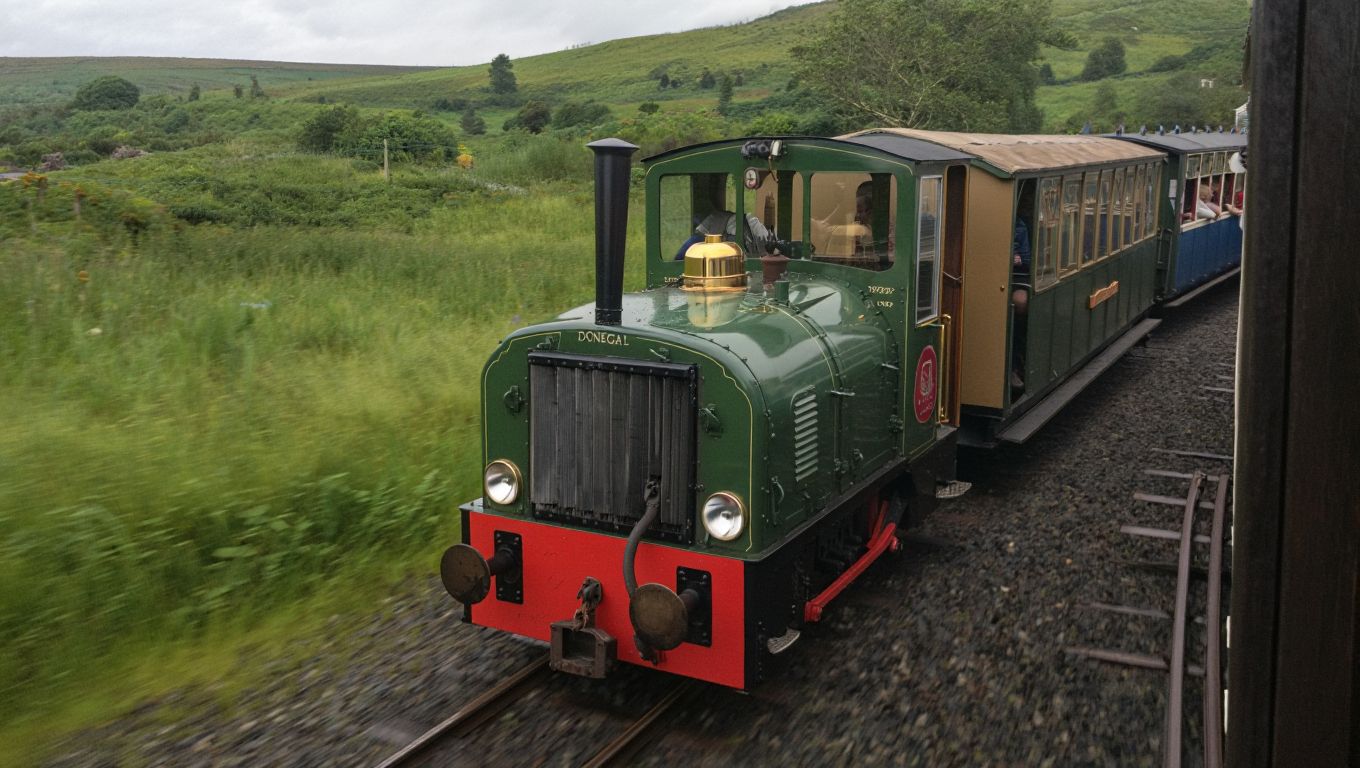
The first warm mornings of summer carry a familiar sound through the Donegal hills: wheels on steel, a whistle’s soft echo, and the low murmur of families craning for a view. After years of patient work, a beloved narrow-gauge train is rolling again, its polished timber and gleaming brass catching the island light. Locals speak of memory, visitors of magic, and the rails—thin and resilient—seem to hum with relief.
“This is about place and people,” says one veteran volunteer, wiping a fleck of soot from a cheek. “You don’t just restore a machine—you restore a story.” And on these 3‑foot tracks, the story unspools with crisp clicks, slow curves, and open bogland breathing space.
A narrow‑gauge icon reborn
In County Donegal, narrow‑gauge heritage has always felt both fragile and fiercely alive. The restoration team blended archives with craft intuition, taking patterns from old drawings and lessons from scarred metal. Over several seasons, every plank was carefully sanded, every valve meticulously checked.
“This carriage smelled of old salt and engine oil when we found it,” laughs a carriage maker, running a hand along new varnish. “Now it smells like cedar and a little bit of pride.” Funding arrived in steady drips, with local businesses, heritage grants, and small private donations joining forces to keep the project moving.
Look closely at the details: the rivet patterns, the hand‑stitched seatbacks, the subtle Donegal red layered over primed steel. Even the buffer‑beam numbers have a period‑correct serif, chosen after long evenings with faded photographs and a magnifying glass.
First rides of the season
Now, as the 2026 season opens, short public runs are underway on a beautifully prepared stretch of line. The ride is deliberately unhurried, giving families time to breathe and photographers time to frame. Expect twenty soothing minutes, maybe a gentle stop, the guard’s flag lifting like a small green theatre.
Children press palms to windows, counting passing posts and calling out sheep, while the engine settles into an easy rhythm. You notice the Donegal light doing what it does so well—sketching out mountains in calm contours and gilding the water’s far edge. “It’s like the county exhales when the train moves,” says a watching farmer, smiling from a gate hinge.
In pictures: moments to keep
You could build an album of textures and quiet drama from a single round trip. Think slate‑blue sky, silver‑green rushes, and timber glowing like amber at the day’s last angle.
- A sunlit platform scene as the guard’s red flag drops and faces lift in shared anticipation.
- The engine’s side rods a blur of honest motion, framed by furze and low stone walls.
- Reflections on carriage glass—fields, clouds, and a sudden flock of white‑winged surprise.
- A child’s careful ticket, clipped into a keepsake corner with a neat iron bite.
How to ride
Services are running on select summer dates, with extra weekend departures during school holidays. Booking is kindly recommended, especially for larger groups, as carriage capacity remains intimate by design. Check the heritage centre’s official channels for live updates, weather‑related advisories, and occasional twilight specials.
Parking is well signed, and volunteers are on‑hand with friendly directions and stroller‑ready routes. Step‑free boarding is available at designated doors, with staff trained to assist with careful, respectful support. Expect a small on‑site shop for maps, enamel badges, and hot drinks that taste best beside warm timber.
If you’re traveling by public transport, plan a relaxed connection and leave time to wander the nearby streets, where shopfronts wear their paint like Sunday best. Bring layers for shifting Atlantic breezes, and a little tolerance for gentle, heritage‑scale pace.
What you’ll hear on board
There’s a particular Donegal soundscape at speed—soft on the ears, rich in texture. Rails murmur under load, a whistle threads the open air, and conversations fall into that quiet register where strangers share small, certain joys. “I rode these lines with my grandad,” murmurs one passenger, eyes on the distant ridge. “Feels like he rode back with me today.”
The crew’s calm calls—a wave, a nod, a practiced gesture—add a theatre of reassuring ritual. Every stop is a small reunion, every start a brief collective cheer. Even the station cat seems to approve, tail high in measured dignity.
Why this matters now
In a world that runs too fast, this little railway offers durable time—not nostalgia as escape, but heritage as lens. It sustains rural skills, strengthens local economies, and keeps a regional story loud enough to be clearly heard. The track may be narrow, yet the view feels wonderfully wide.
“These projects teach care,” says the restoration lead, leaning on a sun‑warm buffer. “Care for tools, care for place, care for the people who will ride after us.” As the last train eases across a golden stretch, you can feel that care in every turned bolt, every sanded edge, every breath of coal‑tinged air.
By evening, the rails hold a fading glow, and the platform settles into gentle quiet. Tomorrow promises fresh steam, new faces, and more pictures waiting to be made. For now, the county rests a little more lightly, knowing the small train is truly, gratefully, home.

Stupid article.Tells you all about this idyllic train ride. Omits to say where it is. What kind of journalism is that?
Where does it run from ?? And to where ??
.