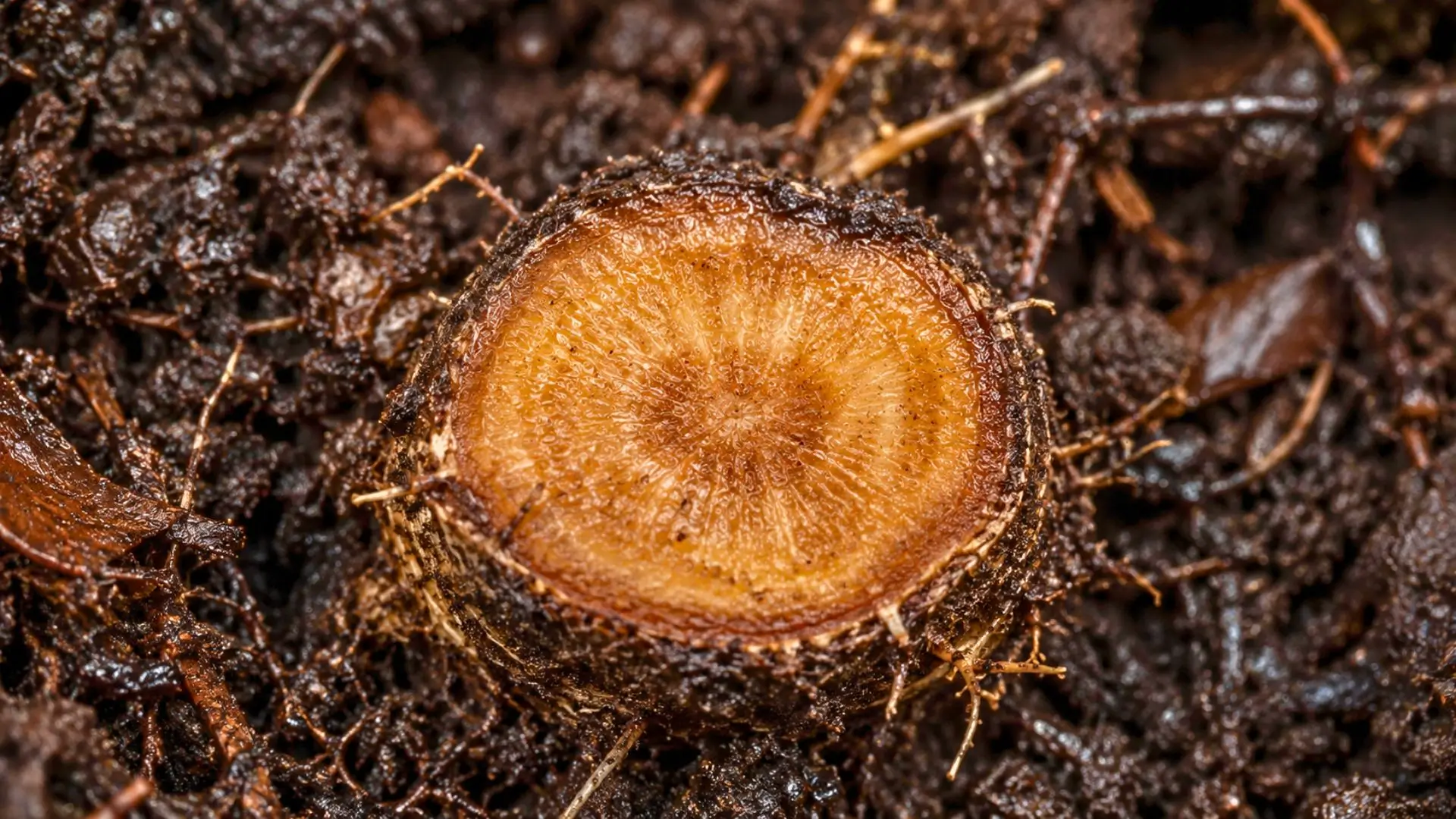
Plants possess an internal communication system far more responsive than we had imagined. Thanks to new underground technologies, scientists measure these invisible alerts with precision, challenging our certainties about the solidarity of forests when faced with disturbances.
How biochemistry lets plants trigger an immediate defense against insect assaults
When a pest targets a leaf, the wounded area releases glutamate. This amino acid instantly triggers a calcium surge through the plant’s vascular system. In this way, the biochemical signal operates similarly to the nervous system in animals.
This impulse travels at about one millimeter per second through plant tissues. Admittedly, this pace remains far from the 120 meters per second observed in mammals. Nevertheless, this transmission is indeed faster than the initial estimate of one centimeter per minute.
Upon receipt of the message by the cellular receptors, the plant produces defensive hormones. Consequently, the leaves rapidly synthesize toxic chemical substances to deter the predators. The response thus occurs in real time to safeguard the rest of the foliage.
Nanotechnological tools now intercept tree distress before the first damage
Engineers from the MIT and the SMART alliance have developed specialized sensors. Made with carbon nanotubes coated with polymers, these instruments insert themselves into the very cores of the roots. They measure directly the salicylic acid and hydrogen peroxide released under stress.
This technical advance, validated in 2024, makes it possible to identify plant distress before the first outward symptoms appear. Henceforth, you can anticipate heat waves or bacterial invasions. This early detection radically changes crop monitoring by intercepting alerts at the source.
The scientific debate intensifies around genuine mutual aid among trees within the underground network
Under the surface, roots closely collaborate with fungi to form the wood wide web. This interconnected network facilitates the exchange of nutrients and propagates drought signals among neighboring trees. Thus, surrounding trees adjust their biological barriers well before facing the threat directly.
However, this idyllic vision popularized by Peter Wohlleben has sparked reservations within the scientific community. Recently, three critical analyses have challenged plant altruism. The biologist Simon Joly reminds us that information transmission via mycorrhizae does not necessarily imply a willingness to mutual aid.
Facing these doubts, researcher Suzanne Simard maintains her conclusions in a study published in January 2025. According to her work, the sharing of resources indeed occurs through soil and roots. The research thus advances on a complex terrain, between enthusiasm and rigor.
A precise mapping of root networks reshapes forest management and the preservation of woodlands
These new data allow for adjustments to forestry strategies in the face of biological threats. By tracing the exact path of the signals, you can modify forest management. Professionals now avoid isolating individual trees and tailor their thinning to preserve these vital networks.
Recall that one gram of soil harbors nearly a billion bacteria, forming an extremely information-dense milieu. The priority is to map this underground network in real time. This approach will guide future logging decisions while respecting the balance of the global ecosystem.

Contact details
Address:
Farmers Forum,
36, Dominick Street,
Mullingar,
Co. Westmeath,
Ireland
Phone:
+353 (0)44 9310206
Or email us:
For technical issues please check out our FAQ's page or email - [email protected]
For general Queries email - [email protected]
Request to add event to our Calendar - [email protected]
Send us your mart reports - [email protected]
Suggestions and feedbacks - [email protected]
News Items / Press Release - [email protected]
To Advertise on Farmers Forum - [email protected]