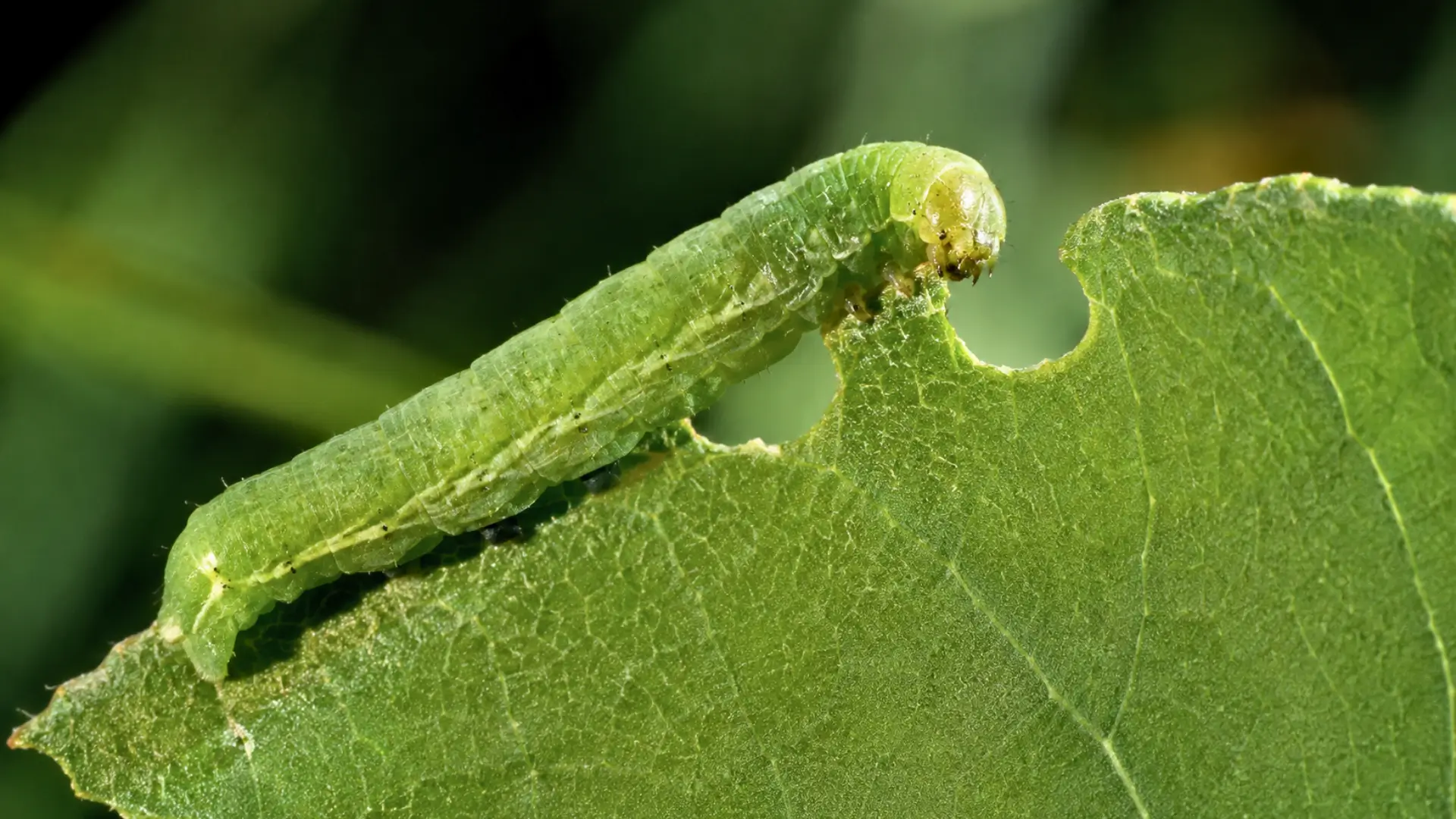
A leaf trembles only a little, a caterpillar gnaws, and an entire defense strategy is set in motion. Researchers have shown that certain plants respond to vibrations that are nearly invisible, as if they can recognize the sound of danger before they are attacked.
How a Caterpillar’s Chewing Triggers the Plant’s Alarm
At first glance, the scene seems to be a garden triviality: a caterpillar perched on a leaf, calmly nibbling away. Yet, in that microscopic crunch, something much bigger is taking shape. In Arabidopsis thaliana, a small cousin of cabbage and mustard, the vibrations produced by the insect are enough to awaken chemical defenses.
The experiment led by Heidi Appel and Rex Cocroft at the University of Missouri has a touch of cinema about it. The researchers recorded the chewing vibrations with a laser, then replayed them to intact plants. The result: exposed to this signal, they prepared themselves better for a real attack.
Plants Filter Useful Vibrations and Ignore Worldly Noise
The most astonishing thing isn’t merely that the plant responds. It seems to sort through signals. The vibrations of wind or the chirping of other insects do not trigger the same reaction. The plant does not panic at the first quiver: it recognizes a biologically useful signal, that of an herbivore in the act of feeding.
One should not picture a hearing like that of animals. No ears, no eardrum, no central brain. Plants instead possess cells capable of perceiving mechanical constraints. In other words, they do not “understand” a sound in the air: they feel a physical movement that traverses their tissues.
This nuance changes everything. In nature, a plant is constantly subjected to jolts: rain, wind, insects, rubbing, neighbors moving. Reacting to everything would be ruinous. Reacting to the right signal, however, becomes a discreet, almost elegant weapon in the long war between plants and herbivores.
A Rapid Chemical Defense Set in Motion Before Real Damage
When the alert is signaled, the plant ramps up the production of defensive compounds, notably glucosinolates and anthocyanins. The former are well known to fans of mustard, horseradish, or wasabi: they contribute to that sharp taste, but also serve as a chemical shield against certain insects.
The fascination lies in the speed of this preparation. The caterpillar, while chewing, unintentionally generates the message that could make its meal less palatable. The plant, for its part, converts an almost imperceptible vibration into a metabolic response. There is no way out for the herbivore; the plant must hold its ground instead.
A Serious Avenue to Strengthen Crops Without Pesticides
This discovery opens an intriguing agricultural path: could chewing vibrations be broadcast to ready crops before pests arrive? The idea may seem straight out of a rural science-fiction novel, but it rests on a simple logic: stimulate natural defenses rather than waiting for damage.
Prudence remains essential. Plant bioacoustics is a young field, and not all plants respond in the same way. Recent studies also distinguish airborne sounds from vibrations transmitted through leaves, stems, or the substrate, a crucial difference in both laboratory and field settings.
Still this perplexing image: in a seemingly still massif, signals circulate, defenses organize, chemical decisions begin. Plants do not speak like animals, but they do not inhabit a silent world either. The next agricultural revolution might begin by learning to listen to what the leaves already sense.

Contact details
Address:
Farmers Forum,
36, Dominick Street,
Mullingar,
Co. Westmeath,
Ireland
Phone:
+353 (0)44 9310206
Or email us:
For technical issues please check out our FAQ's page or email - [email protected]
For general Queries email - [email protected]
Request to add event to our Calendar - [email protected]
Send us your mart reports - [email protected]
Suggestions and feedbacks - [email protected]
News Items / Press Release - [email protected]
To Advertise on Farmers Forum - [email protected]