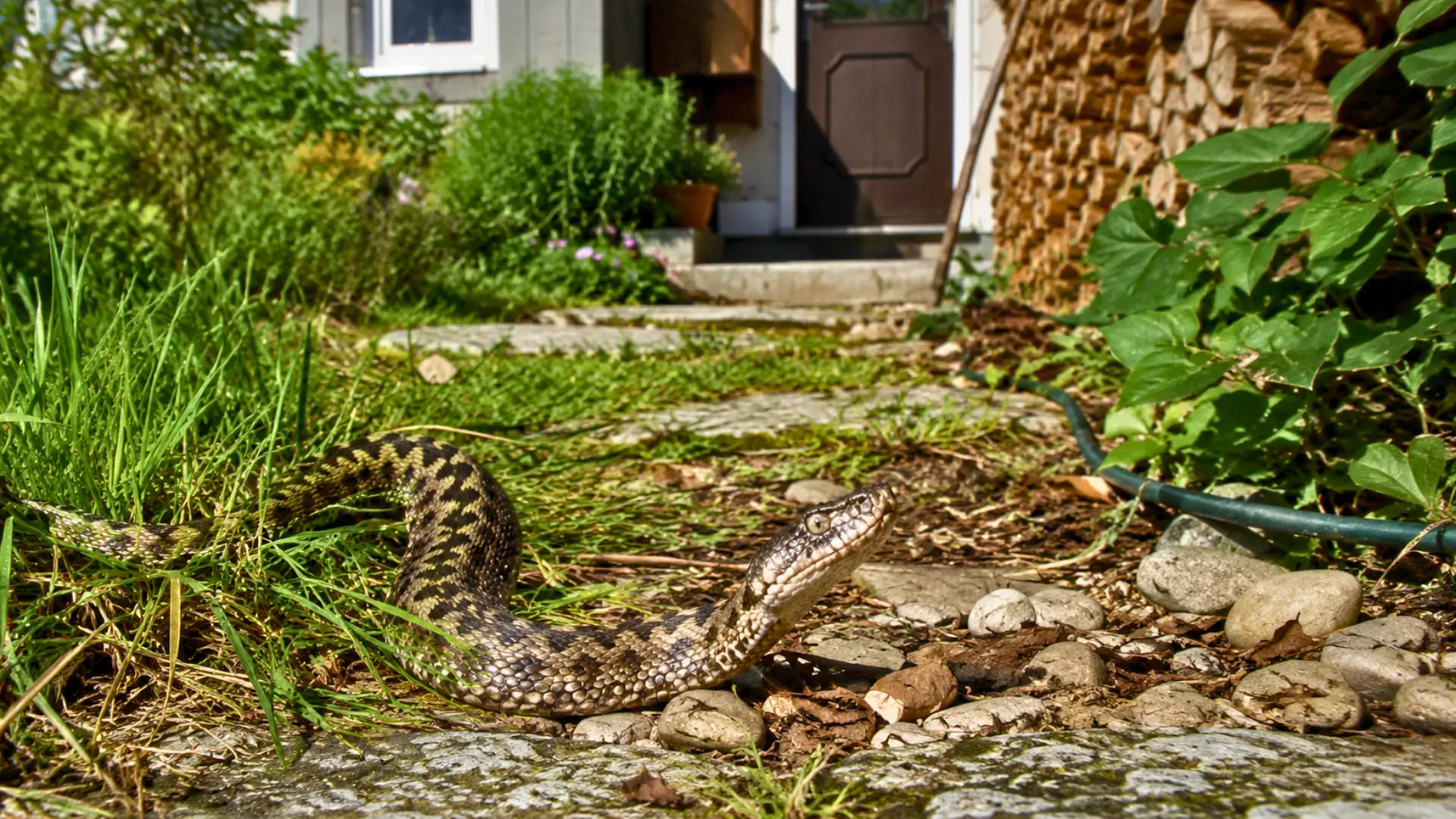
What if the risk comes not from a more aggressive snake but from a moving world map? A recent study warns about the possible arrival of venomous species in regions that are unprepared, with very real public health consequences.
Global warming pushes certain venomous species into new territories
A snake does not read borders. It follows warmth, humidity, prey, and shelter. Yet today, those cues are shifting. Under the influence of global warming and the transformation of natural habitats, some venomous species would retreat. Others, conversely, would advance into more temperate or more populated areas.
That is precisely what an international study published in PLOS Neglected Tropical Diseases suggests. It modeled the distribution of 508 venomous species important for human health. To achieve this, the researchers combined field observations, museum collections, citizen science, and climate projections up to 2050 and 2090.
Venomous snakes already known could move closer to more populated and less prepared areas
However, the scenario is not a disaster movie with reptiles surfacing from sewers. The danger is more mundane, thus more troubling: a cultivated field, a yard, a water source, a running trail. In reality, the novelty would be the increasing overlap between humans and snakes in places not accustomed to them.
Thus, in North America, the copperhead and the cottonmouth could move northward. In Europe, the Peliade viper, already known in France, might encounter more human activity. Farther east, some kraits could approach densely populated areas, notably in China and in northern India.
Nevertheless, the greatest cause for concern is not merely the presence of a venomous animal. It is also the element of surprise. In regions accustomed to snakes, simple reflexes exist: proper footwear, caution near piles of wood, quick access to care. Conversely, a population that is less prepared discovers the risk at the worst possible moment.
Snake bites remain a major health emergency in remote rural regions
In fact, the numbers are staggering. According to the World Health Organization, about 5.4 million people are bitten each year. Among them, up to 2.7 million suffer an envenomation. Finally, deaths range from 81,000 to 138,000 each year, with hundreds of thousands of amputations or lasting disabilities.
This crisis remains largely invisible. It mainly strikes far from cameras: tropical campaigns, dusty roads, rice paddies, plantations, isolated villages. Moreover, the problem isn’t purely biological. It is also social: distance to hospital, cost of care, availability of appropriate antivenoms, and training of caregivers.
In this regard, Australia underscores a crucial lesson. The country is home to several snakes among the most venomous in the world. Yet deaths remain rare thanks to prevention, organized emergency response, and access to treatments. In other words, venom does less harm when the health system reaches people in time.
Prevention, antivenoms and hospitals must follow the rapid evolution of risk zones
Nevertheless, the value of this study is not to label snakes as invaders. Many species are likely to see their habitats shrink. Some could even edge toward extinction. Therefore, the real question is twofold: how to protect biodiversity while preparing humans for a shifting health risk.
For authorities, these projections can thus become a very concrete tool. They help plan voorraad of sera, training for medical teams, and prevention campaigns. In this context, a map of snakes almost becomes a map of future emergencies.
All that remains is a difficult image to forget: in fifty years, a severe bite could occur where no one would ever have expected a dangerous snake. The challenge will not be to panic. It will be to learn to inhabit a world where wildlife, too, is searching for its new place.

Contact details
Address:
Farmers Forum,
36, Dominick Street,
Mullingar,
Co. Westmeath,
Ireland
Phone:
+353 (0)44 9310206
Or email us:
For technical issues please check out our FAQ's page or email - [email protected]
For general Queries email - [email protected]
Request to add event to our Calendar - [email protected]
Send us your mart reports - [email protected]
Suggestions and feedbacks - [email protected]
News Items / Press Release - [email protected]
To Advertise on Farmers Forum - [email protected]