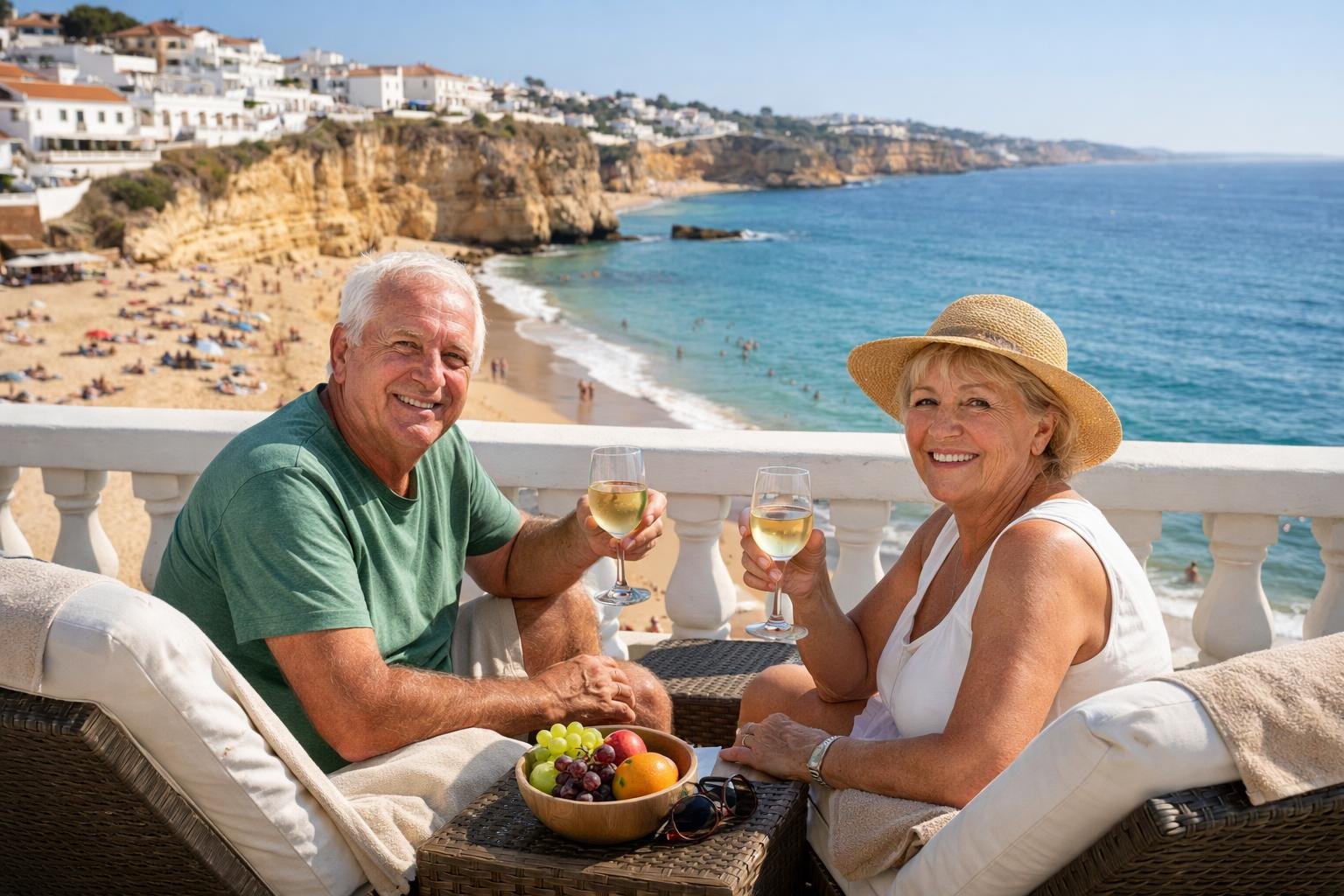
They packed two suitcases, three decades of routine, and a quiet belief that retiring abroad didn’t have to be a luxury. In Ireland, friends warned them that the Iberian dream had become pricey, that every latte and rent review on the Mediterranean spelled trouble. But Anne and Pat, both in their late sixties, looked a little further west along the map—and a little deeper into their maths.
They settled not on a cliffside fantasy but in the working-port town of Olhão, a short train ride from Faro. “We didn’t need a villa with a pool,” Anne says. “What we needed was light, walkability, and bills that wouldn’t make us nervous.” Within a month, their spreadsheet told the story: a real life that cost less than their two-bed in Galway.
From rain to a rhythm that fits
They chose the Eastern Algarve, where rents are gentler than in glossy resorts. The streets in Olhão are narrow, the markets a bustle of fish, citrus, and clipped Portuguese. “We stopped counting Irish showers,” Pat laughs, “and started counting sunrises.”
Their calendar turned simple: morning walks by the marina, a coffee at a pastelaria where two espressos and a pastel de nata cost less than one flat white in Dublin. Late afternoons are for language lessons, a swim when the tide behaves, and dinner from whatever the market’s red snapper whispered that day.
What they actually spend each month
To test their hunch, they tracked every euro. The result surprised even their cautious hearts.
- Long-term rent (1-bed, East Algarve): €830
- Utilities (electricity, water, gas): €110
- Groceries and markets: €290
- Eating out and cafés: €140
- Public transport and occasional car share: €70
- Mobile and home internet: €42
- Health top-up and pharmacy: €95
- Leisure, gifts, flights fund (averaged): €180
- Buffer for “life happens”: €150
Total: about €1,907. “Our combined pensions land near €2,400 after everything,” Anne notes, “so we still breathe and save a little.”
The small decisions that change the bill
They didn’t chase a postcard; they chased patterns. East, not west. Year-long contract, not high-season slice. “We arrived in February,” Pat says, “when landlords talk and the pace is human.” They asked for a 12‑month lease with one small increase clause and got it.
They use trains and regional buses, tapping a reloadable card that makes fares almost cheerful. When they rent a car, it’s by the day for inland jaunts—Monchique, Castro Marim, a Tuesday fair that sells proper olive wood for half the price. Twice a week they cook like locals: whole fish, beans, tomatoes that taste like July even in April. “We don’t diet,” Anne smiles. “We just eat what the market gives.”
Why Portugal crushed the myth
The story everyone told was that Southern Europe had become a playground for digital nomads, steakhouse menus, and winter rents that leap like hares. There’s some truth on the busy strips, less so a few train stops from the airport and a ten-minute stroll from the old dock. “We toured a couple of Algarve hotspots and blinked at the prices,” Pat says. “Then we stepped east and felt our shoulders drop.”
They considered Spain for years—Cartagena, Almería, even inland Andalucía—but Portugal’s bureaucracy felt navigable, and the rhythm clicked with their temperament. “It wasn’t about a tax hack,” Anne adds. “It was about a chance to live quietly without counting the days till payday.”
Health, safety, and the bit everyone asks
Healthcare was the decider. They registered locally, learned which clinic door to knock, and bought a modest private top-up for queue-busting and dentistry. Pharmacies are friendly and frank; generics are cheap. “We keep a little list in Portuguese,” Pat says, “so we never mime our way through a prescription.”
Safety? “We walk home past midnight and mostly hear cutlery and chat,” Anne says. The occasional festival brings drums, not trouble. Insurance is ordinary, keys live in a drawer, and their neighbours water the herbs when they fly home.
A day that feels earned
On Wednesdays they take the early train to Tavira, sit by the river with notebooks, and write letters they never posted back home. On Sundays it’s a ferry to Ilha da Culatra, where lunch means grilled sardines, lemon, and a plastic table that wipes clean. “We traded a bigger house for a bigger sky,” Pat says. “Turns out, that’s where the savings were hiding.”
They still check prices—not with fear but with a wink. A winter coat on sale because “winter” is an idea here. Two bus rides for the price of one rainy taxi back in Ireland. A museum pass that gently shames the cost of a pint.
What they wish they’d known sooner
“Don’t chase the Instagram Algarve,” Anne says. “Chase the bus timetable.” Come off-season, ask for the long let, learn five phrases and use them like gold. Most of all, budget by week, not by headline. “A place can be famous for being expensive,” Pat adds, “and still hide streets that fit your life.”
They didn’t win the lottery; they drew a map. It happens to include tiled alleys, tide charts, and a landlord who likes punctuality. And it holds a space at the café where the waiter now knows their names—and their quiet order.

Contact details
Address:
Farmers Forum,
36, Dominick Street,
Mullingar,
Co. Westmeath,
Ireland
Phone:
+353 (0)44 9310206
Or email us:
For technical issues please check out our FAQ's page or email - [email protected]
For general Queries email - [email protected]
Request to add event to our Calendar - [email protected]
Send us your mart reports - [email protected]
Suggestions and feedbacks - [email protected]
News Items / Press Release - [email protected]
To Advertise on Farmers Forum - [email protected]