Flattened cartons, rinsed jars, compressed packaging: sorting reassures our kitchens. Yet, a troubling truth is growing in 2026: recycling cannot absorb our appetite for packaging, and zero waste is returning to the forefront.
The Yellow Bin Reveals the Limits of a Recycling System That Has Become Too Reassuring
For years, the yellow bin acted as a small domestic confessional. A packaging thrown in the right place seemed almost forgiven. But the numbers tell a less comfortable story: according to ADEME, France recycles a large share of its household packaging, while the plastic remains the system’s poor student.
Citeo still reported a recycling rate of only 27% for plastic packaging in 2023. It’s not nothing, but it’s not a magic wand. Some plastics degrade, mix poorly, are costly to process, or end up in uses less noble than the original object.
Reducing Waste at the Source Proves More Effective than Sorting It Better
The problem isn’t that sorting would be useless. On the contrary, sorting prevents landfilling, fuels industrial streams, and saves raw materials. The trap begins when recycling becomes a permission to buy more, as if every saved tray erases the next one.
The OECD notes that, without further action, plastic production and waste could still surge by 2040. Here lies the crux: even a more efficient recycling system remains overwhelmed if the tap keeps flowing. Recycling is mopping up. Reducing is closing the tap.
Zero Waste Settles into Daily Gestures Without Upending Life
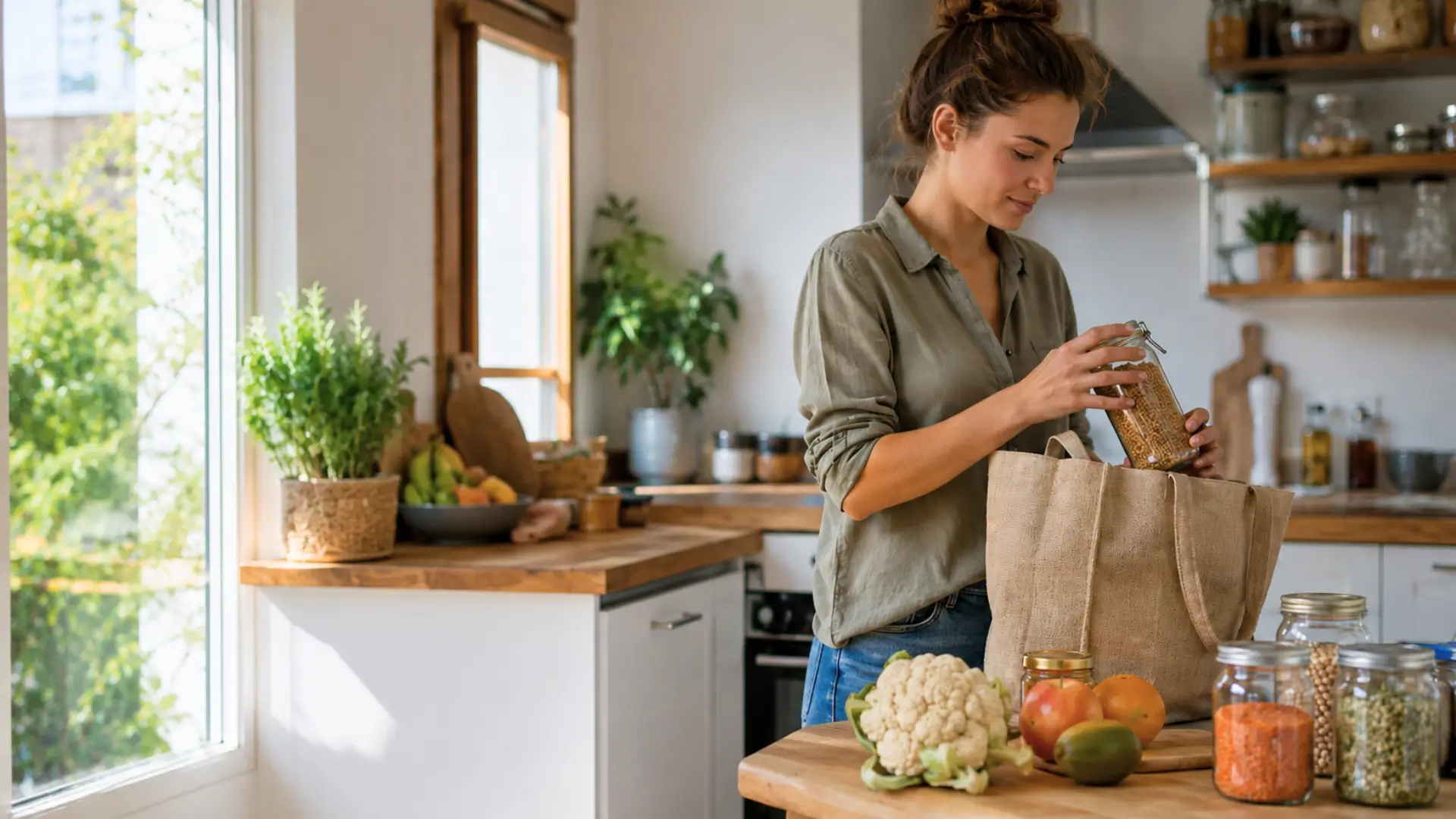
Zero waste no longer has much of the austere cliché, with jars lined up as in a monastic laboratory. It reappears through almost ordinary actions: a water bottle in a bag, a tote forgotten and then found, products in their raw form that avoid three layers of plastic wrap. The change seems tiny, but it adds up quickly.
In the aisles, bulk goods advance in waves, not always evenly, but the idea takes hold: buy only what you need, refuse excess packaging, favor items that can be reused. The most interesting thing is not the aesthetics of the jars, but the reclaiming of control over what enters the home.
Throwing Away Less Also Helps Regain Control Over Your Budget and Your Home
The story of waste unfolds like a reverse discovery. After inventing disposable objects en masse, societies rediscover an ancient principle: repair, refill, pass down, compost. This isn’t a return to candlelight; it’s a more lucid modernity capable of measuring the hidden costs of instant comfort.
The concrete benefits become apparent quickly. Fewer packaging means fewer bags to carry out, fewer odors, fewer impulse purchases, and sometimes a leaner budget. Local authorities watch closely, because collecting, sorting, incinerating, or burying waste is expensive. The best economy is often that of waste avoided.
One almost political question remains, tucked between the yellow bin and the pantry: should we continue to ask citizens to sort better, or should we ask manufacturers to produce less future waste? The next ecological battle could well begin there, in that small space where a packaging is refused before it even exists.

Contact details
Address:
Farmers Forum,
36, Dominick Street,
Mullingar,
Co. Westmeath,
Ireland
Phone:
+353 (0)44 9310206
Or email us:
For technical issues please check out our FAQ's page or email - [email protected]
For general Queries email - [email protected]
Request to add event to our Calendar - [email protected]
Send us your mart reports - [email protected]
Suggestions and feedbacks - [email protected]
News Items / Press Release - [email protected]
To Advertise on Farmers Forum - [email protected]