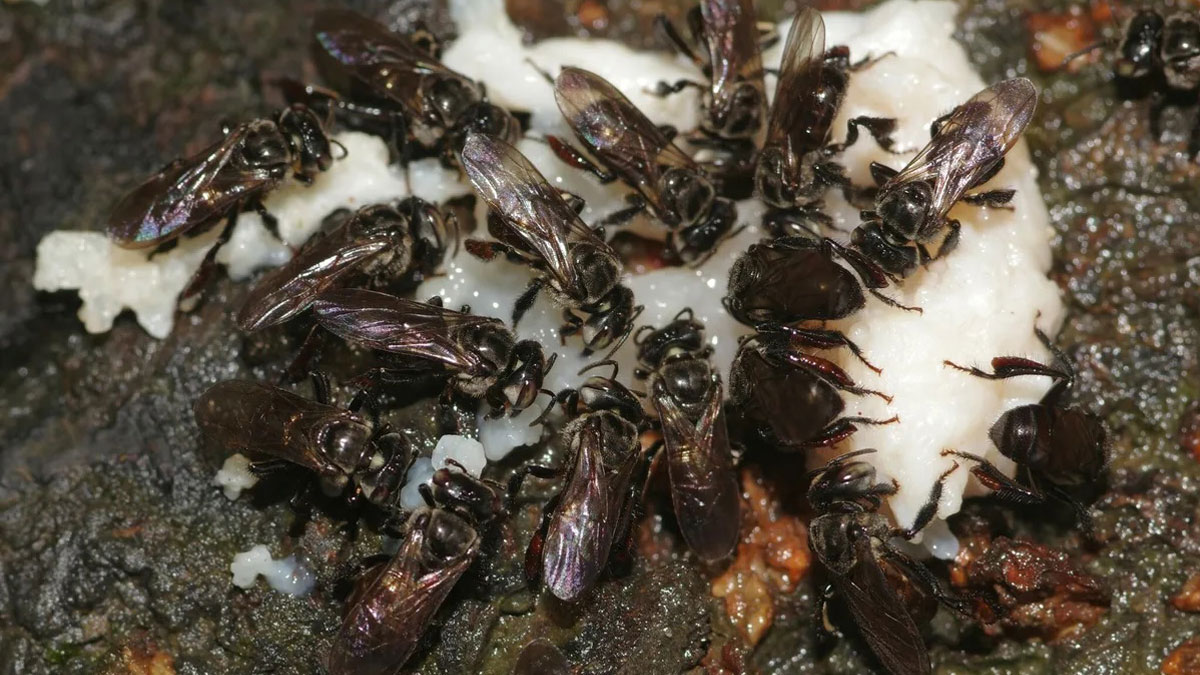
For a moment, forget the bucolic image of bees flitting idly from flower to flower in a soft buzz. In Central America, a handful of species pollinate… decaying carcasses.
Macabre Nectar
The genus Trigona comprises 32 species of stingless bees. Observed in Costa Rica, three species eschew flowers entirely. While they occasionally harvest the sugar from nodules on the stems of various plants, they primarily feed on decomposing flesh.
As one can imagine, such a diet entails a series of significant adaptations. In 2021, a study revealed that their gut microbiota differed markedly from that of their purely phytophagous relatives.
« It is notably rich in acidophilic bacteria [which help to break down meat], which are absent in the close relatives of these bees », wrote entomologist Quinn McFredrick. « These bacterial populations, similar to those observed in vultures and other scavenger species, also provide them with protection against the pathogens present on carcasses [toxins and microbes]. »
These “vulture bees” of Costa Rica also possess specialized mandibles, which they use to cut the malodorous flesh they feed on, but their overall behavior proves to be closely similar to that of classic honey bees. Once their loot is carried to the hive, it is carefully stored and then used to nourish the larvae, whose growth requires a high intake of protein.
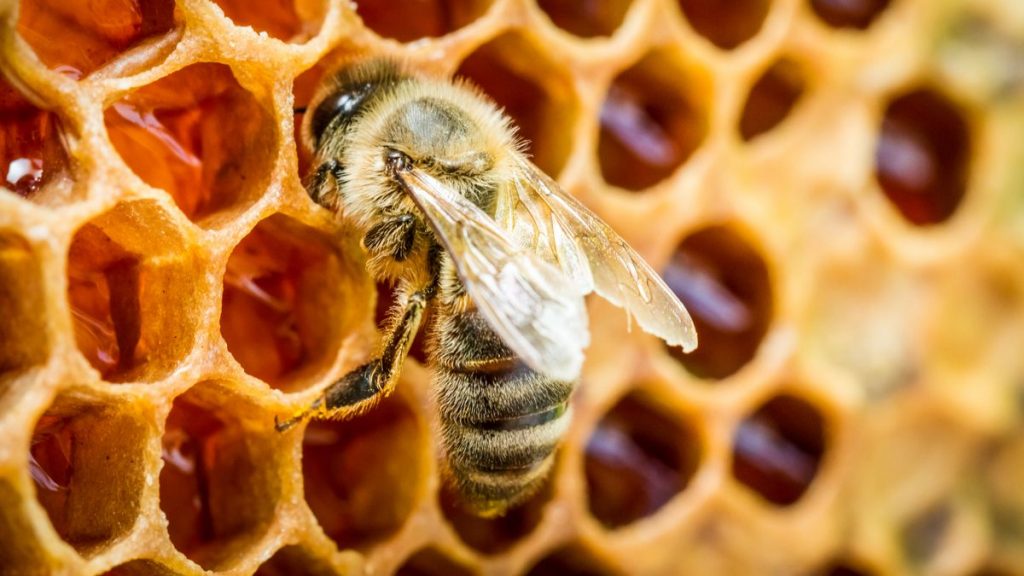
Strange Bees
Among the other unusual bees are also some species known as “oleic bees,” which do not collect pollen but plant lipids, extracted with specialized structures on their legs. These are then used to feed their larvae or to line the nest walls.
Among orchid bees, the males do not gather nectar or pollen, but odor molecules (also drawn from carrion) in order to build a complex chemical fragrance to lure females.
In a completely different vein, some bees adopt a parasitic lifestyle, infiltrating the colonies of other species to lay their eggs, which then develop thanks to the valuable resources accumulated by their hosts.
Another peculiarity of these fascinating insects is that they adapt their dancing movements to their audience.

Contact details
Address:
Farmers Forum,
36, Dominick Street,
Mullingar,
Co. Westmeath,
Ireland
Phone:
+353 (0)44 9310206
Or email us:
For technical issues please check out our FAQ's page or email - [email protected]
For general Queries email - [email protected]
Request to add event to our Calendar - [email protected]
Send us your mart reports - [email protected]
Suggestions and feedbacks - [email protected]
News Items / Press Release - [email protected]
To Advertise on Farmers Forum - [email protected]